

Travel disruption hits Germany on eve of transport strike
Advertisement
Read this article for free:
or
Already have an account? Log in here »
To continue reading, please subscribe:

Digital Subscription
One year of digital access for only $205*
- Enjoy unlimited reading on winnipegfreepress.com
- Read the E-Edition, our digital replica newspaper
- Access News Break, our award-winning app
- Play interactive puzzles
*First annual payment billed as $205.00 + GST for one year. This annual subscription will automatically renew at $233.00 + GST every 52 weeks (10% off the regular annual price of $259.35). Offer available to new and qualified returning subscribers only. Cancel any time.
To continue reading, please subscribe:
Add Free Press access to your Brandon Sun subscription for only an additional
$1 for the first 4 weeks*
- Enjoy unlimited reading on winnipegfreepress.com
- Read the E-Edition, our digital replica newspaper
- Access News Break, our award-winning app
- Play interactive puzzles
*Your next Brandon Sun subscription payment will increase by $1.00 and you will be charged $17.95 plus GST for four weeks. After four weeks, your payment will increase to $24.95 plus GST every four weeks.
Read unlimited articles for free today:
or
Already have an account? Log in here »
Hey there, time traveller!
This article was published 26/03/2023 (1277 days ago), so information in it may no longer be current.
BERLIN (AP) — An increased number of travelers in Germany boarded trains and planes on Sunday, a day before a major one-day strike that aims to bring the country’s transportation system to a standstill.
But even advance travel was met with disruption in some places as Munich airport already shut down because of the impending strike on Monday, and technical problems affecting German airline Lufthansa in Frankfurt led to flight delays and cancellations at the country’s biggest airport.
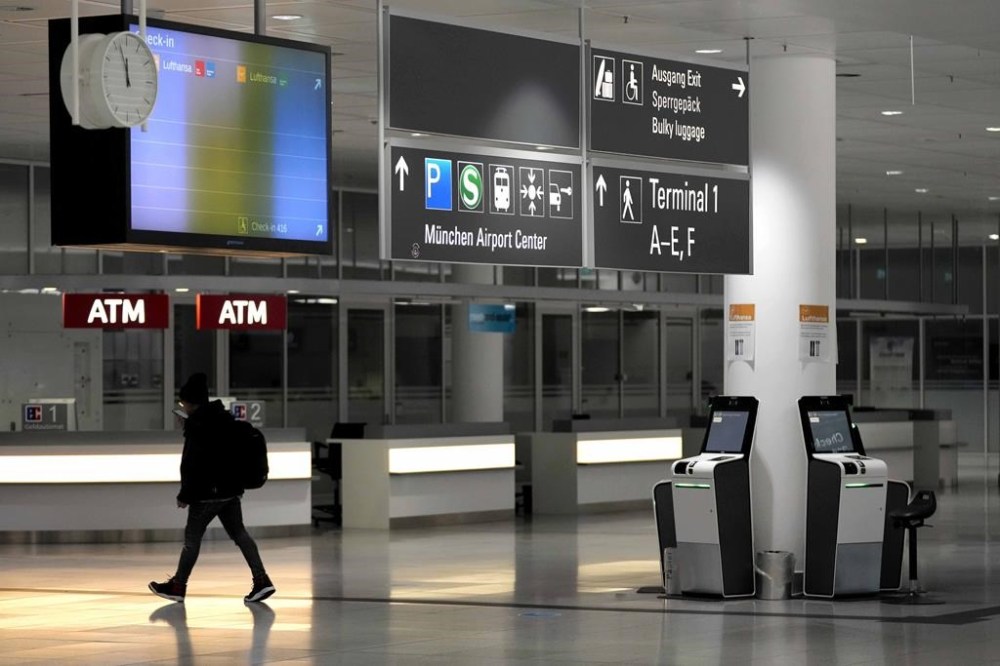
Munich Airport, the country’s second-busiest, said that the ver.di union was hitting it with two days of strikes and it has no regular passenger or cargo flights on either Sunday or Monday. A total of around 1,500 connections were affected, and takeoffs and landings were only possible for emergency humanitarian flights, German news agency dpa reported.
German unions have called on thousands of workers across the country’s transportation system to stage a one-day strike as employees in many sectors are seeking hefty raises to reflect persistently high inflation.
Ver.di chair Frank Werneke said last week that the service workers’ union is calling for 120,000 workers to walk out. Those will include security and ground workers at all German airports except in Berlin, local transit employees in seven of Germany’s 16 states, harbor employees and workers on highways — the latter a measure that Werneke said is likely to affect some tunnels.
The EVG union, which represents many railway workers, is calling for 230,000 workers at Germany’s main railway operator, government-owned Deutsche Bahn, and others to walk out.
Ver.di is engaged in a series of pay negotiations, notably for employees of Germany’s federal and municipal governments. In that case, it is seeking a 10.5% pay raise. Employers have offered a total of 5% in two stages plus one-time payments of 2,500 euros ($2,700).

It already has staged a series of one-day walkouts at individual airports and in public services, including local transit.
EVG is seeking a raise of 12%. Deutsche Bahn also has offered a two-stage raise totaling 5% plus one-time payments.