

Credit Suisse rescue rebuked by half of Swiss parliament
Advertisement
Read this article for free:
or
Already have an account? Log in here »
To continue reading, please subscribe:

Digital Subscription
One year of digital access for only $205*
- Enjoy unlimited reading on winnipegfreepress.com
- Read the E-Edition, our digital replica newspaper
- Access News Break, our award-winning app
- Play interactive puzzles
*First annual payment billed as $205.00 + GST for one year. This annual subscription will automatically renew at $233.00 + GST every 52 weeks (10% off the regular annual price of $259.35). Offer available to new and qualified returning subscribers only. Cancel any time.
To continue reading, please subscribe:
Add Free Press access to your Brandon Sun subscription for only an additional
$1 for the first 4 weeks*
- Enjoy unlimited reading on winnipegfreepress.com
- Read the E-Edition, our digital replica newspaper
- Access News Break, our award-winning app
- Play interactive puzzles
*Your next Brandon Sun subscription payment will increase by $1.00 and you will be charged $17.95 plus GST for four weeks. After four weeks, your payment will increase to $24.95 plus GST every four weeks.
Read unlimited articles for free today:
or
Already have an account? Log in here »
Hey there, time traveller!
This article was published 12/04/2023 (1277 days ago), so information in it may no longer be current.
GENEVA (AP) — Switzerland’s lower house of parliament issued a searing — though symbolic — rebuke Wednesday of an emergency plan spearheaded by the executive branch to prop up embattled Credit Suisse and shepherd it into a takeover by Swiss banking rival UBS.
The National Council, through an unusual left-right alliance, voted twice over the last day to reject government guarantees authorized last month of 100 billion Swiss francs (about $110 billion) to help keep Credit Suisse afloat and 9 billion francs to help UBS mop up any losses it may incur in the deal.
The votes took place in a special parliamentary session that wrapped up Wednesday to scrutinize long-running troubles at Credit Suisse, a 167-year-old bank that was a pillar of Swiss finance, and the government plan to save it from a collapse that could have shaken the global financial system.

Switzerland’s main right-wing party opposed tighter regulations on banks, while centrists favored tougher rules but would accept state help for banks in some cases. Left-leaning parties that have long decried “overly dangerous” banks were insistent on stricter limits on bonuses for top executives and requirements for more money to be kept on hand by the biggest lenders.
“The whole discussion centered on whether more regulation was needed — in particular to the leverage ratio — and severely regulate bonuses of the managers of the big, systemically important banks,” Socialist lawmaker Roger Nordmann said.
Finance Minister Karin Keller-Sutter, who has been at the epicenter of a political firestorm around the 3 billion franc ($3.25 billion) Credit Suisse-UBS deal, told lawmakers that capital requirements would be increased — and “you can start from the premise that big banks will face more severe restrictions.”
But Nordmann, who had questioned the minister on that issue, said by phone that Keller-Sutter hadn’t presented any clear measures and was too noncommittal.
“That’s an invitation for all dishonest bankers to come to Switzerland, and what we need is honest people,” he said.

The votes were symbolic because a parliamentary commission has already signed on to the emergency rescue plan that Swiss authorities orchestrated last month as shares of Credit Suisse sank and customers rushed to pull out their money. The failure of two U.S. banks just days before had sparked concerns about the stability of the Swiss lender and the global financial system.
Both the Swiss central bank and the government splashed out more than 200 billion Swiss francs in guarantees to help underpin the fusion of the country’s top two banks and keep Credit Suisse from failing.
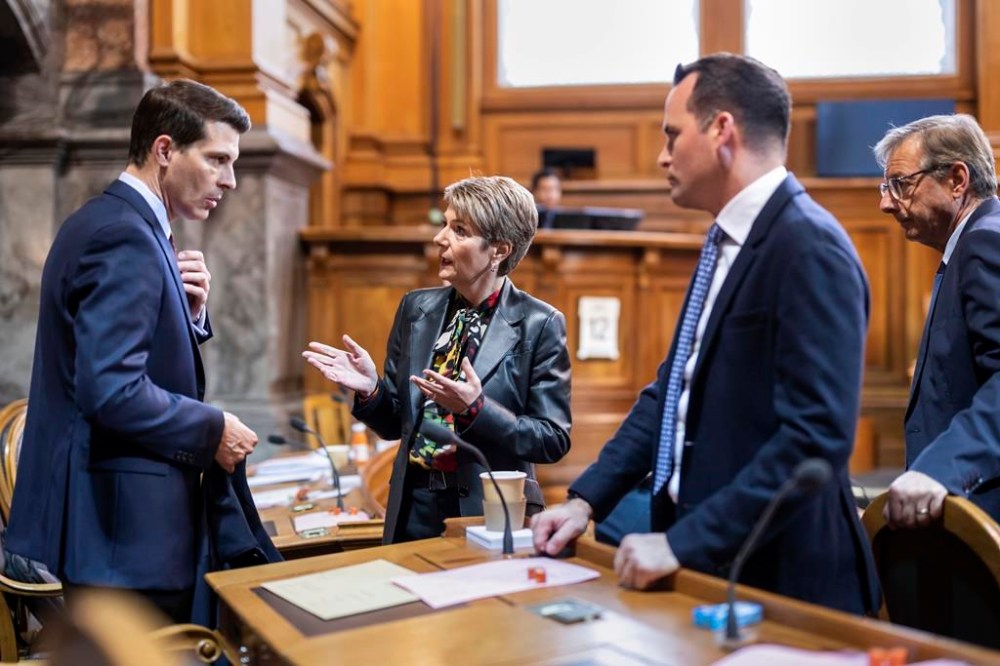
Parliament’s upper house had voted Tuesday to accept the takeover plan announced March 19 by Switzerland’s seven-member executive branch — known as the Federal Council, which is headed by the Swiss president — as well as the Swiss National Bank and the financial markets regulator, FINMA.
Lawmakers in the upper house backed a plan that would have included limits to bonuses for bankers, but it didn’t go far enough for the lower house.
For now, stricter legislative rules on Switzerland’s biggest banks — led by UBS — are in limbo ahead of crucial elections for parliament this fall.