

Rogers CEO pledges to work with rival companies to provide TTC cell service
Advertisement
Read this article for free:
or
Already have an account? Log in here »
To continue reading, please subscribe:

Digital Subscription
One year of digital access for only $205*
- Enjoy unlimited reading on winnipegfreepress.com
- Read the E-Edition, our digital replica newspaper
- Access News Break, our award-winning app
- Play interactive puzzles
*First annual payment billed as $205.00 + GST for one year. This annual subscription will automatically renew at $233.00 + GST every 52 weeks (10% off the regular annual price of $259.35). Offer available to new and qualified returning subscribers only. Cancel any time.
To continue reading, please subscribe:
Add Free Press access to your Brandon Sun subscription for only an additional
$1 for the first 4 weeks*
- Enjoy unlimited reading on winnipegfreepress.com
- Read the E-Edition, our digital replica newspaper
- Access News Break, our award-winning app
- Play interactive puzzles
*Your next Brandon Sun subscription payment will increase by $1.00 and you will be charged $17.95 plus GST for four weeks. After four weeks, your payment will increase to $24.95 plus GST every four weeks.
Read unlimited articles for free today:
or
Already have an account? Log in here »
Hey there, time traveller!
This article was published 12/04/2023 (1228 days ago), so information in it may no longer be current.
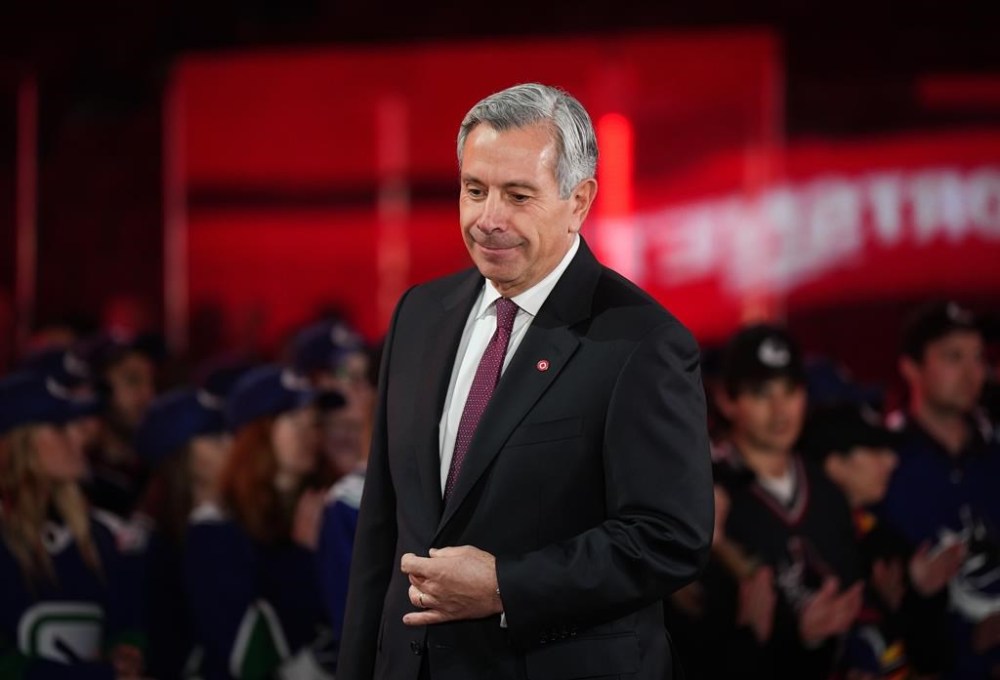
TORONTO – Rogers Communications Inc. president and CEO Tony Staffieri said his company would not attempt to prevent any of its rivals from offering cellphone service to their customers on Toronto’s subway system once Rogers takes control of the wireless infrastructure.
Speaking Wednesday at a lunch hosted by Canadian Club Toronto, Staffieri pledged the network “will work for everybody.”
“We really need to figure out and implement on a timely basis 911 emergency calling throughout the subway transit system and it doesn’t matter who you’re on. It could be us, Bell, Telus, Videotron — it doesn’t matter,” he said.
“We think it’s important for not just our customers but for Torontonians and that was our intent in doing this. If Bell, Telus want to step up and join in, we’re happy and open to having those discussions with them.”
Bell and Telus had expressed concern over whether their customers would be able to use wireless service on the transit system after Rogers announced it had acquired BAI Communications’ Canadian arm, which has held the rights to the Toronto Transit Commission’s wireless network since 2012.
Staffieri said talks with BAI began around a year ago as Rogers heard from customers, many of whom were returning to downtown offices amid the pandemic, that they wanted connectivity on the subway.
He said those negotiations became more timely recently in light of a wave of violence on the TTC that prompted calls for the three major telecom companies to sign on to BAI’s service.
Rogers plans to upgrade BAI’s existing network, which covers around one-quarter of the subway’s underground tunnels, to ensure 5G capacity over the next nine months.
Staffieri said it will take around two years for Rogers to also build a 5G network for the entire subway system, with construction only possible for two to three hours per night when trains do not run.
He said the system will come online in “bits and pieces” over that time frame, with 911 calling first, followed by text messages, voice calling and video streaming.
“The TTC has committed to give us as much access as possible,” said Staffieri. “We want to do this aggressively.”
The Rogers CEO also weighed in on his company’s other major acquisition earlier this month, the $26-billion purchase of Shaw Communications Inc., which closed April 3.
Staffieri has vowed that the deal will mean increased competition in the telecommunications market and reduced prices for customers. But asked if the goal of lower cellphone fees is at odds with trying to increase profits, he said the two actually “go hand in hand.”
“History has shown us we can do both,” he said.
“If you looked at the last four years, wireless prices in Canada have come down 30 per cent and they’ve come down double digits in the last 12 months in the face of significant inflation … That’s all happening against the backdrop where the size of the market continues to grow.”
The Shaw merger, which was first announced in March 2021, was cleared late last month when Industry Minister François-Philippe Champagne agreed to the transfer of Freedom Mobile’s wireless licences from Shaw to Quebecor Inc.’s Videotron.
As part of Videotron’s attached conditions, the company must offer plans that are at least 20 per cent lower than its competitors.
Asked about competing with Videotron, which was dubbed by Champagne as a viable fourth national carrier, Staffieri said Rogers will “come at them” on multiple fronts.
“We will not be undersold just because of the price. You can expect us to be very aggressive in our value propositions on that,” he said.
“We have the most effective dealer network — almost 6,000 across the country in terms of stores, kiosks and channels — and we intend to leverage those. We intend to leverage our network superiority. We are the largest and best network and now that includes wireline as well.”

Speaking about the company’s outlook for the next five years, Staffieri said he hoped to improve the “consumer value perception.”
“Today, if you think about your cellphone and everything you rely on it for, all that connectivity that runs your life, it costs you less than a cup of coffee a day,” said Staffieri.
“I’m not sure all consumers feel like they’re getting that kind of value and so I think we need to drive home better the value perception of our industry.”
This report by The Canadian Press was first published April 12, 2023.
Companies in this story: (TSX:RCI.B, TSX:BCE, TSX:T, TSX: QBR.B)