

2.5 years after signing, NJ environmental justice law begins
Advertisement
Read this article for free:
or
Already have an account? Log in here »
To continue reading, please subscribe:

Digital Subscription
One year of digital access for only $205*
- Enjoy unlimited reading on winnipegfreepress.com
- Read the E-Edition, our digital replica newspaper
- Access News Break, our award-winning app
- Play interactive puzzles
*First annual payment billed as $205.00 + GST for one year. This annual subscription will automatically renew at $233.00 + GST every 52 weeks (10% off the regular annual price of $259.35). Offer available to new and qualified returning subscribers only. Cancel any time.
To continue reading, please subscribe:
Add Free Press access to your Brandon Sun subscription for only an additional
$1 for the first 4 weeks*
- Enjoy unlimited reading on winnipegfreepress.com
- Read the E-Edition, our digital replica newspaper
- Access News Break, our award-winning app
- Play interactive puzzles
*Your next Brandon Sun subscription payment will increase by $1.00 and you will be charged $17.95 plus GST for four weeks. After four weeks, your payment will increase to $24.95 plus GST every four weeks.
Read unlimited articles for free today:
or
Already have an account? Log in here »
Hey there, time traveller!
This article was published 17/04/2023 (1256 days ago), so information in it may no longer be current.
WOODBRIDGE, N.J. (AP) — Two and a half years after it was signed into law, a measure designed to prevent New Jersey communities already dealing with sources of pollution from having to accept more of them took effect Monday.
Officials said the law is the first in the nation to require permit denials if an environmental justice analysis determines a new facility will have a disproportionately negative impact on overburdened communities.
But the law, which Democratic Gov. Phil Murphy called the toughest in the nation, comes too late to block some of New Jersey’s most controversial power plant proposals in minority neighborhoods, where residents had hoped the measure could prevent them from being built.
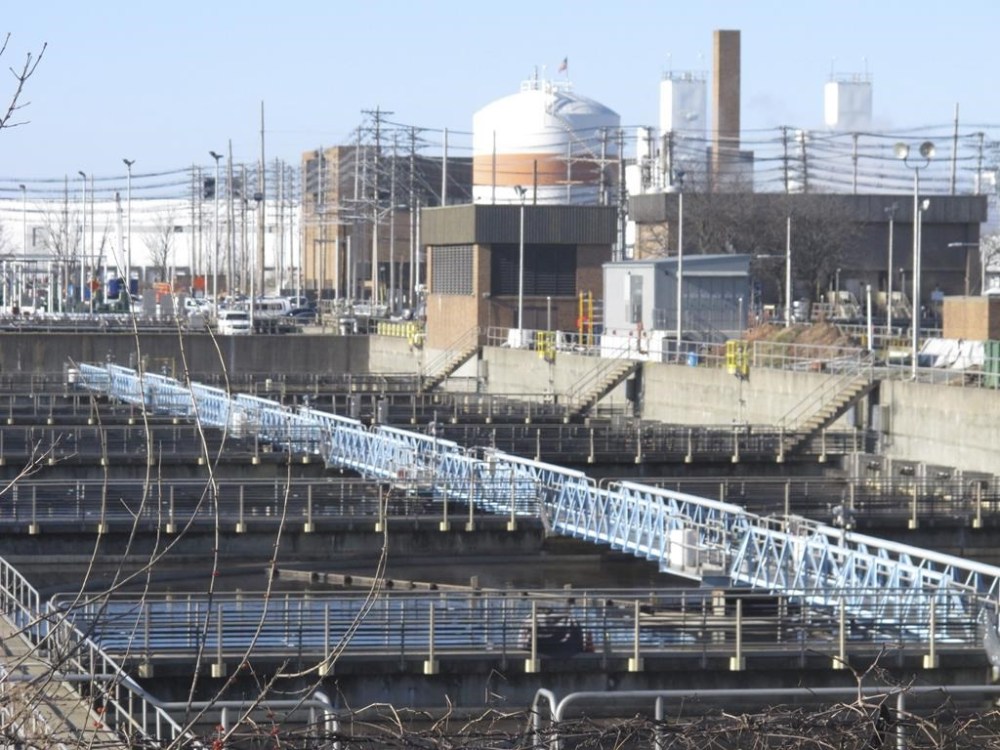
“We knew this wasn’t the silver bullet that was going to come in and immediately kill environmental racism,” said Maria Lopez-Nuñez, an official with the Ironbound Community Corporation, which has been fighting numerous power plant proposals in and near the heavily industrial and polluted section of Newark. “I knew the environmental justice rules would come too late to stop some of these projects. But we’re still celebrating today. This is the beginning, and we still think we can win.”
The law will not apply to a proposal to build a second natural gas fired power plant next to an existing one in Woodbridge that has drawn extensive protests from area residents. Many complain of respiratory ailments and some say their children needed to be hospitalized with breathing problems.
That proposal, by Silver Spring, Maryland-based Competitive Power Ventures, was submitted in 2016 and deemed “administratively complete” by the state Department of Environmental Protection a year later, meaning it is not covered by the new law, department spokesman Larry Hajna said. But an administrative order directing the state to impose special conditions to minimize adverse environmental effects, does apply, he said. The application is still pending.
Proposals to build backup power plants for the Passaic Valley Sewerage Commission’s treatment plant in Newark and for NJ Transit, the state transportation agency in nearby Kearny, are also still pending. Both have been hotly opposed by residents of neighboring communities.
The DEP did not respond to questions Monday on whether the environmental justice law will apply to those projects.
Murphy signed the law in September 2020, saying it would give the state the ability to deny permits for polluting projects in communities that already have more than their share.
But the bureaucratic process of writing the actual regulations and conferring with interested parties delayed full implementation of the law until Monday — a fact that has angered residents living nearby.
Murphy said final adoption of the environmental justice law’s regulations “will further the promise of environmental justice by prioritizing meaningful community engagement, reducing public health risks through the use of innovative pollution controls, and limiting adverse impacts that new pollution-generating facilities can have in already vulnerable communities.”
“It’s no secret that poor, urban and minority communities have been oversaturated with toxic facilities, and they have never had a real voice in determining whether these businesses and institutions were acceptable,” added state Sen. Troy Singleton.

Marcus Sibley, chairman of the New Jersey State Conference NAACP Environmental and Climate Justice Committee, said the law should empower overburdened communities with a tool to fight additional sources of pollution.
“Expecting entities to do the right thing hasn’t ever been a winning strategy for our constituents most vulnerable to exploitation, adverse environmental impacts, gross inaction and divestment,” he said.
The New Jersey Business and Industry Association opposed the law, saying it will discourage businesses from locating in the state and will cost it good-paying manufacturing jobs.
___
Follow Wayne Parry on Twitter at www.twitter.com/WayneParryAC.