
In employees they trust Wawanesa Insurance will be chock-full of first-class amenities when construction on its new 21-storey downtown tower is finished next winter, but like many Winnipeg companies after the pandemic, it’s allowing staff to decide where they’ll get their work done
Read this article for free:
or
Already have an account? Log in here »
To continue reading, please subscribe:

Digital Subscription
One year of digital access for only $205*
- Enjoy unlimited reading on winnipegfreepress.com
- Read the E-Edition, our digital replica newspaper
- Access News Break, our award-winning app
- Play interactive puzzles
*First annual payment billed as $205.00 + GST for one year. This annual subscription will automatically renew at $233.00 + GST every 52 weeks (10% off the regular annual price of $259.35). Offer available to new and qualified returning subscribers only. Cancel any time.
To continue reading, please subscribe:
Add Free Press access to your Brandon Sun subscription for only an additional
$1 for the first 4 weeks*
- Enjoy unlimited reading on winnipegfreepress.com
- Read the E-Edition, our digital replica newspaper
- Access News Break, our award-winning app
- Play interactive puzzles
*Your next Brandon Sun subscription payment will increase by $1.00 and you will be charged $17.95 plus GST for four weeks. After four weeks, your payment will increase to $24.95 plus GST every four weeks.
Read unlimited articles for free today:
or
Already have an account? Log in here »
Hey there, time traveller!
This article was published 05/05/2023 (1254 days ago), so information in it may no longer be current.
Yes, there will be Pelotons in the office.
And exercise classes, and collaboration spaces and an IT bar stocked with computer accessories.
SUPPLIED A rendering of the Wawanesa Mutual Insurance Company’s 19-floor, 300,000-square-foot tower in True North Square.
“We believe the building itself will draw our employees in,” said Lisa Osachoff, The Wawanesa Mutual Insurance Company’s chief people and culture officer.
“The building” being a 21-floor, 370,000-square-foot tower in True North Square worth, in 2019, $136 million. Wawanesa executives did not provide an updated cost.
COVID-19 wasn’t on Wawanesa’s radar when it announced its new North American headquarters. Staff entered their offices daily, clocking their 9-to-5.
Now, workers might not visit their cubicles at all — and via current policy, they won’t have to once Wawanesa’s multimillion-dollar facility opens in January.
The Manitoba-based company is part of the seeming majority of white-collar operations leaning on a hybrid model as the province emerges from the pandemic.
This is the future, experts predict — even for Wawanesa, with its shiny new space.
“(Our) program is built around trust of our employees, that they are making the right choice to be productive, to deliver what we need,” Osachoff said.
SUPPLIED Leaders altered the design to reflect the new age of work: some office spaces were eliminated and more collaboration areas were added.
About 90 per cent of Wawanesa’s staff can work remotely, and the number who work in office varies daily.
Productivity has not dropped since going hybrid, added Brad Hartle, the company’s senior communications specialist.
Leaders altered the design to reflect the new age of work: some office spaces were eliminated and more collaboration areas were added.
Staff will be able to book “heads down” workspaces — meant for privacy — and “team focused” areas for group discussions.
The Peloton bikes will join a range of exercise equipment on the fitness floor. Wawanesa took suggestions from staff who got used to certain machines during their pandemic-era at-home gym days.
There will be a café, rooms for religious practices, views overlooking the city.
“We feel the building and all the amenities will help support that decision (to come back to the office),” Osachoff said.

SUPPLIED
Wawanesa staff will be able to book “heads down” workspaces — meant for privacy — and “team focused” areas for group discussions.
Employers who mandate full-time office work risk losing employees and might shrink their roster of job applicants, said Jane Helbrecht, founder of Uplift Engagement.
“I very much believe hybrid is here to stay,” she said. “People looking for work… have a lot of negotiating power.”
Hybrid — requiring employees to enter the office at least once a week — seems to be the predominant model for Winnipeg offices, Helbrecht noted.
It’s the approach Payworks is taking, even with its upcoming move to headquarters double the size of its current location.
“The building is being created so if everyone decided to come back, we would have space,” said Chris Radford, Payworks’ human resources manager.
MIKE DEAL / WINNIPEG FREE PRESS FILES Chris Radford, human resources manager at Payworks.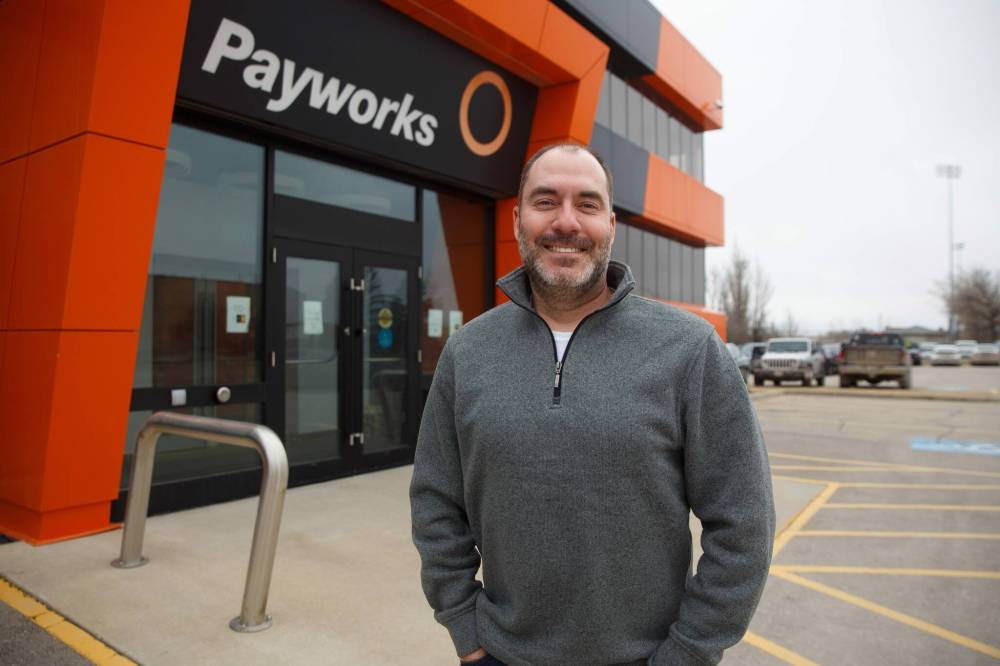
Currently, staff might work fully remote, fully in office or somewhere in between — it depends on the role.
Payworks’ new facility, still under construction, will have a golf simulator, on-site Zumba classes, a meditation room and air-hockey tables.
The features aren’t to draw people to the roughly 100,000-square-foot office, Radford said — Payworks has similar offerings in its Waverley Street building. It hosts snack days and hands out chocolate bunnies at Easter to feed culture, he added.
Still, a majority of companies across Canada — about 83 per cent — are attempting to make the office more desirable, including offering office perks, human-resource consulting firm Robert Half found.
Radford would have a hard time advocating for a full-time in-office mandate.
“Employees can be engaged and productive at home or at work,” he said. “I don’t think we want to go the point where we’re starting to mandate where you work, as an employer.”
“Employees can be engaged and productive at home or at work…I don’t think we want to go the point where we’re starting to mandate where you work, as an employer.”–Chris Radford, Payworks’ human resources manager
Throughout Winnipeg, businesses have fallen to either side of the post-pandemic spectrum.
Bold Commerce is en route to a fully remote model. In fact, the south Winnipeg building might be up for lease soon, said Jodi Armit, vice-president of people experience.
“There’s just too many benefits,” Armit said. “We’ve got the technology, we’ve got the capability now of hiring wherever we want to hire.”
The company’s roughly 200 workers span the continent, Armit said.
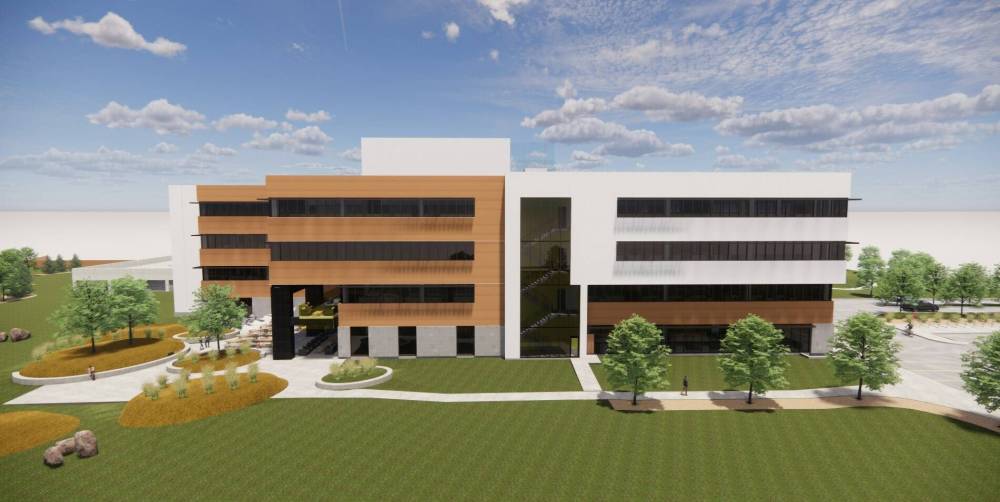
SUPPLIED
A rendering of Payworks' new 100,000-square-foot office.
The flexible hours, the ability to buy technology with money traditionally spent on office space, the clearer guidelines on work outcomes to ensure staff meet targets — all are positives of the remote model, she said.
Bold Commerce has dropped in-person events.
“It’s really exclusive,” Armit said. “You end up (with) people missing out that aren’t in the town.”
Instead, the e-commerce business hosts virtual cocktail parties and coffee sessions. Staff organize town hall discussions, mingle on Google’s Huddle and message each other on Slack.
SUPPLIED Payworks’ headquarters, which is being built in south Winnipeg, is expected to open in spring or summer of 2024.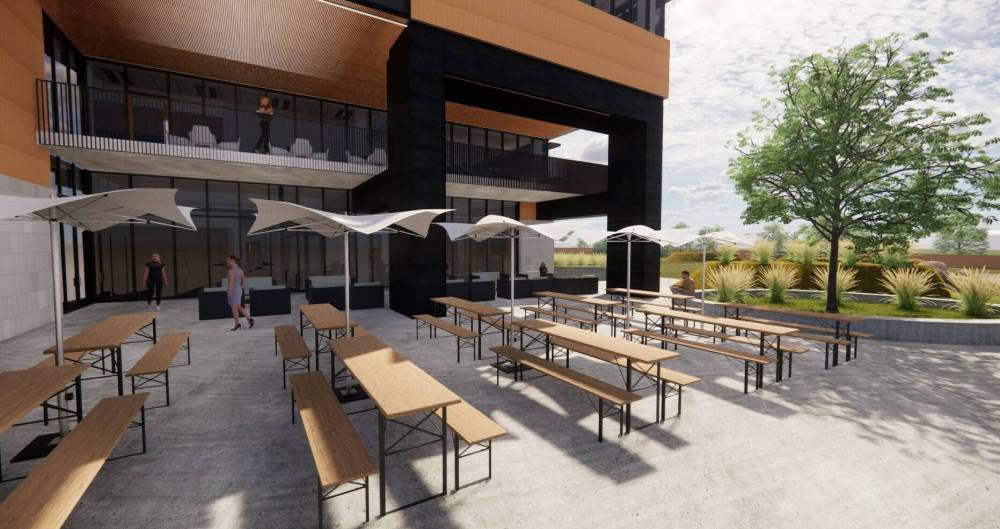
Meantime, True North Sports + Entertainment employees have been working full time from Carlton Street for the past year, and for periods in 2021.
“We work in public assembly.… We need to be a leader to welcome our employees back post-pandemic,” said Dawn Haus, True North’s vice-president of people and culture.
Approximately 200 staff work downtown full time; the number doesn’t include part-time workers at Canada Life Centre and Burton Cummings Theatre.
“The nature of the work that we do, it’s very fast-paced. It takes a lot of collaboration,” Haus said. “Having everyone back here was really important.”
Staff returned, after working remotely, to new offices in True North Square. The transition elicited some pushback, Haus said. Now, the company has a greater focus on gathering, including bringing departments together to listen to guest speakers.
SUPPLIED Payworks’ new facility, still under construction, will have a golf simulator, on-site Zumba classes, a meditation room and air-hockey tables.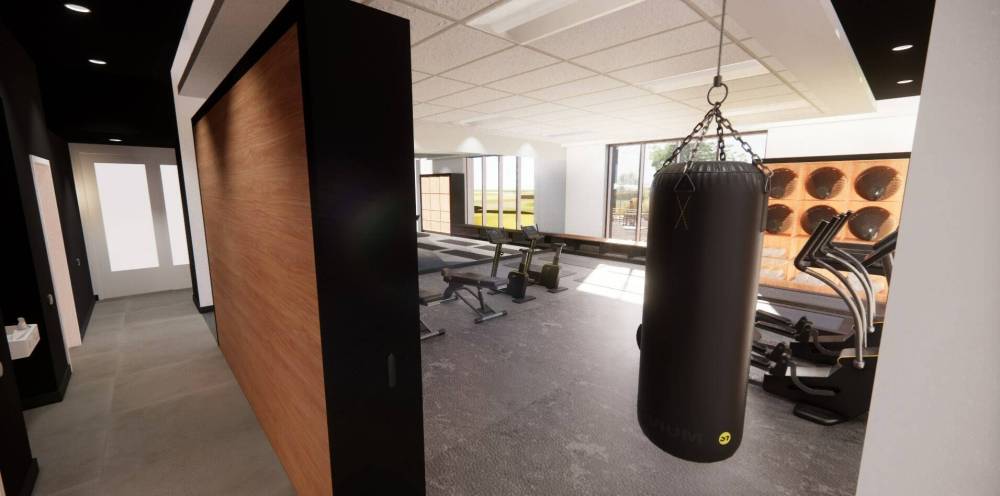
Downtown’s well-being, introducing new hires to veteran staff and separating work from home life were among the reasons for the in-office mandate, Haus said.
“It’s important there’s a separation between (home) space and your workspace, having those healthy boundaries,” she said. “(Working remotely), I didn’t have that commute home to decompress.”
The shift back to the office has likely had an impact on potential job applicants, Haus said.
A quarter of respondents to an Angus Reid Institute poll, released in April, reportedly preferred working from home all the time; another quarter liked office work five days a week. The majority — 50 per cent — supported a hybrid model.
One-fifth of respondents who’d worked from home said they’d quit if told to return to the office full time. Thirty-one per cent said they’d consider switching jobs.
“The issue is much larger than one of people returning to the office. It’s an issue now of ‘How do we work best?’” said Loren Remillard, president of the Winnipeg Chamber of Commerce.
“I would not be surprised to see this continue to evolve where there’s even new models that come into play.”
One new idea Remillard has heard of is adapting hours, and even closing an office, for entire seasons based on productivity.
Winnipeg’s office vacancy rate remains significantly higher than it was pre-pandemic. Last quarter, vacancy was 16.3 per cent, said Paul Kornelsen, Winnipeg vice-president at CBRE, a global commercial real estate company.
The rate has been stable over the past year-and-a-half, he said.
SUPPLIED Staff at Payworks might work fully remote, fully in office or somewhere in between — it depends on the role.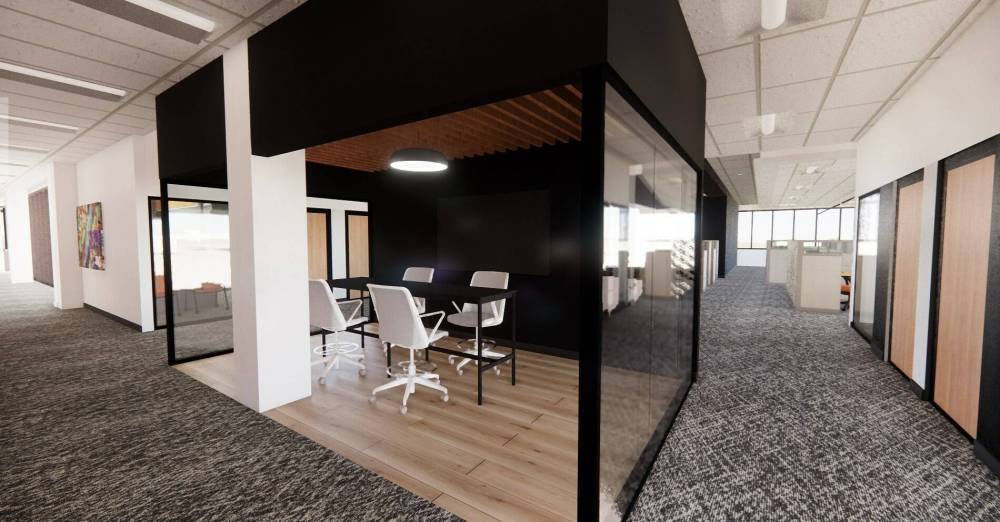
In 2002, just 6.7 per cent of downtown Winnipeg’s offices were vacant.
“There’s enough supply,” Kornelsen said. “We don’t even have the demand for the supply that exists.”
He doesn’t anticipate construction of new office skyscrapers in the near future.
Before the pandemic, a new build might cost between $125 to $175 per square foot. Now, it ranges from $180 to $310 in Canada’s major cities, CBRE data shows.
Many companies are in long-term leases — it could take years before downsizing becomes a trend, if at all, Remillard said.
The Angus Reid Institute surveyed 1,622 Canadians from Feb. 9 to 12. The survey wasn’t conducted with a random sample of Canadians, so no margin of error can be ascribed to the results.
gabrielle.piche@winnipegfreepress.com

Gabrielle Piché reports on business for the Free Press. She interned at the Free Press and worked for its sister outlet, Canstar Community News, before entering the business beat in 2021. Read more about Gabrielle.
Every piece of reporting Gabrielle produces is reviewed by an editing team before it is posted online or published in print — part of the Free Press‘s tradition, since 1872, of producing reliable independent journalism. Read more about Free Press’s history and mandate, and learn how our newsroom operates.
Our newsroom depends on a growing audience of readers to power our journalism. If you are not a paid reader, please consider becoming a subscriber.
Our newsroom depends on its audience of readers to power our journalism. Thank you for your support.
Related Articles
It will take more than office workers' return to get downtown back on its feet


History
Updated on Friday, May 5, 2023 10:30 PM CDT: Corrects size of building.
Updated on Saturday, May 6, 2023 1:56 PM CDT: Updates deck


