

Lebanese Central Bank governor no-show in Paris corruption probe
Advertisement
Read this article for free:
or
Already have an account? Log in here »
To continue reading, please subscribe:

Digital Subscription
One year of digital access for only $205*
- Enjoy unlimited reading on winnipegfreepress.com
- Read the E-Edition, our digital replica newspaper
- Access News Break, our award-winning app
- Play interactive puzzles
*First annual payment billed as $205.00 + GST for one year. This annual subscription will automatically renew at $233.00 + GST every 52 weeks (10% off the regular annual price of $259.35). Offer available to new and qualified returning subscribers only. Cancel any time.
To continue reading, please subscribe:
Add Free Press access to your Brandon Sun subscription for only an additional
$1 for the first 4 weeks*
- Enjoy unlimited reading on winnipegfreepress.com
- Read the E-Edition, our digital replica newspaper
- Access News Break, our award-winning app
- Play interactive puzzles
*Your next Brandon Sun subscription payment will increase by $1.00 and you will be charged $17.95 plus GST for four weeks. After four weeks, your payment will increase to $24.95 plus GST every four weeks.
Read unlimited articles for free today:
or
Already have an account? Log in here »
Hey there, time traveller!
This article was published 16/05/2023 (1209 days ago), so information in it may no longer be current.
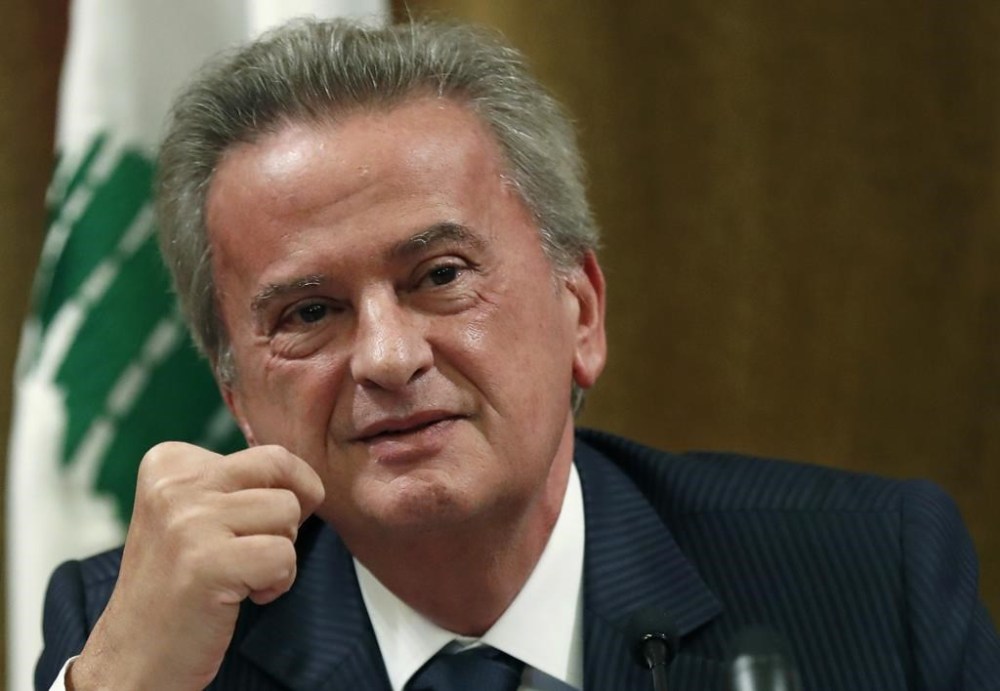
BEIRUT (AP) — Lebanon’s embattled Central Bank governor failed to appear before French prosecutors on Tuesday to be questioned on corruption charges, officials said.
A European judicial team from France, Germany and Luxembourg is conducting a corruption probe into an array of financial crimes, including illicit enrichment and alleged laundering of $330 million, implicating the Lebanese governor, Riad Salameh.
Salameh, 72, who has held his post for almost 30 years, has repeatedly denied all allegations against him. He has insisted that his wealth comes from his previous job as an investment banker at Merrill Lynch, inherited properties, and investments.
The three European governments in March 2022 froze over $130 million in assets linked to the probe. During a visit to Lebanon in March, the European delegation questioned Salameh about the Lebanese Central Bank’s assets and investments outside the country, a Paris apartment — which the governor owns— and his brother Raja Salameh’s brokerage firm Forry Associates Ltd.
According to a senior Lebanese judicial official, Riad Salameh never received his summons from Paris despite several attempts to deliver it. The official said a Lebanese judge sent the notice to Salameh several times over the past two weeks, but it was returned each time because the governor was not present at the Central Bank to receive the notice.
Salameh’s whereabouts were not known and the Central Bank did not immediately respond to requests on Salameh’s failure to show up in Paris.
The date for Tuesday’s hearing was set last month and Lebanon lifted a travel ban on Salameh, who is also being investigated at home. In the probe in Lebanon, Beirut’s Public Prosecutor Raja Hamoush in late February charged Salameh, his brother and a close associate with corruption, including embezzling public funds, forgery, illicit enrichment, money-laundering and violation of tax laws.
Once hailed as the guardian of Lebanon’s financial stability, Salameh is being increasingly blamed for the country’s financial meltdown. Many say he precipitated the economic crisis, which has plunged three-quarters of Lebanon’s population of 6 million into poverty.
Salameh’s term ends in July and while there is no apparent successor, the veteran governor has said in television interviews that he plans to step down.
Separately, lawyers representing Salameh, his brother and close associate Marianne Hoayek filed requests this week in Beirut demanding the suspension of the European probe until Lebanon’s own investigation of the governor is completed.

Another Lebanese judicial official said the defense team argued this would ensure proper administration of justice and that a parallel European probe violates Lebanese judiciary’s sovereignty.
Both Lebanese officials spoke to The Associated Press on condition of anonymity to discuss the investigation.
According to Nadim Houry, who heads the Paris-based think tank Arab Reform Initiative, Salameh’s latest actions and those of Lebanese political and financial leaders, are attempts to stall the European probe.
Salameh “still enjoys protection from the political class, which is deeply connected to the judiciary in Lebanon,” Houry said. “They know they cannot manipulate the judicial process in France the way they do in Lebanon.”
Paris authorities could still press charges or try to pursue Salameh through Interpol, Houry added.