

US economic growth for last quarter is revised up to a still-tepid 1.3% annual rate
Advertisement
Read this article for free:
or
Already have an account? Log in here »
To continue reading, please subscribe:

Digital Subscription
One year of digital access for only $205*
- Enjoy unlimited reading on winnipegfreepress.com
- Read the E-Edition, our digital replica newspaper
- Access News Break, our award-winning app
- Play interactive puzzles
*First annual payment billed as $205.00 + GST for one year. This annual subscription will automatically renew at $233.00 + GST every 52 weeks (10% off the regular annual price of $259.35). Offer available to new and qualified returning subscribers only. Cancel any time.
To continue reading, please subscribe:
Add Free Press access to your Brandon Sun subscription for only an additional
$1 for the first 4 weeks*
- Enjoy unlimited reading on winnipegfreepress.com
- Read the E-Edition, our digital replica newspaper
- Access News Break, our award-winning app
- Play interactive puzzles
*Your next Brandon Sun subscription payment will increase by $1.00 and you will be charged $17.95 plus GST for four weeks. After four weeks, your payment will increase to $24.95 plus GST every four weeks.
Read unlimited articles for free today:
or
Already have an account? Log in here »
Hey there, time traveller!
This article was published 25/05/2023 (1239 days ago), so information in it may no longer be current.
WASHINGTON (AP) — The U.S. economy grew at a lackluster 1.3% annual rate from January through March as businesses wary of an economic slowdown trimmed their inventories, the government said Thursday in a slight upgrade from its initial estimate.
The government had previously estimated that the economy grew at a 1.1% annual rate last quarter.
The Commerce Department’s revised measure of growth in the nation’s gross domestic product — the economy’s total output of goods and services — marked a deceleration from 3.2% annual growth from July through September and 2.6% from October through December.
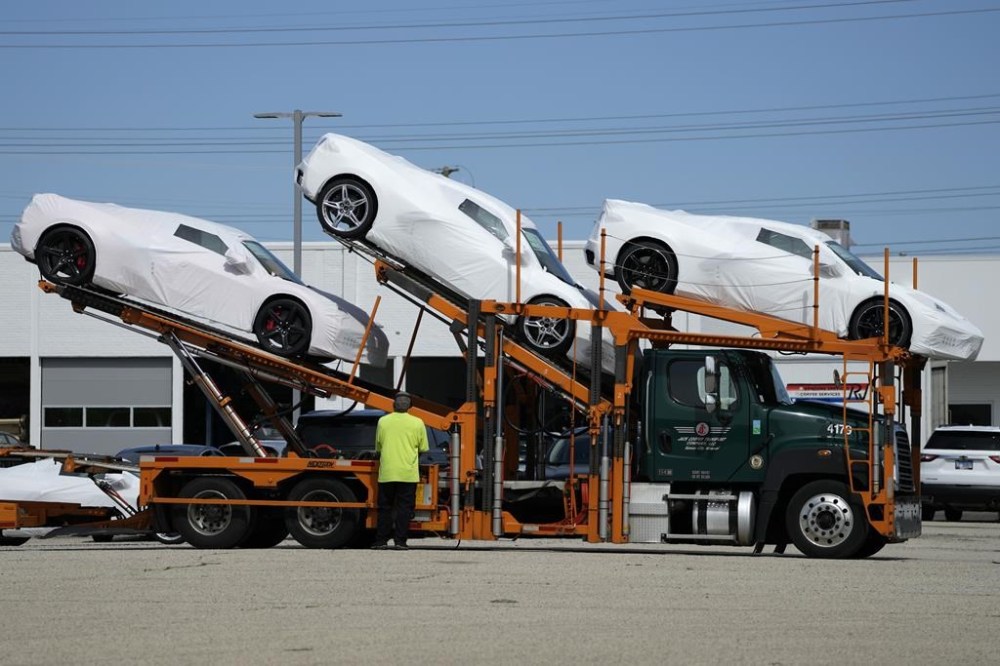
Despite the first-quarter slowdown, consumer spending, which accounts for around 70% of America’s economic output, rose at a 3.8% annual pace, the most in nearly two years and an encouraging sign of household confidence. Specifically, spending on physical goods, like appliances and cars, rose 6.3%, also the fastest growth rate since April-June of last year.
A cutback in business inventories shaved 2.1 percentage points off January-March growth.
The steady slowdown in the nation’s economic growth is a consequence of the Federal Reserve’s aggressive drive to tame inflation, with 10 interest rate hikes over the past 14 months. Across the economy, the Fed’s rate increase have elevated the costs of auto loans, credit card borrowing and business loans.
“Consumers — the critical lynchpin to the U.S. economy — are still spending, tapping into savings and credit to be able to do so,″ said Jim Baird, chief investment officer for Plante Moran Financial Advisors. “That can’t persist indefinitely though, raising the risk of a more pronounced slowdown or recession the longer the Fed’s battle with inflation drags on.”
With mortgage rates having doubled over the past year, the real estate market has already taken a beating: Investment in housing fell at a 0.2% annual rate from January through March. In April, sales of existing homes were 23% below their level a year earlier.
As the Fed’s rate hikes have gradually slowed growth, inflation has eased from the four-decade high it reached last year. Still, consumer prices were still up 4.9% in April from a year earlier — well above the Fed’s 2% target.
The economy’s slowdown is widely expected to lead to a recession later this year. In addition to higher borrowing rates, the economy’s other obstacles include a cutback in lending as banks conserve cash after three big bank failures in recent months.

There is also the looming risk that House Republicans will refuse to raise the statutory limit on what the government can borrow, if President Joe Biden and the Democrats don’t agree to sharp spending cuts. That would leave the Treasury unable for the first time to pay all its bills on time. Economists say a protracted debt default would cause downgrades of the U.S. credit and likely trigger a recession deeper and sooner than the one that is already expected.

For now, though, most sectors of the economy other than housing are showing surprising resilience. Retail sales have continued to rise. So have orders for manufactured goods.
Most significantly, the nation’s job market remains fundamentally solid. In April, employers added 253,000 jobs, and the unemployment rate matched a 54-year low. The pace of layoffs remains comparatively low. And job openings, though declining, are still well above pre-pandemic levels.
While the U.S. economy remains durable for now, Europe’s largest economy, Germany, has fallen into a downturn. Its economy shrank unexpectedly in the first three months of this year, marking a second quarter of contraction that is one definition of recession, data released Thursday shows. Germany’s GDP declined by 0.3% from January to March after a drop of 0.5% during the final quarter of 2022.
Though employment in Germany rose in the first quarter and inflation has eased, higher interest rates will keeping weighing on spending and investment, said Franziska Palmas, senior Europe economist for Capital Economics.