

Ukraine’s economy shows ‘resilience’ from Russian attacks, IMF says as it backs aid
Advertisement
Read this article for free:
or
Already have an account? Log in here »
To continue reading, please subscribe:
Digital Subscription
One year of digital access for only $1.44 a week*
- Enjoy unlimited reading on winnipegfreepress.com
- Read the E-Edition, our digital replica newspaper
- Access News Break, our award-winning app
- Play interactive puzzles
*Billed as $5.77 plus GST every four weeks. After 52 weeks, price increases to the regular rate of $19.95 plus GST every four weeks. Offer available to new and qualified returning subscribers only. Cancel any time.
To continue reading, please subscribe:
Add Free Press access to your Brandon Sun subscription for only an additional
$1 for the first 4 weeks*
- Enjoy unlimited reading on winnipegfreepress.com
- Read the E-Edition, our digital replica newspaper
- Access News Break, our award-winning app
- Play interactive puzzles
*Your next Brandon Sun subscription payment will increase by $1.00 and you will be charged $17.95 plus GST for four weeks. After four weeks, your payment will increase to $24.95 plus GST every four weeks.
Read unlimited articles for free today:
or
Already have an account? Log in here »
Hey there, time traveller!
This article was published 30/05/2023 (1237 days ago), so information in it may no longer be current.
FRANKFURT, Germany (AP) — Ukraine’s economy is showing “remarkable resilience” following Russian attacks on its electricity infrastructure, officials from the International Monetary Fund said Tuesday as they signed off on an initial loan of $900 million and raised their estimate for the country’s economic growth.
The outlook improved to 1% to 3% growth this year from minus 3% to plus 1% in an earlier assessment in March, said Gavin Gray, the IMF’s mission chief to Ukraine.
Inflation is coming down and the hryvna currency is stable despite the massive disruption of the war, Gray said. But he warned that the economic outlook faces “exceptionally high risks.”
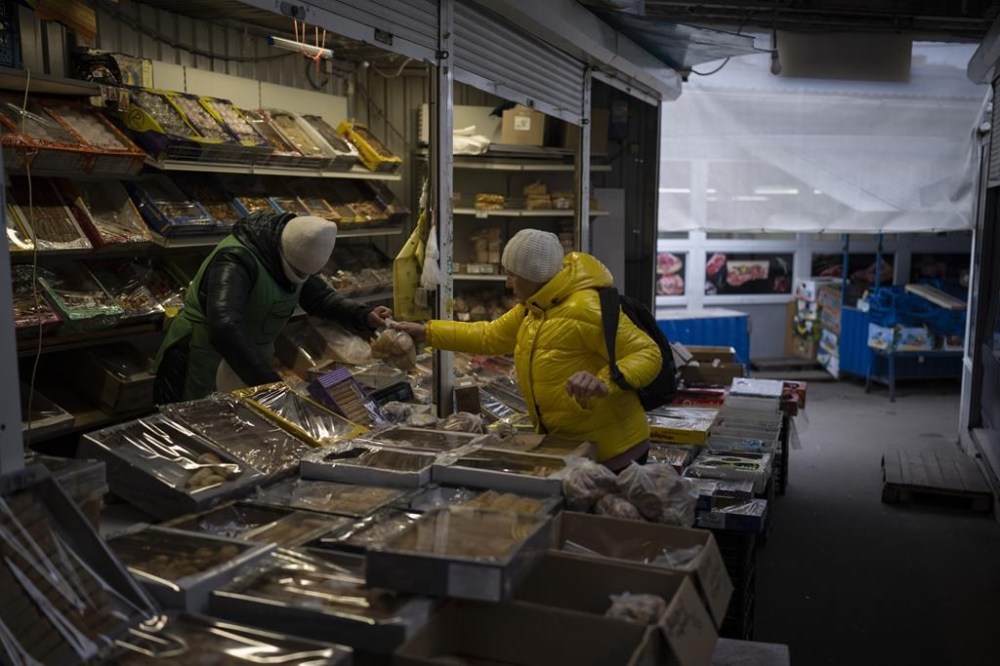
“Through the winter, Ukraine faced devastating attacks on its critical infrastructure, and missile strikes continue countrywide,” Gray said in an online news conference. “Despite this, the Ukrainian economy has shown remarkable resilience — economic activity in the first quarter rebounded strongly, as the energy system rapidly recovered from attacks on critical infrastructure, foreign exchange markets stabilized, and inflation started to decline decisively.”
The recovery was expected to strengthen “as the economy progressively adapts to war conditions, ” he said.
Ukraine’s economic output shrank by about 30% in 2022 after Russia invaded in February of that year.

The IMF said Ukrainian officials had met requirements for reforming economic policies under a first review of what is to be a $15.6 billion loan package over four years. The changes include drafting tax legislation aimed at improving revenue collection and assuring donors that are keeping the country’s state finances afloat that Ukraine will be able to pay its share of financial burdens.
Release of a first, $900 million installment of assistance was agreed at staff level but still requires approval of the IMF’s executive board.
The positive review was in sharp contrast to Ukraine’s pre-war IMF programs, which were marked by missed deadlines and a lack of progress in reforming the economy and resisting the domination of politically connected business figures known as oligarchs.
Ukrainian officials have been at pains to show they are cracking down on corruption as they seek membership in the European Union. The head of the country’s Supreme Court was arrested this month on bribery charges, while several senior officials, including front-line provincial governors and a deputy defense minister, lost their jobs over corruption allegations in January.
The IMF loan program is expected to open the way for an additional $115 billion in loans and grants from Ukraine’s allies, including the U.S., the European Union and other members of the Group of Seven rich democracies. The aid is intended to cover huge budget deficits caused by vastly higher military spending and the loss of tax revenue from areas occupied by Russian troops as well as to support economic reform efforts.