

China inks ‘strategic partnership’ with Palestinan Authority as it expands Middle East presence
Advertisement
Read this article for free:
or
Already have an account? Log in here »
To continue reading, please subscribe:

Digital Subscription
One year of digital access for only $205*
- Enjoy unlimited reading on winnipegfreepress.com
- Read the E-Edition, our digital replica newspaper
- Access News Break, our award-winning app
- Play interactive puzzles
*First annual payment billed as $205.00 + GST for one year. This annual subscription will automatically renew at $233.00 + GST every 52 weeks (10% off the regular annual price of $259.35). Offer available to new and qualified returning subscribers only. Cancel any time.
To continue reading, please subscribe:
Add Free Press access to your Brandon Sun subscription for only an additional
$1 for the first 4 weeks*
- Enjoy unlimited reading on winnipegfreepress.com
- Read the E-Edition, our digital replica newspaper
- Access News Break, our award-winning app
- Play interactive puzzles
*Your next Brandon Sun subscription payment will increase by $1.00 and you will be charged $17.95 plus GST for four weeks. After four weeks, your payment will increase to $24.95 plus GST every four weeks.
Read unlimited articles for free today:
or
Already have an account? Log in here »
Hey there, time traveller!
This article was published 14/06/2023 (1183 days ago), so information in it may no longer be current.
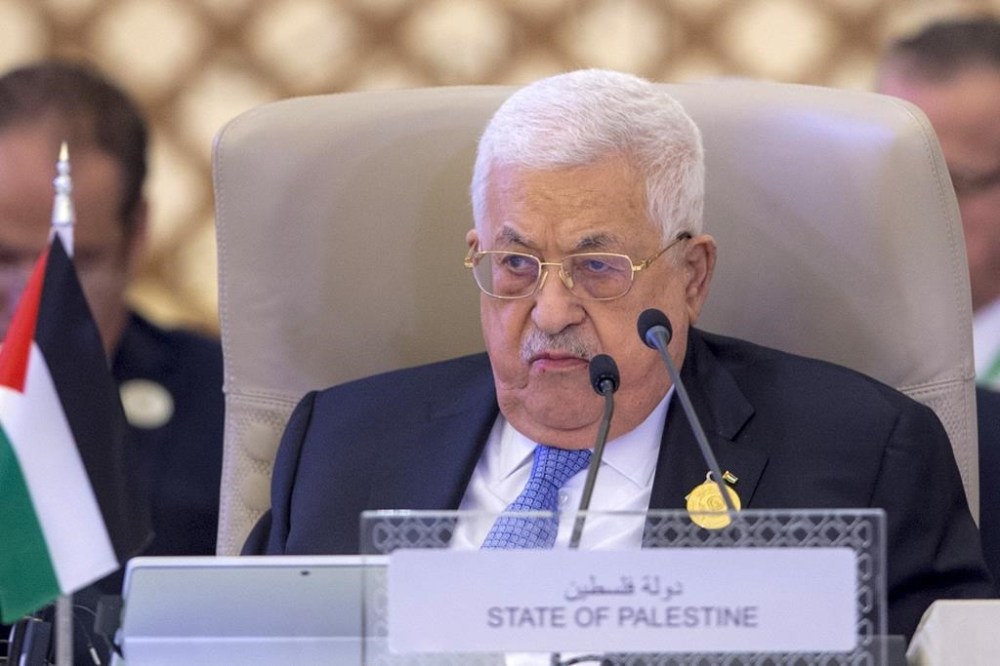
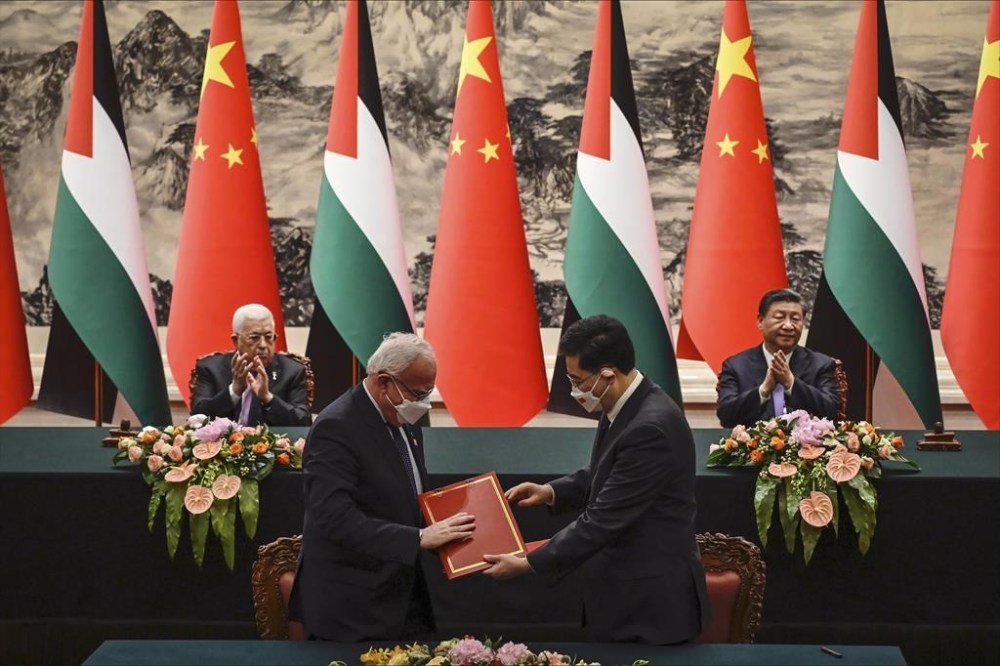
BEIJING (AP) — China said Wednesday that it established a “strategic partnership” with the Palestinian Authority during a visit to Beijing by Palestinian President Mahmoud Abbas.
The announcement marked another step in China’s campaign to gain political and economic influence in the Middle East, where it is competing with the United States.
China is seeking energy resources and markets for its military and civilian exports while also promoting its version of authoritarian government as part of joint challenge with Russia to the Western-led democratic world order.
Beijing has long maintained diplomatic ties with the Palestinian Authority, and it appointed a special envoy to meet with Israeli and Palestinian officials. But its experience in the region is mainly limited to construction, manufacturing and other economic projects.
Abbas was welcomed with full military honors at the Great Hall of the People in China’s capital.
“We are good friends and partners,” Chinese President Xi Jinping, who is head of the ruling Communist Party, told Abbas at the start of their meeting. “We have always firmly supported the just cause of the Palestinian people to restore their legitimate national rights.”
“China is willing to strengthen coordination and cooperation with the Palestinian side to promote a comprehensive, just and lasting solution to the Palestinian issue as soon as possible,” he said.
Xi called the strategic partnership an “important milestone in the history of bilateral relations,” but its financial details were not immediately disclosed.
Abbas said his administration was “looking forward to strengthening cooperation with China within the framework of its initiative” and securing investments.

“We especially appreciate the Chinese side’s commitment to financing a number of development projects presented by Palestine. We wish the speedy dispatch of technical delegations to implement these projects,” he said.
China relies on such partnerships to bolster its diplomatic posture and give large Chinese corporations a leg up when negotiating infrastructure deals in line with the government’s “Belt and Road Initiative,” which has left many struggling countries in deep debt to Chinese banks.
China also has sought close ties with Israel to expand its diplomatic presence and to gain access to high technology.
Abbas’ visit follows China’s hosting of talks between Iran and Saudi Arabia that resulted in the restoring of diplomatic relations between the two Mideast rivals and boosting China’s standing in the region.
The Riyadh-Tehran rapprochement is seen as a diplomatic victory for China as Gulf Arab states perceive the United States as slowly withdrawing from the wider region.