

Zimbabwe reports record tobacco sales, mostly to China, yet many farmers deep in debt
Advertisement
Read this article for free:
or
Already have an account? Log in here »
To continue reading, please subscribe:

Digital Subscription
One year of digital access for only $205*
- Enjoy unlimited reading on winnipegfreepress.com
- Read the E-Edition, our digital replica newspaper
- Access News Break, our award-winning app
- Play interactive puzzles
*First annual payment billed as $205.00 + GST for one year. This annual subscription will automatically renew at $233.00 + GST every 52 weeks (10% off the regular annual price of $259.35). Offer available to new and qualified returning subscribers only. Cancel any time.
To continue reading, please subscribe:
Add Free Press access to your Brandon Sun subscription for only an additional
$1 for the first 4 weeks*
- Enjoy unlimited reading on winnipegfreepress.com
- Read the E-Edition, our digital replica newspaper
- Access News Break, our award-winning app
- Play interactive puzzles
*Your next Brandon Sun subscription payment will increase by $1.00 and you will be charged $17.95 plus GST for four weeks. After four weeks, your payment will increase to $24.95 plus GST every four weeks.
Read unlimited articles for free today:
or
Already have an account? Log in here »
Hey there, time traveller!
This article was published 15/06/2023 (1213 days ago), so information in it may no longer be current.
HARARE, Zimbabwe (AP) — Zimbabwe has reported record tobacco sales as the southern African nation reestablishes itself as one of the leading growers in the world, and yet the small-scale Black farmers now selling their crop mostly to China are “heavily indebted” and seeing “minimal” benefits, according to an association that represents their interests.
Critics say the farmers are not benefitting as they should from Zimbabwe’s tobacco boom, largely because of a contract system that locks them into unfavorable loans and prices, often with Chinese companies operating under the state-owned China National Tobacco Corporation, the largest cigarette maker in the world.
China buys most of Zimbabwe’s tobacco to feed its huge market. While other companies and local merchants are also involved in the contract system in Zimbabwe, it is dominated by Chinese firms and their agents.
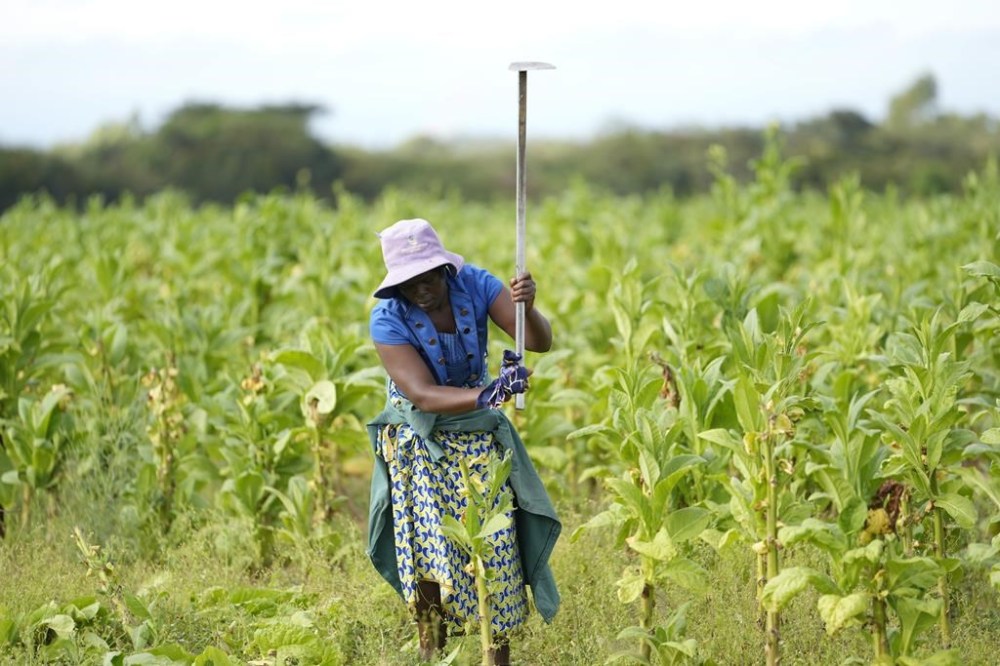
The Zimbabwean government announced Wednesday that the country, Africa’s top producer and among the top 10 in the world, has so far sold 261 million kilograms of tobacco since the selling season opened in March, more than the previous record of 259 million kilograms in 2019. It praised the numbers as proof of the success of a controversial and often violent land reform process that began more than 20 years ago. Starting in 2000, a few thousand white commercial farmers were forced off their land, which was then redistributed to tens of thousands of landless Black farmers.
Acting Information Minister Jenfan Muswere said that Black farmers given land under the reforms now made up 60% of the 150,000 farmers who grew tobacco this season. Overall, small-scale Black farmers contributed 85% of the crop, “demonstrating that government policies in the agriculture sector are sound and continue to bear fruit,” Muswere said.
But the government’s celebrations were offset by the Tobacco Association of Zimbabwe, which represents the farmers.
“This is a momentous achievement for the sector: it shows that farmers are working hard. But the benefits to farmers are minimal,” said George Seremwe, president of the association. “It is worrying that most farmers are heavily indebted.”
“We would be happier if this tobacco success story translates to improved livelihoods for farmers,” Seremwe told The Associated Press on Thursday.
Tobacco production in Zimbabwe plummeted from a high of about 240 million kilograms in 1998 to less than 50 million kilograms a decade later, according to government figures, following the eviction of white farmers who accounted for the majority of growers.
It has firmly rebounded in terms of production volume, and China’s involvement is largely responsible.
Under the contract system, the government-run China National Tobacco Corporation and its subsidiaries loan seeds, fertilizers, food and money to the Zimbabwean farmers. The farmers, in turn, are obligated to sell their tobacco crop to those firms or their agents, who generally set the price, although a regulatory body in Zimbabwe does provide a price guide.
Around 95% of Zimbabwe’s tobacco crop is financed through the contract system.
And while production is increasing, farmers say their position is not improving and the contract system is a debt trap as prices sometimes drop or they receive reduced inputs while still having to make the same repayments on loans. Farmers are now losing prized assets like livestock after failing to make their repayments, Seremwe said.

The situation for Zimbabwe tobacco farmers is set amid recent scrutiny of how China’s unforgiving lending tactics have brought hardship to some developing countries.
The Chinese embassy has defended the country’s role in reviving Zimbabwe’s tobacco production “by offering zero-interest loans and free tech-services” to farmers.
Yet authorities in Zimbabwe now seem to accept there are problems with the contract system, not least because most of the proceeds of tobacco sales leave the country to repay loans from foreign companies. The Zimbabwean government has promised to advance $60 million to farmers next season under a plan that seeks to increase local funding of the crop’s production from the current 5% to 70% by 2025.
___
More AP Africa news: https://apnews.com/hub/africa