

Business Council of Manitoba celebrates 25th anniversary
Advertisement
Read this article for free:
or
Already have an account? Log in here »
To continue reading, please subscribe:

Digital Subscription
One year of digital access for only $205*
- Enjoy unlimited reading on winnipegfreepress.com
- Read the E-Edition, our digital replica newspaper
- Access News Break, our award-winning app
- Play interactive puzzles
*First annual payment billed as $205.00 + GST for one year. This annual subscription will automatically renew at $233.00 + GST every 52 weeks (10% off the regular annual price of $259.35). Offer available to new and qualified returning subscribers only. Cancel any time.
To continue reading, please subscribe:
Add Free Press access to your Brandon Sun subscription for only an additional
$1 for the first 4 weeks*
- Enjoy unlimited reading on winnipegfreepress.com
- Read the E-Edition, our digital replica newspaper
- Access News Break, our award-winning app
- Play interactive puzzles
*Your next Brandon Sun subscription payment will increase by $1.00 and you will be charged $17.95 plus GST for four weeks. After four weeks, your payment will increase to $24.95 plus GST every four weeks.
Read unlimited articles for free today:
or
Already have an account? Log in here »
Hey there, time traveller!
This article was published 16/06/2023 (1188 days ago), so information in it may no longer be current.
A 25th anniversary celebration of the Business Council of Manitoba on Thursday was understated, well-organized, collegial and insightful.
That’s the way the BCM operates.
With a who’s who of the province’s business leaders on hand, including the CEO’s of all of the largest companies, as well as appearances by the mayor, the leader of the Opposition and a number of provincial cabinet ministers in one space in the second floor conference room of The Leaf, it was a classic low-key example of the way power works in Manitoba.
MIKAELA MACKENZIE / WINNIPEG FREE PRESS FILES
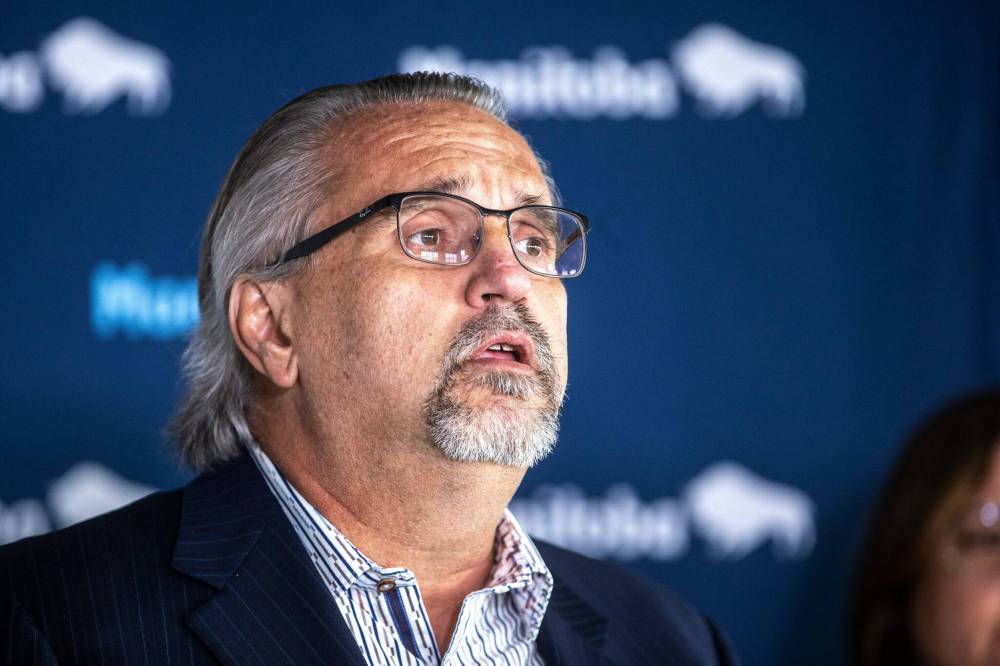
Mike Pyle, the Business Council of Manitoba’s current chair and the chair of Manitoba First Fund.
Formed in 1997 in the aftermath of the departure of the NHL Winnipeg Jets 1.0 when business leaders tried to come together to save the team, there was a realization that many of them — the BCM’s membership is drawn from the leadership of the largest employers in Manitoba who live in the province — were actually meeting each other for the first time.
Sandy Riley, who was part of one of the original organizing meetings with Art DeFehr, Arthur Mauro, the late Harold Buchwald and the late Kerry Hawkins, said there was a realization that in the ashes of the efforts to save the Jets, “there was no mechanism for the business community to coalesce” were it to play a role in other initiatives.
While others have co-opted it, it was Riley who coined the phrase that the success and actual existence of Winnipeg was a “collective act of will” of the people already here and that it continues to be the case.
The BCM’s stated reason for existence is to make Manitoba a preferred place to live, work and invest.
One after another, its members spoke of its non-partisan approach to encouraging all three levels of government to implement policy that would promote its goals.
As the BCM and the governments of the day became more comfortable with each other over time, the immediate past-chair, Darryl Levy, said meetings with the leaders of the opposition have now became part of the normal course of business for the organization.
Among its most consequential contributions over the years has been the implementation of the Provincial Nominee Program that has become the prime source of population and workforce growth for the province.
“If not for the Provincial Nominee Program we would have 185,000 fewer people living in the province,” said James Teitsma, the province’s minister of consumer protection and government services.
Chad Friesen, the CEO of Friesens Corp. of Altona, said his company’s experience is a good case study on its impact.
It would have been hard to operate a company with 660 employees in a town with a population of 4,500 people otherwise, he said.
“Over the last 15 years our business has changed dramatically as a result of immigration,” he said. “About 15 years ago we would have had a bunch of white Mennonites running the business. Today about 36 per cent of our employees were not born in Canada and we were responsible for bringing many of them, together with the Provincial Nominee Program, to Canada.”
The organization is not all about claiming responsibility for successes in the province, but the creation of the Manitoba First Fund, the first active venture capital operation in the province in 18 years, is undoubtedly one of the hallmarks of the organization’s activities.
“The Business Council has been working on this since just after the financial crisis in 2008,” said Mike Pyle, the BCM’s current chair and the chair of Manitoba First Fund.
While politicians all agreed it was important, he said they were terrified following the negative experience of the Crocus Investment Fund.
It was the “fund of funds” concept brought forward by the BCM that was eventually approved by the Stefanson government that has put up $100 million to be invested in approved venture capital shops that will leverage additional funds to invest in specific Manitoba companies. Pyle said its original stake will likely all be spoken for by the end of the year.

Bram Strain, the CEO of the organization — he’s only third person to hold that position after the late Jim Carr who led it for its first 15 years, followed by Don Leitch for seven years — said that while the organization has the word “business” in its title, about 50 per cent of its time and resources are spent on community wellness issues.
Over the years, it has provided about $8 million worth of awards to 2,000 Indigenous students in the province. It was one of the first organizations in the province to recognize the importance of the Indigenous community to the future prosperity of Manitoba.
And significant time and resources are now focused on dealing with downtown issues including homelessness, not something you might normally expect the most successful business people in the province would be engaged in.
But that’s the way the Business Council of Manitoba rolls.
martin.cash@freepress.mb.ca