

The end of scarcity?
Veteran financial adviser argues money creation has gone off the rails, but says blockchain may help set common people (economically) free
Advertisement
Read this article for free:
or
Already have an account? Log in here »
To continue reading, please subscribe:

Digital Subscription
One year of digital access for only $205*
- Enjoy unlimited reading on winnipegfreepress.com
- Read the E-Edition, our digital replica newspaper
- Access News Break, our award-winning app
- Play interactive puzzles
*First annual payment billed as $205.00 + GST for one year. This annual subscription will automatically renew at $233.00 + GST every 52 weeks (10% off the regular annual price of $259.35). Offer available to new and qualified returning subscribers only. Cancel any time.
To continue reading, please subscribe:
Add Free Press access to your Brandon Sun subscription for only an additional
$1 for the first 4 weeks*
- Enjoy unlimited reading on winnipegfreepress.com
- Read the E-Edition, our digital replica newspaper
- Access News Break, our award-winning app
- Play interactive puzzles
*Your next Brandon Sun subscription payment will increase by $1.00 and you will be charged $17.95 plus GST for four weeks. After four weeks, your payment will increase to $24.95 plus GST every four weeks.
Read unlimited articles for free today:
or
Already have an account? Log in here »
Hey there, time traveller!
This article was published 24/06/2023 (1114 days ago), so information in it may no longer be current.
Financial adviser and author Kristen Ragusin is an optimist when it comes to money.
Certainly, her newly published book’s title reflects her upbeat worldview: The End of Scarcity: The Dawn of the New Abundant World.
The book proposes a return to a simpler, kinder use of the almighty dollar, or coin, or even a tally stick (more about that later).
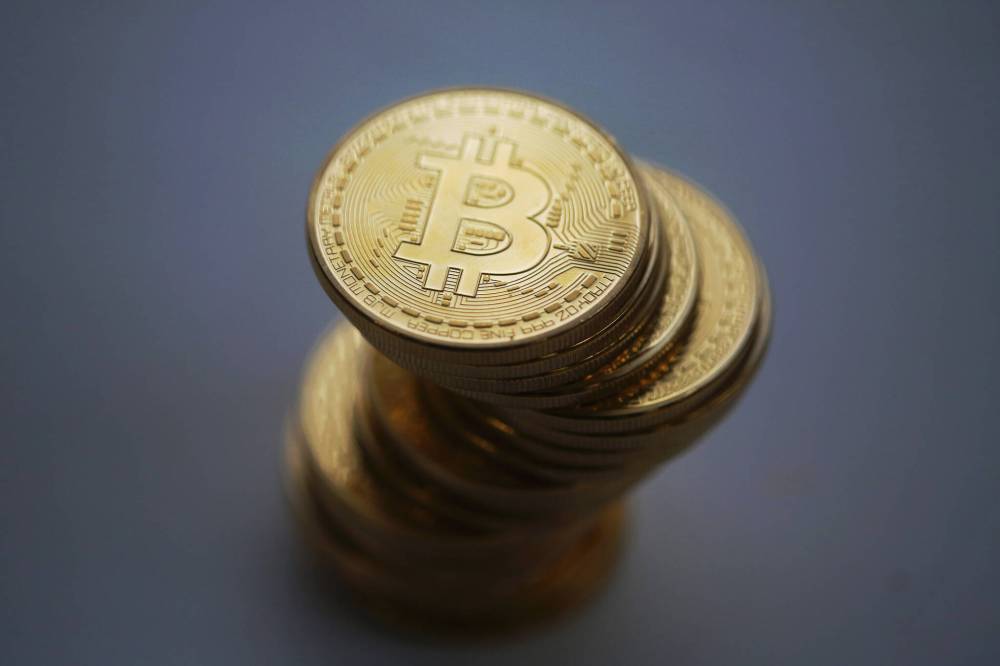
Chris Ratcliffe / Bloomberg files
After the speculative bubble in digital assets burst last year, markets have pummeled Bitcoin, the most valuable and well-known cryptocurrency.
“I have always seen money as a tool in society that was created to empower humanity,” says Ragusin, senior vice-president of investments at Raymond James, based in Boston.
“So, I had a very positive relationship with it, starting with my childhood.”
She recounts in a recent interview with the Free Press how, growing up, her dad would ask her a weekly question about money and if she answered correctly, she received her allowance.
That foundational financial know-how and curiosity about money led Ragusin, after graduating university, to embark on a career in the investment industry helping people use this tool to their advantage.
Yet as years passed, she realized helping people pursue the American Dream was fraught with obstacles.
Then came the financial crisis of 2008.
“I saw my worldview had been incorrect,” she says.
She looked at the causes: greed, over-speculation and deception by an industry she had trusted.
But all of those issues had a root cause, in her view: “How we perceive money today, and more pointedly how money is created.”
This journey of discovery is the basis of her new book and a prescription for the financial ills that afflict many of us.
Make no mistake; Ragusin still believes money can be a tool that helps. When used correctly, it allows us to exchange the value of our contributions with the contributions of others.
The problem today is that money in large part has become something else because of the way it comes into existence in our system, and in turn, this creates a false sense of scarcity.
Traditionally, scarcity refers to an imbalance: too much demand and not enough supply. And money helps reflect that value relationship
“But the root of the current problem of scarcity is we’re defining it as ‘living for the money’ or ‘not enough money,’” she says.
The reason for this unhealthy relationship is because of how money is created today.
“We may see our dollars as digital numbers in our accounts, and think money exists — that it’s a thing.”
But money, for the most part, is really a debt — often someone’s consumer debt (credit cards) or mortgage. Ragusin explains this is not news.
Money has long been created from debt — like a government issuing a bond.
What has changed is that money is increasingly created from consumption-based debt and less from debt incurred from productive contributions — like a loan to start a business.
This shift has created a culture of over-consumption, leading people to live beyond their means.
It doesn’t have to be this way, Ragusin contends.
There have been periods in history when money better reflected productive value, and societies generally flourished. She points to England from the Middle Ages to the Industrial Revolution when a common currency was tally sticks. These pieces of hazelwood had markings denoting value and were broken between two parties in a transaction. The longer part of the stick — the stock — went to the party giving an item to the other individual, who received the shorter end of the stick — the foil — which was a receipt. The break in the tally stick was unique so it was hard to forge — like an olden-days version of today’s digital encryption.
Tally sticks had their limitations, but during their use, England saw tremendous innovation, including the Magna Carta and parliamentary democracy.
Tally sticks are also notable because they bear similarities to a new economic revolution — cryptocurrency.
“To be clear, most cryptocurrencies are products of the current speculation-extraction culture, which is just saying, ‘Hey, here’s a cool idea. Let me see if I can make some money,’” Ragusin says.
“That comes from the current perspective of scarcity.”
What is promising, however, is the technology underpinning crypto: blockchain.
A decentralized digital ledger, blockchain technology is purportedly unalterable, allowing for verifiable transactions between two or more parties.
What makes it game-changing is how it circumvents central banking systems, returning money closer to its ideal use. According to Ragusin, that is “a service to help us value the exchanges ” for other goods and services.
Many examples of blockchain-based economic communities are cropping up today, including one used by soybean farmers in Argentina — a country upended many times by high inflation
It’s not just Argentine farmers. More farmers around the world are using a cryptocurrency called Agrocoin. Backed by agricultural commodities, it allows for peer-to-peer transactions and eliminates middlemen (like banks) and fees.
Of course, even as crypto and blockchain decentralize money control, their values are still expressed in currencies like the U.S. dollar, Ragusin says.
“After all, the Fed isn’t going to disappear because if it did, there would be chaos,” she says, noting the current hierarchical system has provided tremendous stability.

Yet competing units of exchange have always existed. Only today, blockchain allows alternative monies to be more viable, providing transparency and security across many jurisdictions.
Blockchain affords humanity alternatives to the current monetary framework, a system that fuels the hyper-consumerism driving the planet off an ecological cliff, Ragusin says.
So, while goods and services can indeed be scarce amid high demand, what isn’t in short supply is human potential. And money, when used right, can reflect this deep pool of human capital, she says.
“Money was never meant to be created as consumer debt, which is why many people feel they are on a hamster wheel,” Ragusin says.
“Rather it is the equal sign to what we’re producing, tapping into our human potential, which is really unlimited.”