Short-term rentals, long-term headaches With the City on the verge of regulating the informal accommodation sector, driven by digital platforms like Airbnb, some worry the bylaw will stifle the industry, while others fear it won’t go far enough to stem growing concerns
Read this article for free:
or
Already have an account? Log in here »
To continue reading, please subscribe:

Digital Subscription
One year of digital access for only $205*
- Enjoy unlimited reading on winnipegfreepress.com
- Read the E-Edition, our digital replica newspaper
- Access News Break, our award-winning app
- Play interactive puzzles
*First annual payment billed as $205.00 + GST for one year. This annual subscription will automatically renew at $233.00 + GST every 52 weeks (10% off the regular annual price of $259.35). Offer available to new and qualified returning subscribers only. Cancel any time.
To continue reading, please subscribe:
Add Free Press access to your Brandon Sun subscription for only an additional
$1 for the first 4 weeks*
- Enjoy unlimited reading on winnipegfreepress.com
- Read the E-Edition, our digital replica newspaper
- Access News Break, our award-winning app
- Play interactive puzzles
*Your next Brandon Sun subscription payment will increase by $1.00 and you will be charged $17.95 plus GST for four weeks. After four weeks, your payment will increase to $24.95 plus GST every four weeks.
Read unlimited articles for free today:
or
Already have an account? Log in here »
Hey there, time traveller!
This article was published 07/07/2023 (1192 days ago), so information in it may no longer be current.
A quick stay in a Winnipeg neighbourhood is just a click away.
Maybe it’s the downtown high-rise with big windows and expansive views, or the Fort Garry bungalow with the in-suite laundry, or the St. Boniface rooms with the hot tub.
For years, short-term rentals listed on Airbnb, Vrbo and other digital platforms have touted options throughout the city.
For years, they’ve been unregulated. But that’s about to change.
Approximate locations of short-term rental properties in Winnipeg. Blue dots show room rentals, while purple dots represent entire-home rentals. The locations shown are within a 500-metre radius of the true address, to preserve host and guest privacy. (AirDNA)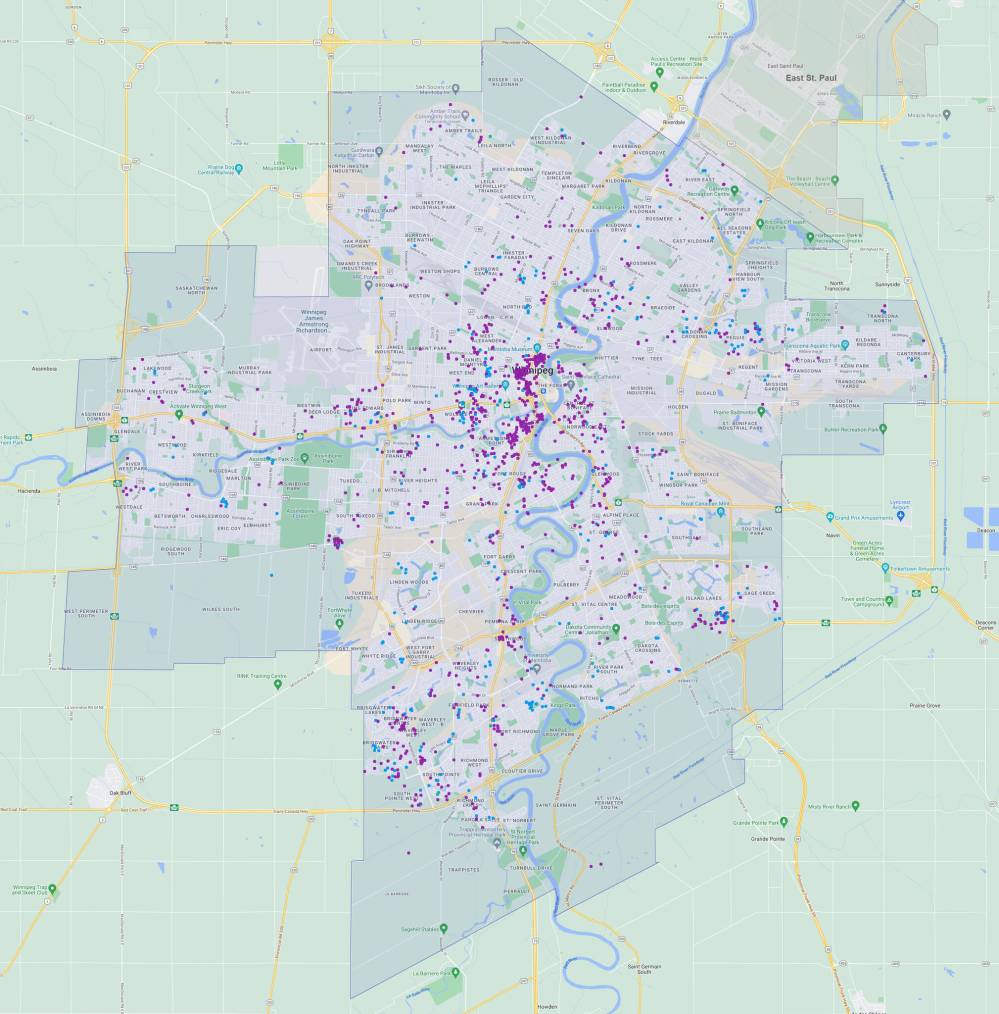
The City of Winnipeg is on the verge of passing a bylaw setting out rules for short-term rentals. Cities across the country have already done the same.
“It’s complex,” notes Jino Distasio, a University of Winnipeg professor who studies city planning.
And it’s divisive.
In one corner are Winnipeg residents tired of disruptions and illegal activity occurring in nearby rentals.
In another corner are operators who’ve poured much of their life’s savings into the industry, keeping their units organized and safe. They would be “devastated” by a mandated shuttering, one owner says.
In the middle are vacationers, business travellers and others — from Winnipeg and abroad — who use short-term rentals for a variety of reasons.
Right now, nobody can say how many are operating in the city. Estimates range from 900 to almost 1,400 — from individual rooms to entire homes — depending on who you ask. None are licensed by the city, none are part of an official database.
The Free Press spoke to a wide number of Winnipeggers affected by short-term rentals ahead of the bylaw’s passing, which could come into force by late summer or autumn.
Some worry the city’s proposed legislation will weaken the industry; others fear it won’t go far enough.
“The building basically turned into a hotel,” Anna Maniquiz said.
Mike Thiessen / Winnipeg Free Press Glasshouse Skylofts on Hargrave Street has become a ghost hotel in the eyes of some condo residents due to the proliferation of short-term rentals.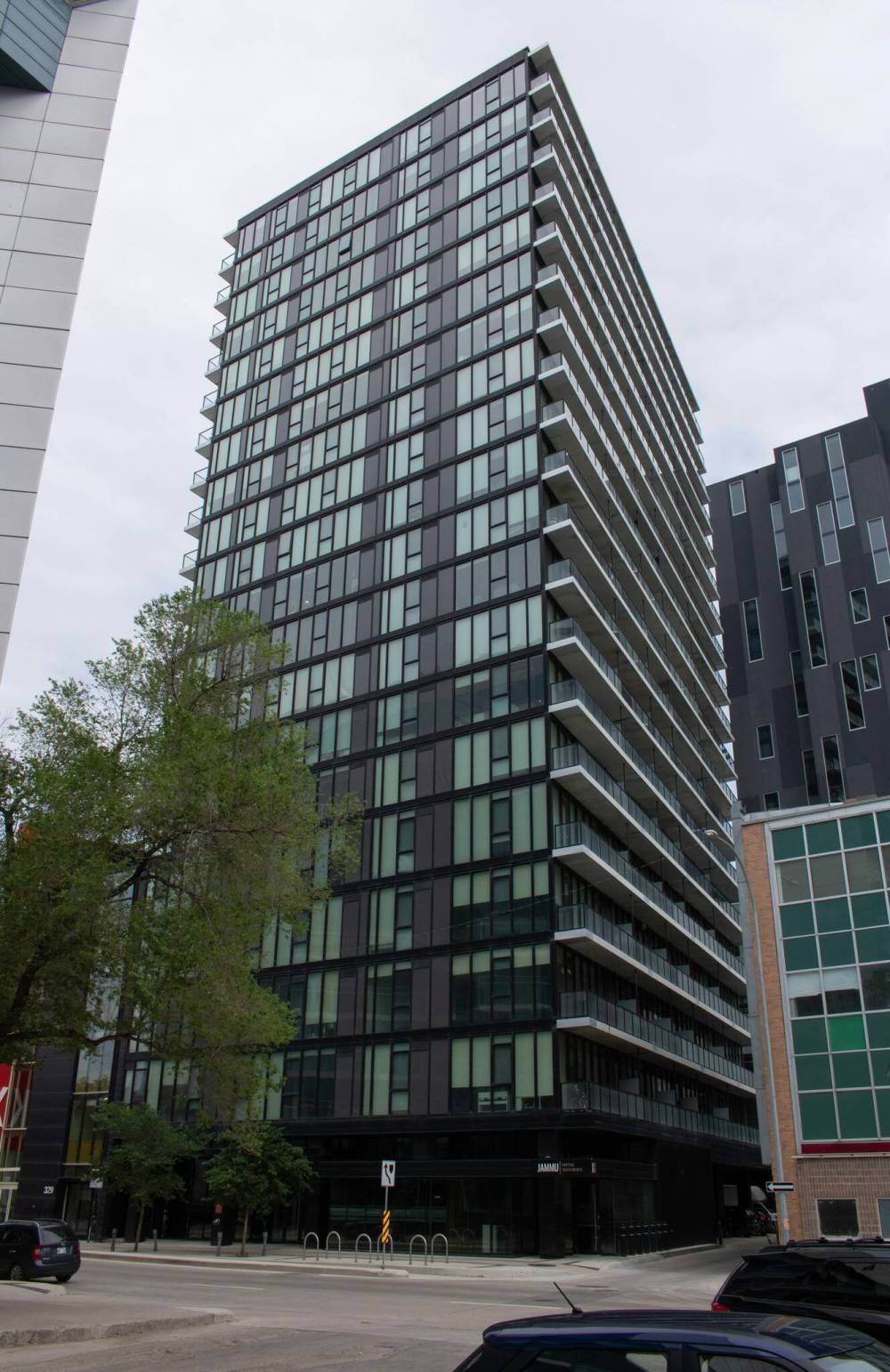
She’s standing on the top floor of the Glasshouse Skylofts, surrounded by fellow condominium owners and floor-to-ceiling windows overlooking downtown Portage Avenue.
In a few minutes, two of her friends descend 21 floors and walk across the street to the Canada Life Centre for a country music concert. It’s one of the perks of the Glasshouse — a concert, a festival, a trendy restaurant is often only a quick walk away, they said.
The high-rise at 311 Hargrave St. is a great location for downtown dwellers. However, it’s also become a magnet for short-term rentals, leading to frequent disruptions and criminal activity, residents said.
“When we first moved in, everyone really enjoyed it,” said Sinan Leylek, a member of the building’s condo board. “There was a lot of vibrancy and really a feeling of community. That community has eroded just by not knowing your neighbours.”
Some Glasshouse residents feel their safety is jeopardized by the constant flow of strangers. In one instance — on May 7 — police seized roughly $14,000 worth of cocaine, $10,000 in cash and trafficking paraphernalia from a short-term rental, the building’s developer confirmed.
”There was a lot of vibrancy and really a feeling of community. That community has eroded just by not knowing your neighbours.”–Sinan Leylek
In January, Winnipeg police raided a unit and seized more than $170,000 worth of street drugs, guns, cash and materials used to produce fentanyl, though that seizure involved a renter on a long-term lease, a spokesperson for Urban Capital, the building’s developer, wrote in an email.
As for the May ordeal, “the board is taking action to ensure this type of incident doesn’t repeat,” the spokesperson wrote.
Maniquiz said she has Glasshouse’s security team on speed dial and reports noise complaints frequently. She and other residents voiced multiple frustrations — from stolen packages to damaged property — and wonder why people don’t just book a room at the neighbouring Alt Hotel if they want to spend a night near the downtown arena.
“It’s hard to want to stay downtown when I feel that my safety is always at risk,” resident Sara Ly wrote in a letter to city council.
She’s among a group of Glasshouse residents wishing the city would restrict the rentals to primary residences, meaning owners could only rent out the homes they live in.
“It’s hard to want to stay downtown when I feel that my safety is always at risk.”–Sara Ly
Several Glasshouse listings on Airbnb indicate a rental company, or someone with multiple listings, renting out units. Glasshouse doesn’t know how many of its units are short-term rentals, a spokesperson said.
Most short-term rental operators at the Glasshouse are responsible and manage their units well, the Urban Capital spokesperson said. In fact, several Glasshouse hosts have near-perfect ratings on Airbnb and outline rules including noise curfews and no parties.
“We believe that the majority of STRs (short-term rentals) are not an issue, but the few with poor and neglectful management are,” the spokesperson wrote in an email. “The board has made finding a solution to rid the building of these problem units/managers our number one priority.”
Mike Thiessen / Winnipeg Free Press Towers Realty Group, which manages Glasshouse, said it works with unit owners and Manitoba’s Residential Tenancies Branch to address issues on a case-by-case basis. 
Towers Realty Group, which manages Glasshouse, said it works with unit owners and Manitoba’s Residential Tenancies Branch to address issues on a case-by-case basis.
The Residential Tenancies Act governs condo owners. Additionally, owners and tenants must also follow the condo corporation’s rules and regulations, noted Jason van Rooy, Towers Realty Group’s director of marketing and customer service.
“Our Property Managers are diligent in their efforts to aid the Board in maintaining a welcoming community for all owners and renters, regardless of the length of their lease or rental term, by working to ensure these Rules and Regulations… are enforced to the best of their ability,” van Rooy wrote in a statement.
Condo boards are responsible for establishing building rules and for resolving disputes. The boards, corporations and unit owners must ensure they comply with the Condominium Act, a provincial spokesperson said in a statement.
But the condo board is limited in what it can do, Leylek said. He described multiple obstacles, such as being unable to fine irresponsible owners and being bounced between various levels of government while seeking assistance in the past.
Additionally, he said, two of five Glasshouse condo board members operate short-term rentals, while a third is in favour of them operating in the condo.
Problematic short-term rental guests are around, but they’re not a reflection of the Glasshouse as a condominium, said Miguel Vega Arroyo, a resident on a long-term lease who loves the building.
The security is “amazing,” he added.
RUTH BONNEVILLE / WINNIPEG FREE PRESS Melanie Mitchell is president of the Manitoba Association of Short Term Rental Owners.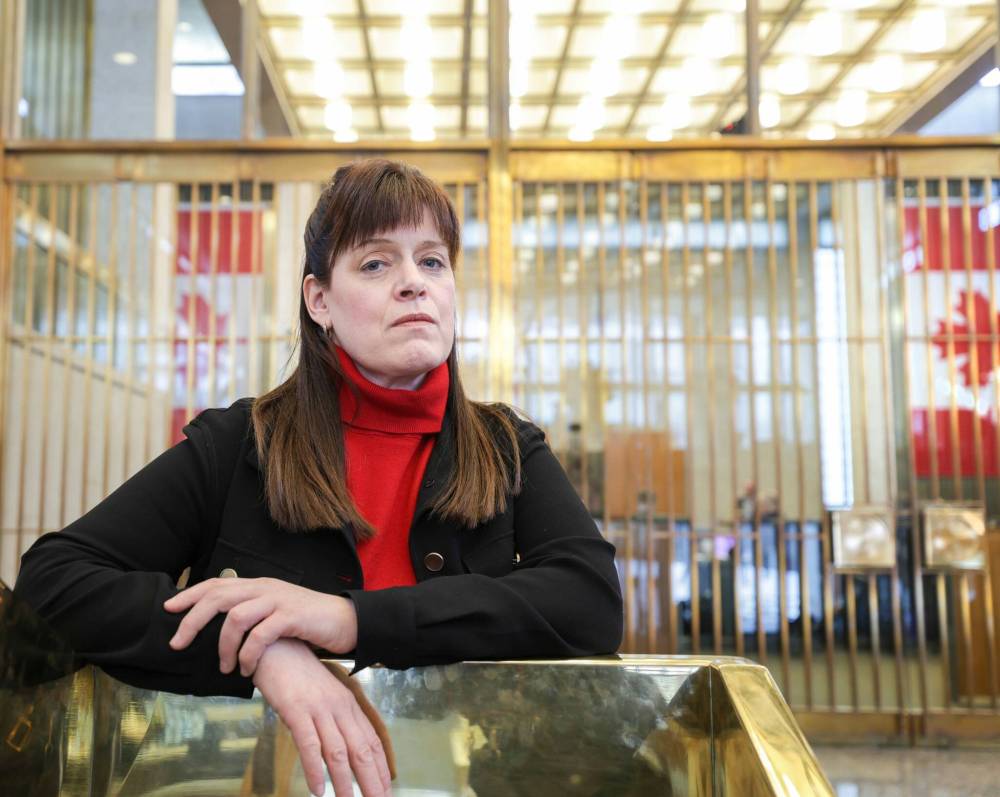
Issues at the Glasshouse do not represent the industry, said Melanie Mitchell, president of the Manitoba Association of Short Term Rental Owners.
“With the right condo bylaws and management, that should be able to be contained,” Mitchell said.
In February 2021, the Glasshouse condo board of the day tried to implement a rule where owners couldn’t lease their space for less than one month. After Glasshouse Skylofts and several owners, some of whom operate short-term rentals, requested a special meeting for a vote, the board sensed defeat and withdrew the rule, Leylek said.
Area city councillor Cindy Gilroy (Daniel McIntyre) supports short-term rentals, but doesn’t like how prevalent they are in one corner of her ward.
“We do want people to come to our city, and short-term rentals (are) a way that people utilize it, but we don’t want it condensed in one area,” Gilroy said. “We need (people) living downtown.”
Draft regulations to shape Winnipeg’s short-term rental industry were hotly debated by city council in February. The city conducted stakeholder meetings and two surveys before proposing new rules.
Ultimately, council voted to allow Winnipeg residents to rent out their own homes, plus three non-primary residential properties they’d owned since at least Feb. 23.
The ruling extends to wholly owned Winnipeg partnerships or corporations.
Once someone sells their non-primary house, that house can’t be used for short-term rentals unless the new owner lives there.
Further, short-term rental operators must pay a five per cent accommodation tax, much like the hotel industry does, should the draft legislation become official.
Related Articles
City to regulate, tax short-term rentals








City staff estimated 900 short-term rental operators have property in Winnipeg. The city could generate $279,000 annually through an accommodation tax, a report noted, using an estimate of 62 nights of rental per year and a rental rate of $100 per night.
Rentals would require annual licensing, operators would be subject to criminal record checks and there would be minimum safety requirements enacted.
Stays would be capped at 30 continuous nights, and the operator’s name and phone number would need to be posted on the property.
City staff is expected to report back to council with final recommendations in the coming weeks.
“Until council votes on the bylaw, it’s not a done deal… People can keep pushing,” said Coun. Janice Lukes (Waverley West), who voted against the draft rules.
Short-term rental legislation: Canadian provinces and cities
A number of Canadian cities and provinces have regulated their short-term rental industries. Below is a sample.
A number of Canadian cities and provinces have regulated their short-term rental industries. Below is a sample.
Quebec: For years, Airbnb hosts had to register with the provincial government. In May, Quebec proposed a new law, following a fire in Old Montreal where seven people died (some of whom were staying in illegal Airbnbs). Under the new law, rentals would need to show their provincial certificate’s number and expiry date in listings.
Rental platforms like Airbnb who don’t ensure compliance with the rules could be fined up to $100,000 per posting. Should the bill pass, Quebec will also create a public registry of tourist accommodations.
Halifax: Short-term rental owners must live in their rental property if they’re in a residential zone, beginning Sept. 1. The rule doesn’t apply to rentals in mixed-use or commercial zones. All have to register with the municipality.
Regina: All short-term rental operators must hold a valid licence and provide contact information to guests. If the average home vacancy rate in Regina drops below three per cent, the city will pause licence issuance until the vacancy rate rises above three per cent.
— Gabrielle Piché
Still, the city has done “a lot of work, a lot of studying, a lot of investigation,” Lukes said, adding she can’t fathom what would change.
In February, Mayor Scott Gillingham said the proposed bylaw should not punish responsible operators, but still address complaints some short-term rentals repeatedly disturb neighbours.
Council called on the provincial government to add conflict-resolution mechanisms to its Condominium Act for condo owners who raise issue with short-term rentals. It also called for the province to specify arrangements between landlords and tenants, regarding short-term rentals, in the Residential Tenancies Act.
Consumer Protection and Government Services Minister James Teitsma was not made available for an interview.
“The province will review any proposals put forth by our municipal partners,” a provincial government spokesperson wrote in a statement. “Currently they are able to regulate activity through by-laws on a municipality-by-municipality basis.”
Kevin Barske rethought his investment strategy upon reading Winnipeg’s draft legislation.
His company, NuLeaf Ventures Inc., has hosted short-term renters in a River Heights bungalow since February 2022.
“I think (the new rules are) a little bit shortsighted,” Barske said. “If they try to… limit the amount of current rentals that are there, that’s going to wipe out a good portion of the industry in one swoop.”
As of May, Winnipeg had 1,373 active short-term rental listings, according to AirDNA data. AirDNA is a short-term rental data analytics provider that tracks rentals using data from Airbnb and Vrbo, alongside information from hosts.
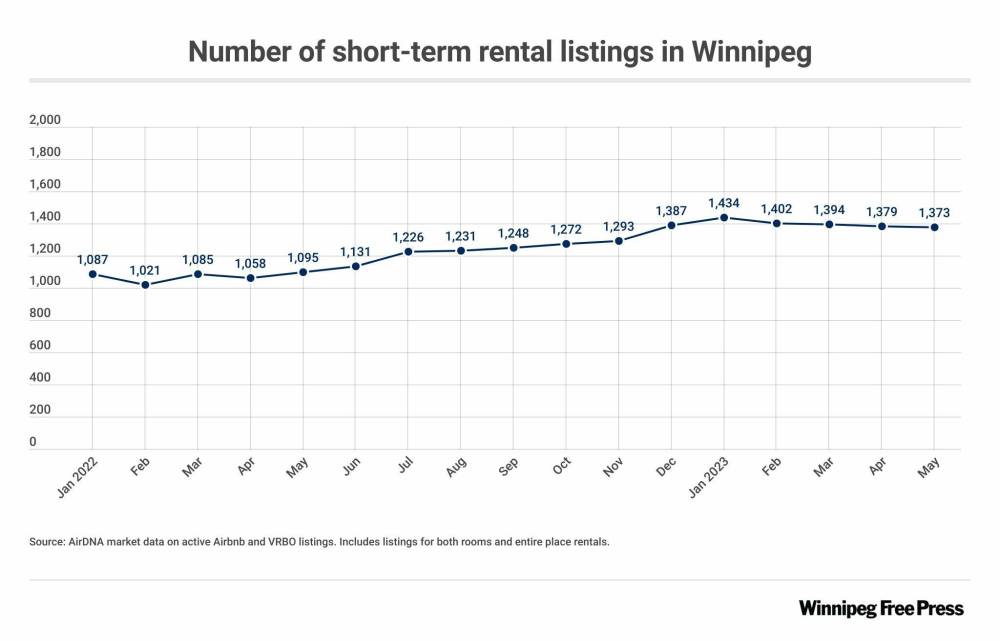
It does not track how many listings are primary residences. However, just 31 per cent of Winnipeg rentals were available more than half the year over the past 12 months, said Madeleine Parkin, AirDNA’s public relations specialist.
Business professionals, construction workers and families waiting for repairs on their own homes filter through NuLeaf’s one-storey. Recently, a corporate executive stayed for 75 nights straight while completing work in Winnipeg, Barske said.
“They’re obviously not there to party,” he said. “As somebody who owns a several-hundred-thousand-dollar investment property, I don’t know why you would want to cater to people who are going to party… and trash your investment.
“That’s not who I would like to attract into my units.”
Council’s proposed 30-night cap on short-term stays doesn’t make sense, Barske argued.
He’s fine with regulation and paying an accommodation tax. However, he’d like to operate rental units anywhere in the city, without a cap on the number or location. In the meantime, he’s stopped buying homes for short-term rentals.
Mike Deal / Winnipeg Free Press Kevin Barske, president of NuLeaf Ventures, outside one of his short-term rental properties on Borebank Street, says he’s opposed to a cap on the number of rental units one can operate in the city.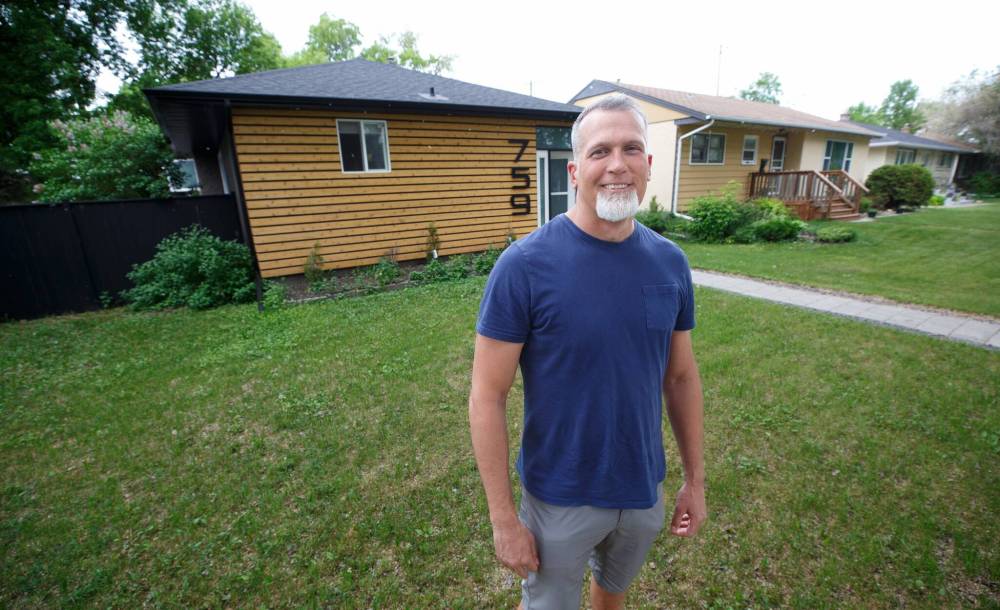
He’s joined by at least 800 people who signed a petition the Manitoba Association of Short Term Rental Owners circulated. Signees rejected caps on nights stayed per visit and the number of units an entity can own, among other things.
Michael Tyas was one signee. He says Airbnb hosting made home ownership affordable for him.
“We are living in a very different world than the past generation,” Tyas said. “I purchased my home specifically with short-term rentals in mind.”
Two of his bedrooms are rentable. He’s hosted for seven years, accepting immigrants and students in Winnipeg.
“They can talk to me about their experience, and I can help to guide them (in the city),” said Tyas, who lives in a downtown home. “I provide turnkey accommodations… I think that it’s an undervalued asset that the city doesn’t seem to appreciate.”
The average short-term rental cost $121.39 per night in May, or $145.27 when looking at entire properties for rent, according to AirDNA. A daily hotel stay cost $143 on average last year and is forecasted to cost $152 this year, CBRE data show.

Tyas has film crew members staying at his house, many of whom will exceed a month-long stay. Putting a 30-day cap on continuous short-term rental stays would create “an arbitrary booking accommodation plan where (crew members) would have to hop around from listing to listing,” Tyas later wrote in an email.
Tyas also doesn’t understand why Winnipeg residents renting rooms to a short-term market would need to pay licensing fees and extra taxes when people with roommates do not.
More than 25 per cent of Winnipeg short-term rentals are private rooms, according to AirDNA.
Tyas has used the revenue generated through rentals to create “curb appeal” at his house and erect a back deck — projects he wouldn’t have been able to tackle otherwise, he said.
On regulation: Manitoba Association of Short Term Rental Owners
Melanie Mitchell, president of the Manitoba Association of Short Term Rentals, has a number of suggestions for prioritizing safety in short-term rentals.
Melanie Mitchell, president of the Manitoba Association of Short Term Rentals, has a number of suggestions for prioritizing safety in short-term rentals:
– Ensuring properties have exterior cameras to deter trafficking incidents and parties.
– Having contact information readily available for guests. Mitchell said she gives renters her cellphone number and email address, along with her partner’s contact information. The couple visits the property regularly.
– Requiring buildings be up to code as per city housing guidelines. Also, equipping rentals with working fire extinguishers, fire alarms and carbon monoxide detectors.
– Making short-term rental operators pay a small fee to government so government officials can enforce the industry’s safety standards.
– Establishing a parking plan for visitors.
— Gabrielle Piché
Mitchell, of the Manitoba Association of Short Term Rental Owners, said she supports regulation, “fair” taxation and prioritizing safety, and believes the city appears to be taking into consideration all perspectives.
“(The proposed legislation) has come a long way in shooting for fairness. It’s come leaps and bounds in terms of trying to negotiate a settlement that makes sense for everyone involved,” Mitchell said.
The grandfathering of three non-primary residences is “a step in the right direction,” but could lead to a steep decline in Winnipeg’s short-term rentals in the coming decades, Mitchell said.
“At least it’s more humane than shutting people who’ve got their life savings… invested in this,” she said. “A loss like that would devastate my family.”
The industry isn’t perfect, Mitchell added. Problems can arise when a long-term renter rents out a dwelling for short-term rentals. The practice is called rental arbitrage.
“I believe if someone owns the furniture and owns the suite, they’re going to be a little bit more stringent on who they allow in,” Mitchell said.
Laurie Foster is tired of watching strangers’ vehicles roll into the driveway across the street.
“There’s no way in the world that what operates as a daily rental motel or hotel should be allowed in the heart of a residential area,” Foster said.
RUTH BONNEVILLE / WINNIPEG FREE PRESS Laurie Foster sits in his front yard in the residential neighbourhood of Waverley Heights. Foster said bought his home with the expectation he wouldn’t be near any commercial operations.
He bought his Waverley Heights home with the expectation he wouldn’t be near any commercial operations — but that’s what short-term rentals are, he argues.
“There’s nothing about the… short-term rental operation that enhances our neighbourhood in any way,” Foster said. “We live with the consequence of their action, and we get no benefit out of it.”
He believes any tax the city implements on short-term rentals will be nullified by the costs of enforcing rules.
”“There’s nothing about the… short-term rental operation that enhances our neighbourhood in any way. We live with the consequence of their action, and we get no benefit out of it.” –Laurie Foster
Lukes, the elected representative for his ward, is one of six councillors to vote against the proposed legislation.
“I didn’t support that. I wanted to see short-term rental units that were owner-occupied,” Lukes said. “(The industry has) morphed into these mini-businesses where people don’t even live in their house.
“A lot of these short-term rentals, they degrade the fabric of the neighbourhood.”
RUTH BONNEVILLE / WINNIPEG FREE PRESS The home across the street from Foster is currently used for short-term rental accommodation. 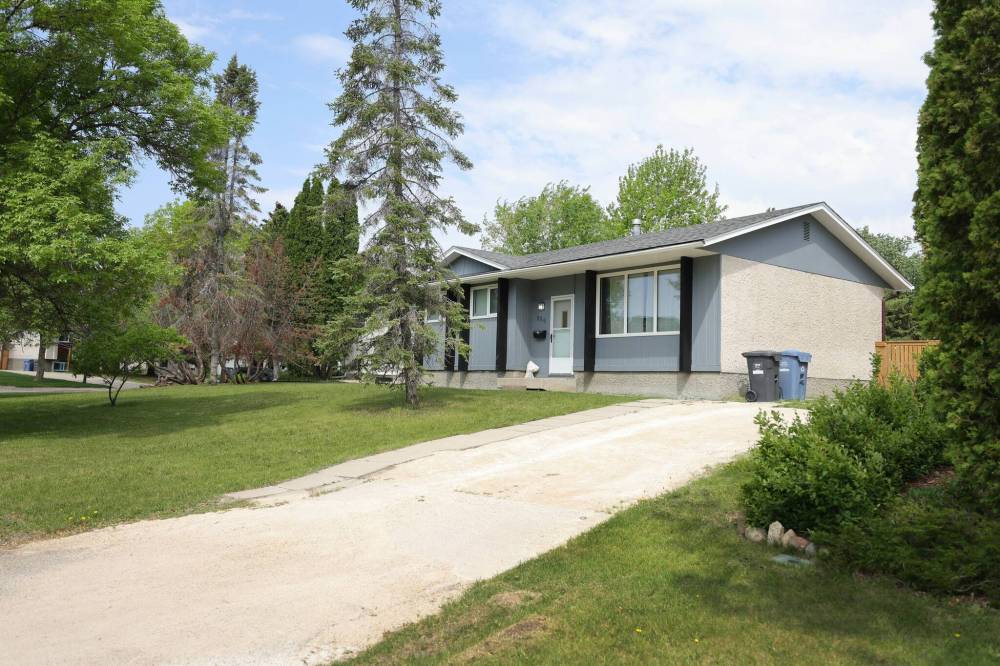
Mandated licensing and new regulations will make a difference because there will be repercussions if short-term rentals are disruptive and law-breaking, she said.
“It’s much more monitored… I like that,” Lukes said. “It’s totally been the wild west up until this point.”
The people operating “party houses” are the ones needing to worry, said Coun. Gilroy, who was among eight politicians to vote in favour of the draft rules.
“There’s a need for (short-term rentals). People do like to stay (in them),” she said. “It’s just, how do we control them and make sure that they’re not all situated in one area, especially within the downtown?”
Tanya McDougall and her mother bring raisin bannock every time they visit Winnipeg. They gift the bread to Mitchell, who’s evolved from Airbnb host to friend.
“I try to stick with her… because I’ve established a good working relationship with her,” said the St. Theresa Point First Nation resident. “She’s been so friendly and accommodating and approachable.”
SUPPLIED Tanya McDougall uses Airbnb when she visits Winnipeg from St. Theresa Point First Nation.
The host — and renting a house — has made Manitoba’s capital “not as scary” to McDougall, who said she’s experienced racism in the past.
She flies in monthly for work and medical appointments. Once, she corralled a group of St. Theresa Point students in the city for a track meet. Renting a house was easier than juggling three hotel rooms, she said.
“It’s more comfortable, it’s more affordable… it doesn’t have that caged-in feeling,” McDougall said.
She’d like Winnipeg to continue offering short-term rentals.
“Imagine checking into a hotel and you’re… not being welcomed. Even the tone of voice, you’re treated in a way where you’re lesser than,” McDougall said. “I always feel that I’m being stereotyped… When I met Melanie and her husband, they didn’t judge me based on that.”
“We’re not competing with hotels,” Mitchell said. “It’s an entirely different client and an entirely different experience.
“Not everyone wants the kitschy mom-and-pop type of stay in someone’s home. Some people just want to check into the hotel.”
But many are operating like hotels and should be taxed as such, said Michael Juce, president of the Manitoba Hotel Association.
“Up until the City of Winnipeg… bylaw passes, that five per cent (accommodation tax) is something that our hotels are collecting on their desk, but not short-term rentals,” Juce said. “I think frustration is just a fair word to put it.”
Hotels’ property taxes are based on the income their property generates. The Manitoba Hotel Association would like to see the same model extended to short-term rentals.
Last year, hotel room revenue in Manitoba was more than ninefold that of short-term rentals. The rentals generated roughly $53.7 million over 294,860 nights booked, according to AirDNA data that Travel Manitoba shared.
By comparison, the hotel industry pulled roughly $490 million in room revenue.
“While we appreciate the benefits of short-term rentals, the hotel industry is a critical component of the tourism industry and our focus is on supporting its full recovery from the effects of the pandemic years,” Linda Whitfield, Travel Manitoba’s vice-president of communications, wrote in a statement.
Meanwhile, the effects of short-term rentals on the province’s housing market haven’t yet been studied locally. The Manitoba Real Estate Association hasn’t undertaken research into the industry and couldn’t provide a data-based comment on its impact.

Forty-two per cent of Winnipeg short-term rentals were available 90 days or less over the past year, meaning they’re likely run by homeowners who temporarily leave, AirDNA’s Parkin wrote in an email.
Last May, there were 1,052 short-term rental listings advertising entire homes, accounting for 65 per cent of the listings, AirDNA data show.
A 2019 McGill University study found Airbnb has likely removed 31,100 units from Canada’s long-term rental housing market.
The Winnipeg Police Service didn’t have statistics on how many incidences of crime were linked to short-term rentals.
“The turnover of guests can be quite high, so property owners may not always be able to screen and monitor the guests’ activities, which, at times, could potentially be nefarious,” said Const. Dani McKinnon. “There’s not really a lot of onsite management overseeing many of these properties.”
Police have stopped large gatherings that had become out of control in unoccupied short-term rentals. Some renters use false identities, McKinnon added, so it’s difficult to know if the individual has good intentions.
“I don’t want to say too much disparaging about the short-term rentals, because obviously there’s a lot of very reputable companies,” she said. “They’re very popular to rent as an alternative accommodation.”
Distasio suspects there’s no perfect solution to regulating the industry.
“It’s becoming more polarizing,” the geography professor said. “We’re actually being drawn into either the very destructive examples — the parties, the damage, the noise — versus, do they provide an opportunity for some people to have affordable… rental or vacation housing?”
Winnipeg lacks affordable housing. On one hand, short-term rentals could take away from that market, Distasio said. On the other hand, the industry fills a gap for those who aren’t looking for hotels or long-term stays, he said.
“The best-case scenario… is for greater regulation, not less, in terms of the requirements for a short-term rental,” he said. “We want people to have a good stay in Winnipeg.”
gabrielle.piche@winnipegfreepress.com

Gabrielle Piché reports on business for the Free Press. She interned at the Free Press and worked for its sister outlet, Canstar Community News, before entering the business beat in 2021. Read more about Gabrielle.
Every piece of reporting Gabrielle produces is reviewed by an editing team before it is posted online or published in print — part of the Free Press‘s tradition, since 1872, of producing reliable independent journalism. Read more about Free Press’s history and mandate, and learn how our newsroom operates.
Our newsroom depends on a growing audience of readers to power our journalism. If you are not a paid reader, please consider becoming a subscriber.
Our newsroom depends on its audience of readers to power our journalism. Thank you for your support.