

City councillor seeks industry regulation for short-term rentals
Advertisement
Read this article for free:
or
Already have an account? Log in here »
To continue reading, please subscribe:

Digital Subscription
One year of digital access for only $205*
- Enjoy unlimited reading on winnipegfreepress.com
- Read the E-Edition, our digital replica newspaper
- Access News Break, our award-winning app
- Play interactive puzzles
*First annual payment billed as $205.00 + GST for one year. This annual subscription will automatically renew at $233.00 + GST every 52 weeks (10% off the regular annual price of $259.35). Offer available to new and qualified returning subscribers only. Cancel any time.
To continue reading, please subscribe:
Add Free Press access to your Brandon Sun subscription for only an additional
$1 for the first 4 weeks*
- Enjoy unlimited reading on winnipegfreepress.com
- Read the E-Edition, our digital replica newspaper
- Access News Break, our award-winning app
- Play interactive puzzles
*Your next Brandon Sun subscription payment will increase by $1.00 and you will be charged $17.95 plus GST for four weeks. After four weeks, your payment will increase to $24.95 plus GST every four weeks.
Read unlimited articles for free today:
or
Already have an account? Log in here »
Hey there, time traveller!
This article was published 22/04/2021 (2001 days ago), so information in it may no longer be current.
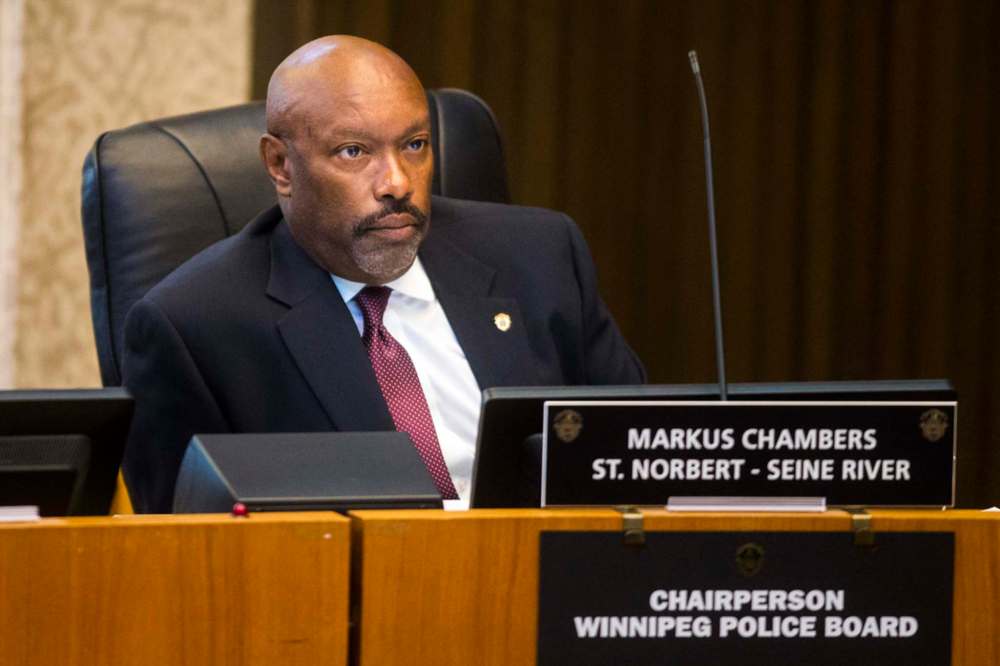
The hotel industry and short-term rental companies, such as Airbnb Inc., are on uneven ground — and that needs to change, says Winnipeg Coun. Markus Chambers.
“We need to level the playing field,” he said Wednesday, calling for the city to examine whether it should require short-term rentals to pay Winnipeg’s five per cent accommodation tax.
He also asked for the city to review the accommodation industry’s standards and regulations, in view of its booming growth in recent years.
“In 2015, (local) revenue from Airbnbs and short-term rentals was $1.5 million. In 2018, it was $16 million,” said Chambers. “The industry has exploded, but it’s created unintended effects as well.”
People across the city, he said, have complained about being neighbours to houses, condos and apartments used primarily as short-term rentals.
“This isn’t what they signed on for — making a major investment in their home and living next door to, basically, a very transient population… It’s a security issue,” Chambers said.
“We need to look at some standards and practices and regulations that regulate that industry a little better.”
Because short-term rentals offer “substantively the same services” as hotels and motels, the councillor said they should be charged the same tax.
The hotel industry has paid the accommodation tax since it came into effect in 2008.
Once a month, hotels and motels pay a sum equal to five per cent of their bookings, with a few exceptions — one being “small bed-and-breakfasts and similar accommodations with three rooms or less for rent.”
The accommodation tax supports Destination Winnipeg, the downtown convention centre, and a host of other organizations, projects and events designed to bolster tourism.
Scott Jocelyn, president of the Manitoba Hotel Association, said he’s been pushing city council to apply the tax to short-term rentals for years.
“For us, it’s about tax fairness,” he said, adding the hotel industry goes through rigorous licensing and health and safety processes.
Short-term rentals, such as Airbnb properties, aren’t subjected to any of that, yet they run essentially the same business, Jocelyn said.
If people want to rent out their homes a few times a year, said Jocelyn, he has no problem with that — it’s when they set up businesses in residential areas that it becomes an issue.
He points to Toronto as a beacon for potential new regulations. Beginning in September 2020, all short-term rentals operators had to register their properties with the city. These operators pay an accommodation tax of four per cent.
Notably, Torontonians can no longer list properties as short-term rentals that are not a principal residence.
This last regulation is a particular sticking point for Cam Finnson, owner of Nest Host, a short-term rental company that deals mostly with corporate housing (such as lodging for visiting film crews) but also rents out spaces on Airbnb.
The company manages dozens of properties.
“It would essentially kill the company,” he said, adding it would depend on how the regulations shape up, if they come to be.
“There are 300 to 400 other owners that have rental properties that essentially do this for extra income or they’re renting,” Finnson said.
Regulations such as Toronto’s would leave these local businesses in a tough spot, Finnson said, adding, however, he is in favour of the accommodation tax being applied to short-term rentals.

Chambers, Jocelyn, and Finnson all said they want to see the industry working on common ground.
But Finnson said he’d want the city to promote short-term rental companies like his as viable accommodation for travellers, in the same way it does for hotels.
Chambers said paying the tax could “legitimize” short-term rentals as an industry.
If submitted to the five per cent tax, said Finnson, his company would deal with it the same way hotels do: add it to the taxes already tacked onto the rented space, which the customer would pay.
fpcity@freepress.mb.ca
Related Articles
With the City on the verge of regulating the informal accommodation sector, some worry bylaw will stifle the industry
Advertisement Advertise With Us
Advertisement Advertise With Us