

Cattle can help preserve soil, water quality
Advertisement
Read this article for free:
or
Already have an account? Log in here »
To continue reading, please subscribe:

Digital Subscription
One year of digital access for only $205*
- Enjoy unlimited reading on winnipegfreepress.com
- Read the E-Edition, our digital replica newspaper
- Access News Break, our award-winning app
- Play interactive puzzles
*First annual payment billed as $205.00 + GST for one year. This annual subscription will automatically renew at $233.00 + GST every 52 weeks (10% off the regular annual price of $259.35). Offer available to new and qualified returning subscribers only. Cancel any time.
To continue reading, please subscribe:
Add Free Press access to your Brandon Sun subscription for only an additional
$1 for the first 4 weeks*
- Enjoy unlimited reading on winnipegfreepress.com
- Read the E-Edition, our digital replica newspaper
- Access News Break, our award-winning app
- Play interactive puzzles
*Your next Brandon Sun subscription payment will increase by $1.00 and you will be charged $17.95 plus GST for four weeks. After four weeks, your payment will increase to $24.95 plus GST every four weeks.
Read unlimited articles for free today:
or
Already have an account? Log in here »
Hey there, time traveller!
This article was published 15/07/2023 (1158 days ago), so information in it may no longer be current.
When Sean LaBrie and his partner Holly decided to buy a ranch as a side gig from his day job as a City of Calgary police officer 18 years ago, he initially thought it was all about the cows.
However, if you talk to him now, it soon becomes clear that it’s not the cows that get him revved up about his mid-life dive into agriculture, it’s growing great forage while preserving soil and water quality.
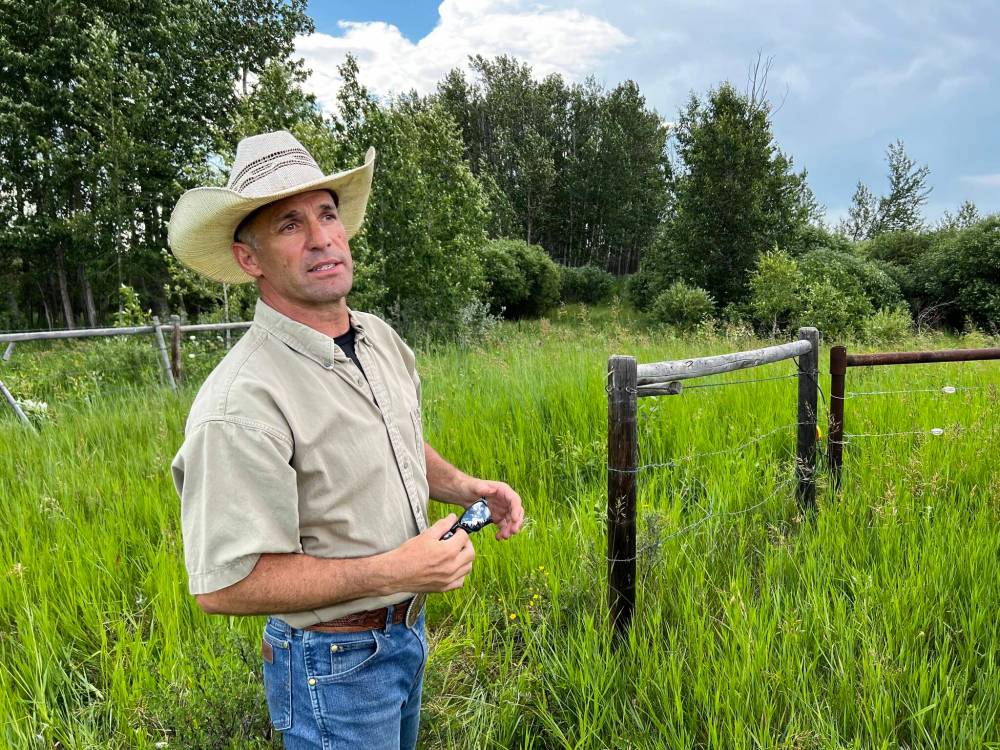
“The cows help me manage the grass… but I’m a grass guy,” he said as he led a tour of visiting farm writers on a trek past the fenced-off creek running through his ranch near Didsbury, Alta.
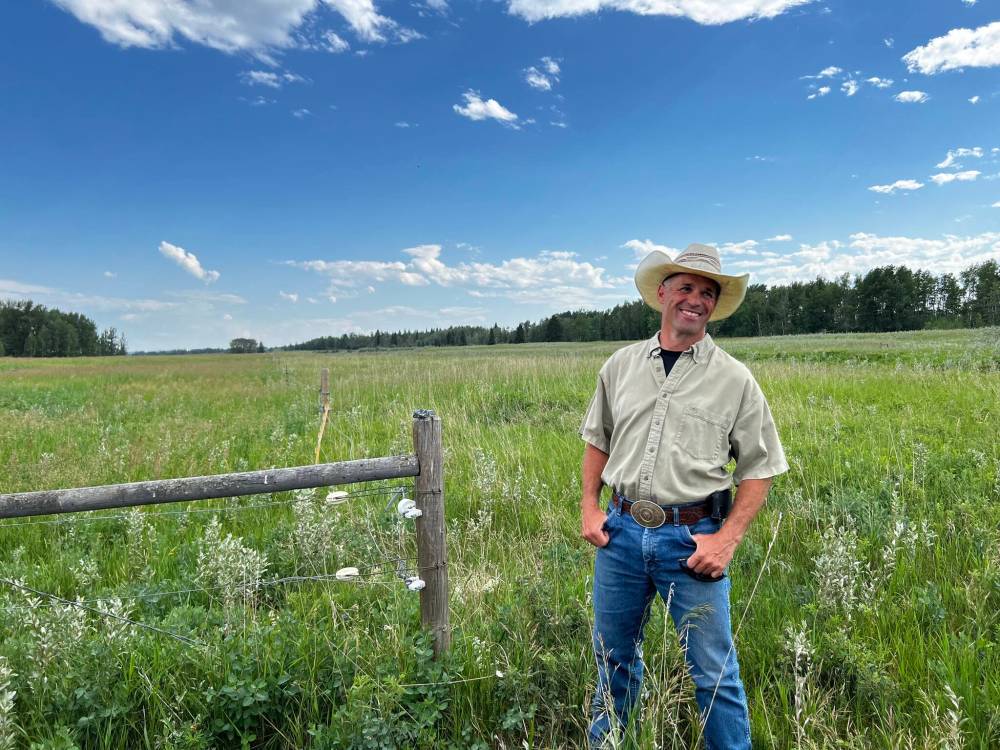
As a city boy who thought cows were “cool,” LaBrie readily acknowledges he didn’t know much when he first took up ranching. The first time he walked through the shed after he bought the ranch from an elderly couple, he held up a “calf puller,” a tool used to assist pregnant cows having trouble delivering, and asked a friend “what the heck this is?”
“I knew that I had some learning to do from that point on,” he said.
However, having no previous knowledge or experience also meant he had no preconceived ideas about how things should be done. He dived into learning and almost immediately fell in with the Foothills Forage and Grazing Association, a crowd that would send him down a very different path than conventional beef production.
Interestingly, it’s a path that rarely requires him to use that calf puller because of the type of cattle he raises.
His 640-acre section is divided into 34 paddocks. One of the “paddocks” is the riparian zone on both sides of the creek, which he only uses for grazing once every five years or so to control overgrowth.
Otherwise, it’s left undisturbed. The cattle’s water supply comes from the creek, but it is pumped from that fragile riparian zone using solar pumps helped by a beaver dam that keeps water levels a little higher.
Whereas conventional producers will move their cattle to a wintering yard, hauling the feed in and the manure out, LaBrie keeps 85 to 100 cow-calf pairs and 15 to 20 replacement heifers on pasture all year round. He rotates them through the different paddocks to force them to graze intensively for short periods, naturally spreading their manure. The paddock is then rested until the next cycle.
It mimics how the land was used by the roving herds of bison before the settlers came and carved the Prairies up into fields.
In some of his paddocks he cuts the forage into swaths for the cattle to graze through the winter months. He routinely tests to ensure the forage diet is meeting the herd’s nutritional needs, but he needs to provide little by way of extra supplements.
The system saves time and requires less investment in machinery. He’s been recognized for his land and water stewardship.
But is he profitable?
Rotational grazing has recently been called into question by research in the U.S that compared rotational paddock systems against turning the cattle into a big open pasture and letting them graze through the season.
That study found that cattle in the rotational system gained 14 per cent less than the ones in the open pasture. The researchers concluded it was because cattle in the open pasture could graze more selectively and ate only the best-quality forage. In the smaller paddocks they were forced to eat more of the less-desirable plants and therefore gained at a slower pace.

Rate of gain is important in beef production. However, so is preserving biodiversity and soil and water quality. Those benchmarks are just harder to measure.
If cattle are allowed to graze openly, they keep going back to the plants they like best, which then die off, leaving less desirable plants to take over.
LaBrie, who retired from policing four years ago, pauses at the profitability question. “I just paid off the mortgage,” he said. “I’m not losing money, put it that way.”
And despite the dry year, he’s standing knee-deep in grass.
Laura Rance is vice-president of content for Glacier FarmMedia. She can be reached at lrance@farmmedia.com