

The architect of Detroit’s bankruptcy filing 10 years ago says it was the best fix for a broken city
Advertisement
Read this article for free:
or
Already have an account? Log in here »
To continue reading, please subscribe:
Monthly Digital Subscription
$0 for the first 4 weeks*
- Enjoy unlimited reading on winnipegfreepress.com
- Read the E-Edition, our digital replica newspaper
- Access News Break, our award-winning app
- Play interactive puzzles
*No charge for 4 weeks then price increases to the regular rate of $19.00 plus GST every four weeks. Offer available to new and qualified returning subscribers only. Cancel any time.
Monthly Digital Subscription
$4.75/week*
- Enjoy unlimited reading on winnipegfreepress.com
- Read the E-Edition, our digital replica newspaper
- Access News Break, our award-winning app
- Play interactive puzzles
*Billed as $19 plus GST every four weeks. Cancel any time.
To continue reading, please subscribe:
Add Free Press access to your Brandon Sun subscription for only an additional
$1 for the first 4 weeks*
*Your next subscription payment will increase by $1.00 and you will be charged $16.99 plus GST for four weeks. After four weeks, your payment will increase to $23.99 plus GST every four weeks.
Read unlimited articles for free today:
or
Already have an account? Log in here »
Hey there, time traveller!
This article was published 17/07/2023 (883 days ago), so information in it may no longer be current.
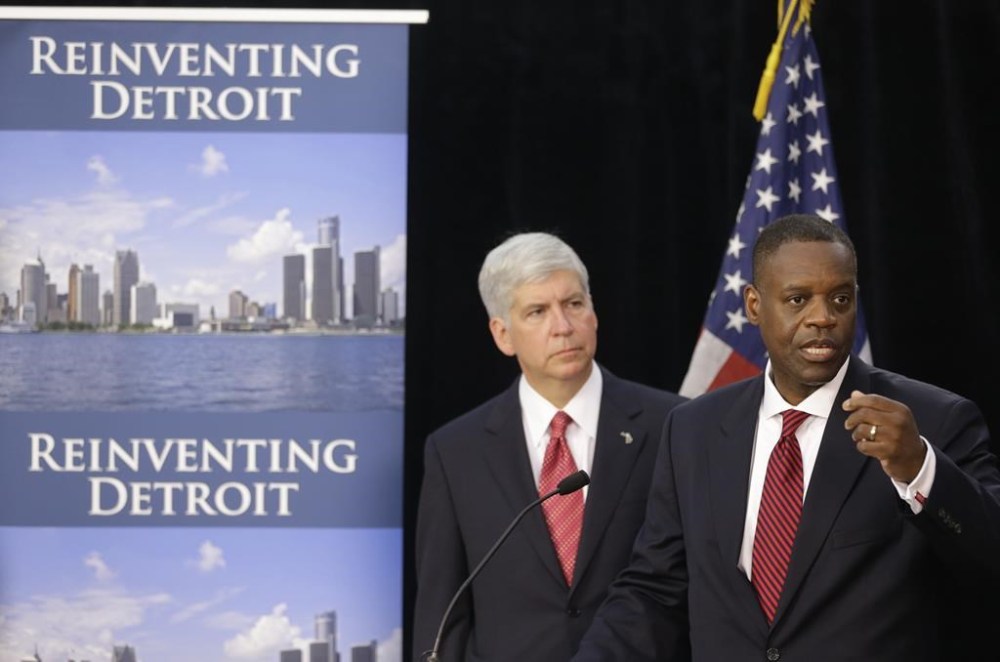
DETROIT (AP) — Detroit’s newly hired emergency manager, Kevyn Orr, stood before reporters in March 2013 and issued a warning to city creditors, unions, vendors and others: “Don’t make me go to bankruptcy court. You won’t enjoy it.”
On July 18, 2013, the restructuring expert did just that, making Detroit the largest city in the U.S. to file for bankruptcy.
What followed was months of negotiations, federal court hearings and an unlikely coming together of foundations to keep city-owned artwork from being sold to help pay off the debt.
“Bankruptcy is a miserable process,” Orr, 65, told The Associated Press earlier this month, ahead of the 10th anniversary of the filing. “It puts everybody outside of their ordinary course, their common spaces.”
Detroit was determined by a state-appointed review team to be in severe financial distress in 2012. Soon after, then-Michigan Gov. Rick Snyder hired Orr — an attorney with the international law firm Jones Day — to take on the heavy lift of fixing a broken city.
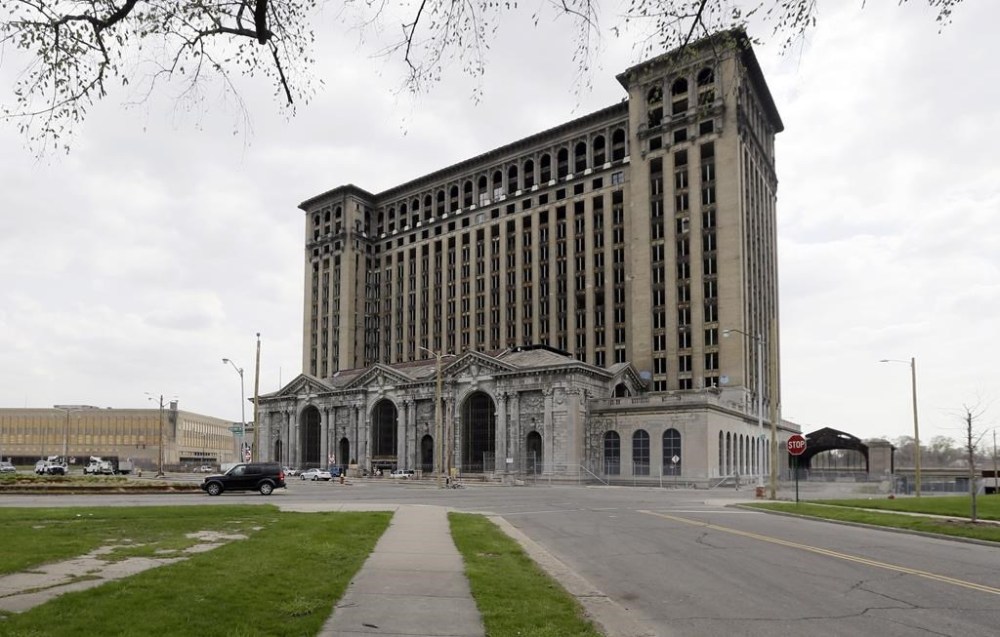
Massive population loss that began in the 1950s and a decadeslong downturn in the auto industry and other manufacturers had severely slashed Detroit’s tax base. Many neighborhoods were rife with vacant and burned out houses. Empty lots became dumping grounds for trash, used tires and even boats.
Poverty, unemployment and crime rates were among the highest in the nation.
The city’s budget deficit was north of $300 million. In the months before the bankruptcy, state-backed bond money helped the city meet payroll for its 10,000 employees. In the bankruptcy filing, Orr cited debt of $18 billion or more.
“This is a problem that’s been evolving for 50-plus years,” Snyder, a Republican, said during Orr’s introduction. “This is a problem that now has reached a true crisis point.”
In 2013, underfunded obligations for pensions were about $3.5 billion. It was $5.7 billion for retiree health coverage.

Orr said the city once had 20,000 workers and 10,000 retirees who were owed pensions. By the time of the bankruptcy filing, those numbers were flipped with 20,000 retirees expecting pension payments.
“You can’t see those inverse yield curves and come away with a conclusion that this is going to end up well,” he said.
On top of that, the city had very few assets that could be sold to pay its debt. He listed city-owned paintings and sculptures at the Detroit Institute of Arts, parking lots and Detroit’s water department. He warned then that the artwork could go on the auction block to help satisfy the city’s staggering debt.
“It wasn’t a threat,” he says now. “It was just: ‘Look, I’ve got a crisis. I need the money.’ We were getting overtures, both domestic and overseas, to buy some of the art.”
Deep-pocketed foundations and the state stepped up and raised $800 million in what came to be known as the “Grand Bargain,” softening cuts to city pensions and placing the artwork in a charitable trust.
Without a consensual resolution with creditors, unions and others to solve the debt, “bankruptcy was the only vehicle that could achieve the outcome,” said Orr, who is now partner-in-charge for U.S. Offices at Jones Day.

Detroit exited bankruptcy in December 2014 with about $7 billion in debt restructured or wiped out. The city now boasts balanced budgets, improved services and a blight reduction effort that has led to the demolition of more than 24,000 vacant houses.
Prior to taking on Detroit’s troubles, Orr advised automaker Chrysler (now Stellantis) and National Century Financial Enterprises in their bankruptcies. He considers his experience in Detroit as among his top accomplishments.
“Probably, for me, (it was) the most personally satisfying because it was for people as opposed to corporations or businesses,” Orr said. “It ranks, certainly, among the highest of all the things I’ve fortunately been involved in.”
___
This story has been updated to correct Kevyn Orr’s current title to partner-in-charge U.S. Offices, not partner-in-charge of Jones Day’s office in Washington, D.C.