

Bolivia boosts lithium resources estimate, cementing spot as global leader
Advertisement
Read this article for free:
or
Already have an account? Log in here »
To continue reading, please subscribe:

Digital Subscription
One year of digital access for only $205*
- Enjoy unlimited reading on winnipegfreepress.com
- Read the E-Edition, our digital replica newspaper
- Access News Break, our award-winning app
- Play interactive puzzles
*First annual payment billed as $205.00 + GST for one year. This annual subscription will automatically renew at $233.00 + GST every 52 weeks (10% off the regular annual price of $259.35). Offer available to new and qualified returning subscribers only. Cancel any time.
To continue reading, please subscribe:
Add Free Press access to your Brandon Sun subscription for only an additional
$1 for the first 4 weeks*
- Enjoy unlimited reading on winnipegfreepress.com
- Read the E-Edition, our digital replica newspaper
- Access News Break, our award-winning app
- Play interactive puzzles
*Your next Brandon Sun subscription payment will increase by $1.00 and you will be charged $17.95 plus GST for four weeks. After four weeks, your payment will increase to $24.95 plus GST every four weeks.
Read unlimited articles for free today:
or
Already have an account? Log in here »
Hey there, time traveller!
This article was published 20/07/2023 (1164 days ago), so information in it may no longer be current.
LA PAZ, Bolivia (AP) — The total of Bolivia’s confirmed lithium resources has increased 2 million tons to 23 million tons, the Andean country’s president said Thursday.
The new estimate further cements Bolivia’s position as the country with the world’s biggest known deposits of lithium, which is in high demand for use in batteries.
“We are the largest lithium reserve in the world, and we have to know how to manage it intelligently to exploit and transform this resource,” President Luis Arce said at the Coipasa salt flat, around 280 kilometers (175 miles) south of the capital of La Paz.
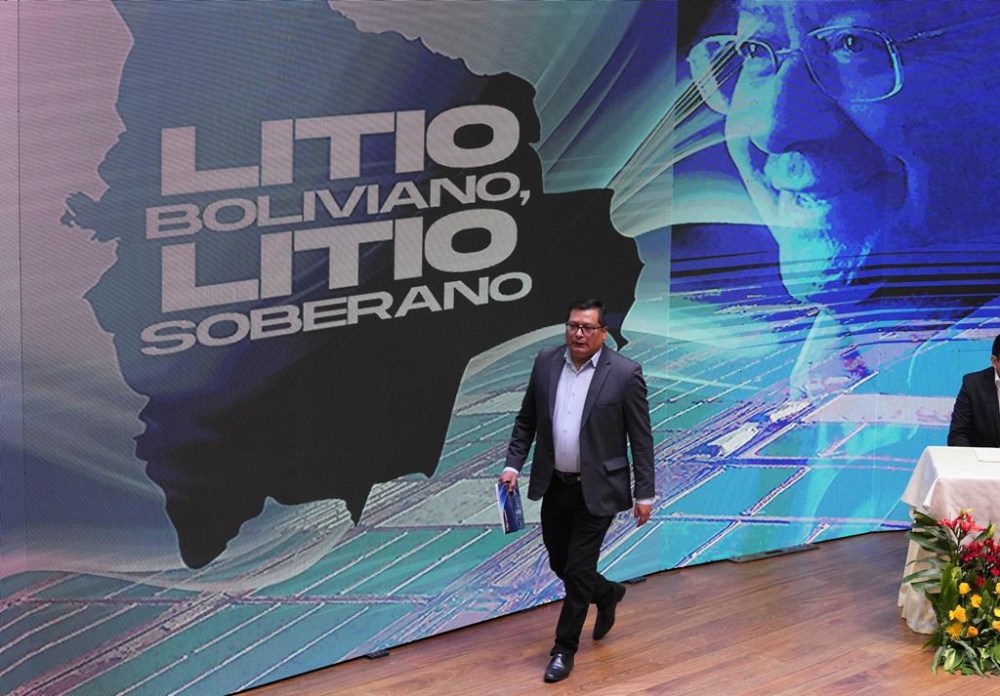
Bolivia has stepped up its search for international partners to help develop its lithium reserves at a time when demand for the metal is soaring amid the transition to renewable energy around the world and the growth in electric vehicles powered by lithium batteries.
The increase in the estimate of Bolivia’s reserves came after further geological studies in the Coipasa and Pasto Grandes salt flats, Raul Mayta, vice minister of exploration and exploitation of energy resources, told the state television channel, Bolivia TV.
Arce is pushing to boost Bolivia’s role in the international lithium market after 14 years of little progress that left it lagging behind neighboring Chile and Argentina. The three countries are home to an area that contains a large share of the world’s proven reserves of lithium.
Last month, Arce’s government signed an agreement with China’s Citic Guoan and Russia’s Uranium One Group to exploit Bolivia’s lithium deposits. Together, they promised to invest $1.4 billion for the construction of two plants for the production and export of 50,000 tons of lithium annually starting in 2025 in the Pastos Grandes salt flats.

A similar amount of investment was reported when the government signed an agreement in January with Contemporary Amperex Technology of China.
Argentina has the world’s second-largest lithium reserves, at 20 million tons, followed by the United States with 12 million tons and Chile with 11 million tons, according to the U.S. Geological Survey. The world’s top lithium producer is Australia, followed by Chile and China in third place, according to the U.S. agency.