

Further federal probes into false Connecticut traffic stop data likely, public safety chief says
Advertisement
Read this article for free:
or
Already have an account? Log in here »
To continue reading, please subscribe:

Digital Subscription
One year of digital access for only $205*
- Enjoy unlimited reading on winnipegfreepress.com
- Read the E-Edition, our digital replica newspaper
- Access News Break, our award-winning app
- Play interactive puzzles
*First annual payment billed as $205.00 + GST for one year. This annual subscription will automatically renew at $233.00 + GST every 52 weeks (10% off the regular annual price of $259.35). Offer available to new and qualified returning subscribers only. Cancel any time.
To continue reading, please subscribe:
Add Free Press access to your Brandon Sun subscription for only an additional
$1 for the first 4 weeks*
- Enjoy unlimited reading on winnipegfreepress.com
- Read the E-Edition, our digital replica newspaper
- Access News Break, our award-winning app
- Play interactive puzzles
*Your next Brandon Sun subscription payment will increase by $1.00 and you will be charged $17.95 plus GST for four weeks. After four weeks, your payment will increase to $24.95 plus GST every four weeks.
Read unlimited articles for free today:
or
Already have an account? Log in here »
Hey there, time traveller!
This article was published 26/07/2023 (1140 days ago), so information in it may no longer be current.
HARTFORD, Conn. (AP) — Connecticut’s public safety commissioner on Wednesday told state lawmakers to expect a federal investigation into a recent audit’s findings that showed hundreds of state troopers submitted false information from 2014 to 2021 on at least 26,000 traffic stops — information ultimately reported to a racial profiling board.
State legislators from two committees called the legislative informational meeting after data analysts with the University of Connecticut said the traffic stop reports resulted in too many drivers being identified as white.
The Department of Emergency Services and Public Protection, which oversees the Connecticut State Police, is already complying with a subpoena related to the traffic stop matter issued by the Office of Inspector General for the U.S. Department of Transportation, department head James Rovella confirmed. The DOT intends to determine whether the false data was used to secure federal money, he said.
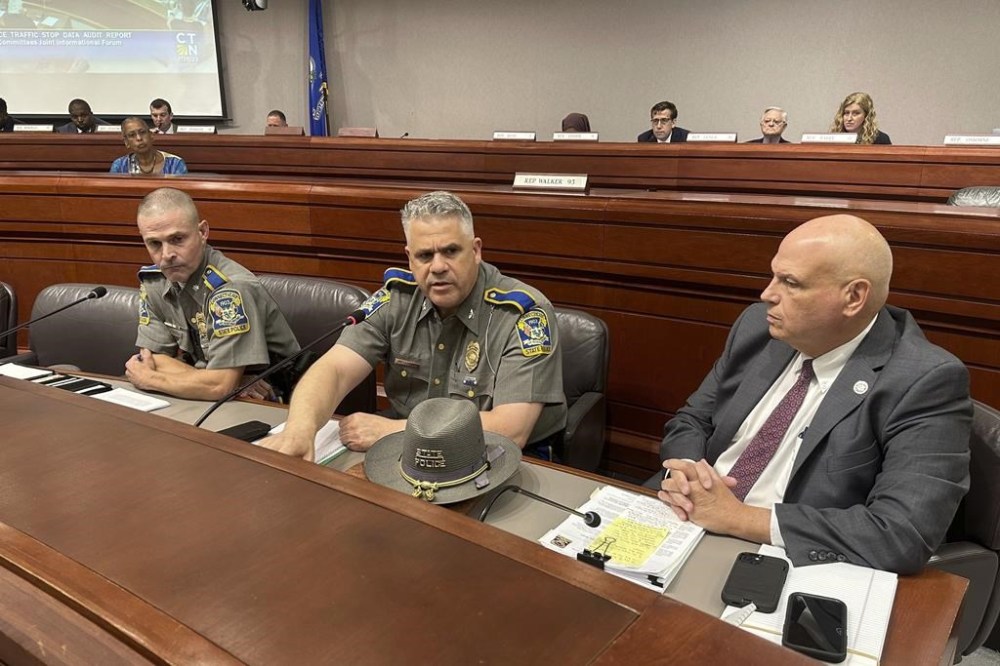
“I don’t think that’s it, ladies and gentlemen,” Rovella told lawmakers. “I think there’s more to come from our federal agencies, at least the Department of Justice on this one.”
On Monday, Democratic Gov. Ned Lamont ordered an independent investigation to “learn how it happened, why it happened, and how to prevent it from ever happening again.”
Ken Barone, associate director of UConn’s Institute for Municipal and Regional Policy and project manager of the Connecticut Racial Profiling Prohibition Project, said the group did not assess the intentions of the troopers in the analysis of the traffic reports. He said no member of the public actually received a ticket. Rather, it was erroneous data entered into the system.
While Barone said further investigation could determine some of the false records were due to human error, he stressed how researchers used “very conservative methodology” that gave troopers the benefit of the doubt.
“We ran the analysis well over 20 times. One of the things that stood out to me: The trend never changed. And that’s telling in statistical analysis,” he said. “The more we ran it, the more the trend stayed the same.”
The audit was spurred by a Hearst Connecticut Media report last year that said four state troopers in an eastern Connecticut barracks intentionally created hundreds of bogus traffic stop tickets to boost their productivity numbers. After internal affairs investigations, one trooper was suspended for 10 days, another was suspended for two days and the other two retired before the probe was completed.
The audit found the number of false traffic infractions reported to the Connecticut Racial Profiling Prohibition Project advisory board didn’t match those reported to the state court system, which handles all traffic citations. The false tickets also more often identified drivers as being white.
The UConn analysts determined 130 troopers — 62 retirees and 68 active duty — had more than eight traffic stops in a single year that didn’t match court records and which accounted for 20% of their reported motor vehicle infractions. That represents about 10% of the department.
Rovella said one trooper decided to identify more than 90% of the people he stopped as a Native American/Alaskan Native.
“For all accounts, he was a model trooper, a model trooper, and did his job correctly. I just don’t know what happened at that time,” said Rovella, noting the trooper has been suspended.
Rovella, who said he was taking the falsified reporting seriously and was “angry, to say the least,” said he doesn’t understand why someone would intentionally submit erroneous information. After the four original troopers were disciplined, steps were taken to make sure troopers would not be motivated to submit bogus tickets in order to get a newer police cruiser, a favorable assignment or benefits.
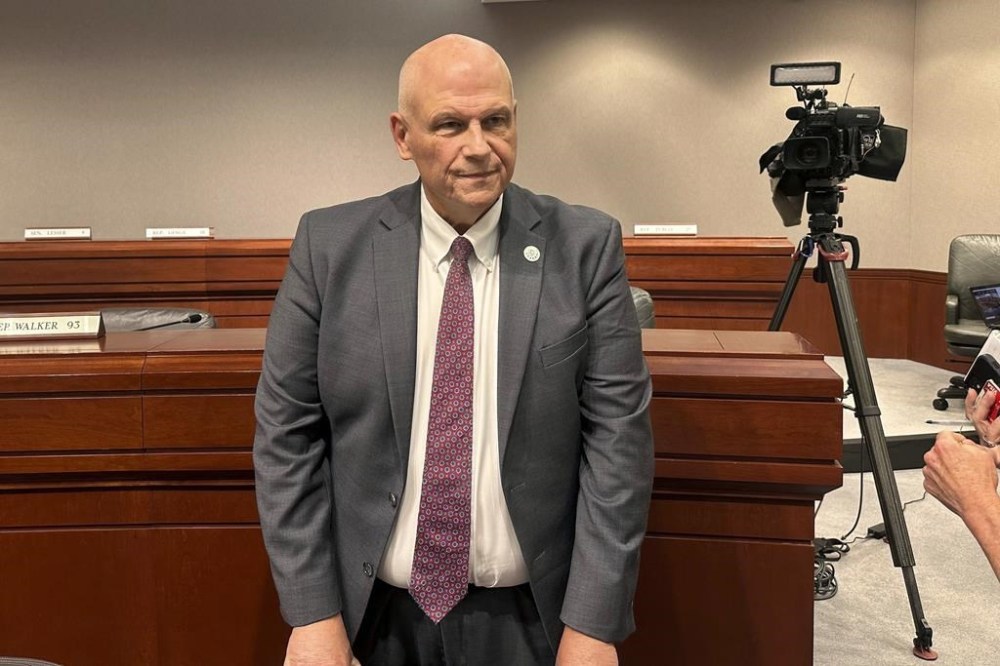
“What was the purpose? That’s what we’re trying to figure out,” said Rovella, noting an internal investigation will also be conducted. “If you’re not getting a better assignment, if you’re not getting a better car, why falsify?”
Rovella pledged to dig into the numbers and said anyone found to have intentionally falsified records “will be held to account.”

State Police union officials urged legislators not to rush to judgement and said many of the troopers identified as having submitted false reports have had stellar careers.
“This isn’t a systemic issue,” said Andrew Matthews, the union’s executive director and counsel. “It’s an individual issue.”
State Rep. Steve Stafstrom, D-Bridgeport and co-chair of the Judiciary Committee, acknowledged the point of the hearing is “not to jump to conclusions” about whether the erroneous reports were intentionally submitted. However, he said lawmakers need to take a closer look at the issue because it calls into question police data the General Assembly relies on to oversee law enforcement.
Claudine Constant, the American Civil Liberties Union of Connecticut’s director of public policy and advocacy, called for “swift, transparent, meaningful accountability” for individual troopers determined to have falsified traffic stop records as well as for the State Police as a whole.
“This problem was widespread, long-lasting, and it happened because of lack of systemic oversight of police,” she said in a statement. “The question now is how our elected officials are going to respond when police violate an anti-racist law tens of thousands of times for years.”