

Germany used to be the world’s export powerhouse. Now, it’s not growing. What happened?
Advertisement
Read this article for free:
or
Already have an account? Log in here »
To continue reading, please subscribe:

Digital Subscription
One year of digital access for only $205*
- Enjoy unlimited reading on winnipegfreepress.com
- Read the E-Edition, our digital replica newspaper
- Access News Break, our award-winning app
- Play interactive puzzles
*First annual payment billed as $205.00 + GST for one year. This annual subscription will automatically renew at $233.00 + GST every 52 weeks (10% off the regular annual price of $259.35). Offer available to new and qualified returning subscribers only. Cancel any time.
To continue reading, please subscribe:
Add Free Press access to your Brandon Sun subscription for only an additional
$1 for the first 4 weeks*
- Enjoy unlimited reading on winnipegfreepress.com
- Read the E-Edition, our digital replica newspaper
- Access News Break, our award-winning app
- Play interactive puzzles
*Your next Brandon Sun subscription payment will increase by $1.00 and you will be charged $17.95 plus GST for four weeks. After four weeks, your payment will increase to $24.95 plus GST every four weeks.
Read unlimited articles for free today:
or
Already have an account? Log in here »
Hey there, time traveller!
This article was published 28/07/2023 (1148 days ago), so information in it may no longer be current.
FRANKFURT, Germany (AP) — The German economy is still failing to grow, figures showed Friday, as the country that should be the industrial powerhouse for all of Europe struggles with high energy prices, rising borrowing costs and a lagging rebound from key trading partner China.
Economic output in Germany stagnated in the April-to-June quarter, the Federal Statistics Office said. That follows a decline of 0.1% in the first three months of the year and a drop of 0.4% in the last three months of 2022 as the energy shock from Russia’s war in Ukraine echoed through Europe’s largest economy.
It comes after the International Monetary Fund forecast this week that Germany would be the globe’s only major economy to shrink this year, even with weak economic growth around the world amid rising interest rates and the threat of growing inflation.
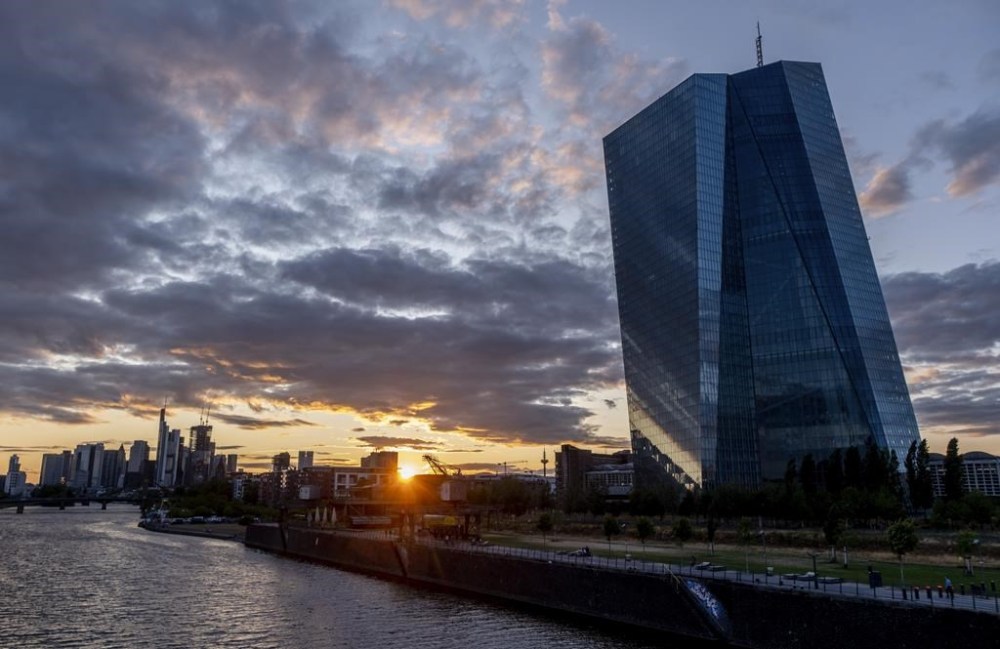
In Germany, the economy has been buffeted by several challenges. Above all, its long-term dependence on Russian natural gas to fuel industry backfired when the invasion of Ukraine led to the loss of most of Moscow’s supply and to higher costs for energy-intensive industries such as metals, glass, cars and fertilizer.
Higher interest rates from the European Central Bank have weighed on construction projects that depend on borrowing. Meanwhile, the rebound in China, Germany’s largest trade partner, after the end of drastic COVID-19 restrictions has been less than many had hoped for.
The second-quarter economic performance was “far from satisfactory,” said Vice Chancellor and Economy Minister Robert Habeck.
He urged action on his proposal to cap energy prices for industry with government help, which has run into skepticism in parts of the governing coalition, and more investment in future-oriented technology such as renewable energy.
“What Germany needs is a targeted impulse for investment and breathing room for our energy-intensive industry,” he said.
Longer-term factors such as an aging population, lagging use of digital technology in business and government, excessive red tape that holds back business launches and public construction projects, and a shortage of skilled labor also have weighed on the economy.
Yet the slowdown does not resemble a classic recession because jobs are abundant, with companies competing for workers and complaining of skills shortages. The unemployment rate was only 2.9% in May, well below the eurozone’s 6.5% — one of the lowest rates on record.

Carsten Brzeski, chief eurozone economist at ING, has described Germany’s situation as a “slowcession,” with the economy “stuck in the twilight zone between stagnation and recession.”
He said Friday that recent data “do not bode well for economic activity in the coming months.”
“In fact, weak purchasing power, thinned-out industrial order books, as well as the impact of the most aggressive monetary policy tightening in decades, and the expected slowdown of the U.S. economy, all argue in favor of weak economic activity,” Brzeski said in a note.
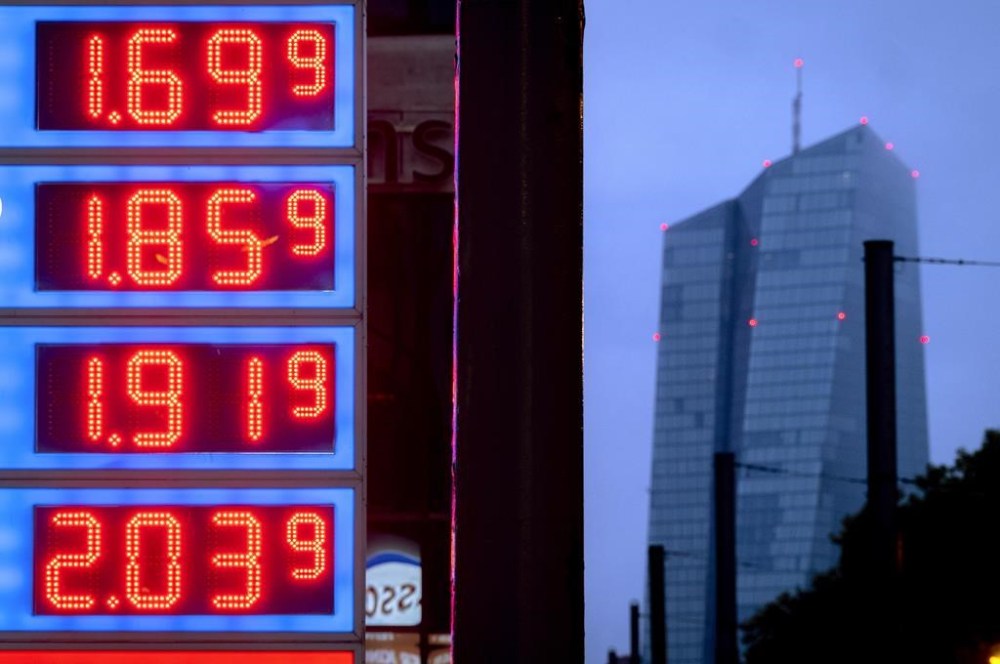
Germany’s woes are calling forth comparisons with the late 1990s, when high labor costs held back the country’s competitiveness. A series of labor market reforms under former Chancellor Gerhard Schroeder in 2003-2004 helped restore economic growth and Germany’s position as an export powerhouse selling industrial machinery and vehicles to the rest of the world.
Germany’s current account surplus of $290 billion, the broadest measure of foreign trade, was the highest in the world in 2019, according to the Bruegel think tank in Brussels. It remained above 7% of GDP for six straight years but fell to 4.2% last year.