

A UN envoy has made his first visit to Western Sahara. He pledged to advance the political process
Advertisement
Read this article for free:
or
Already have an account? Log in here »
To continue reading, please subscribe:

Digital Subscription
One year of digital access for only $205*
- Enjoy unlimited reading on winnipegfreepress.com
- Read the E-Edition, our digital replica newspaper
- Access News Break, our award-winning app
- Play interactive puzzles
*First annual payment billed as $205.00 + GST for one year. This annual subscription will automatically renew at $233.00 + GST every 52 weeks (10% off the regular annual price of $259.35). Offer available to new and qualified returning subscribers only. Cancel any time.
To continue reading, please subscribe:
Add Free Press access to your Brandon Sun subscription for only an additional
$1 for the first 4 weeks*
- Enjoy unlimited reading on winnipegfreepress.com
- Read the E-Edition, our digital replica newspaper
- Access News Break, our award-winning app
- Play interactive puzzles
*Your next Brandon Sun subscription payment will increase by $1.00 and you will be charged $17.95 plus GST for four weeks. After four weeks, your payment will increase to $24.95 plus GST every four weeks.
Read unlimited articles for free today:
or
Already have an account? Log in here »
Hey there, time traveller!
This article was published 08/09/2023 (1109 days ago), so information in it may no longer be current.
UNITED NATIONS (AP) — The United Nations doubled down on its pledge to revive stalled negotiations over the disputed Western Sahara during a visit to the region this week in which its top negotiator met with officials on all sides before the release of a highly anticipated U.N. report next month.
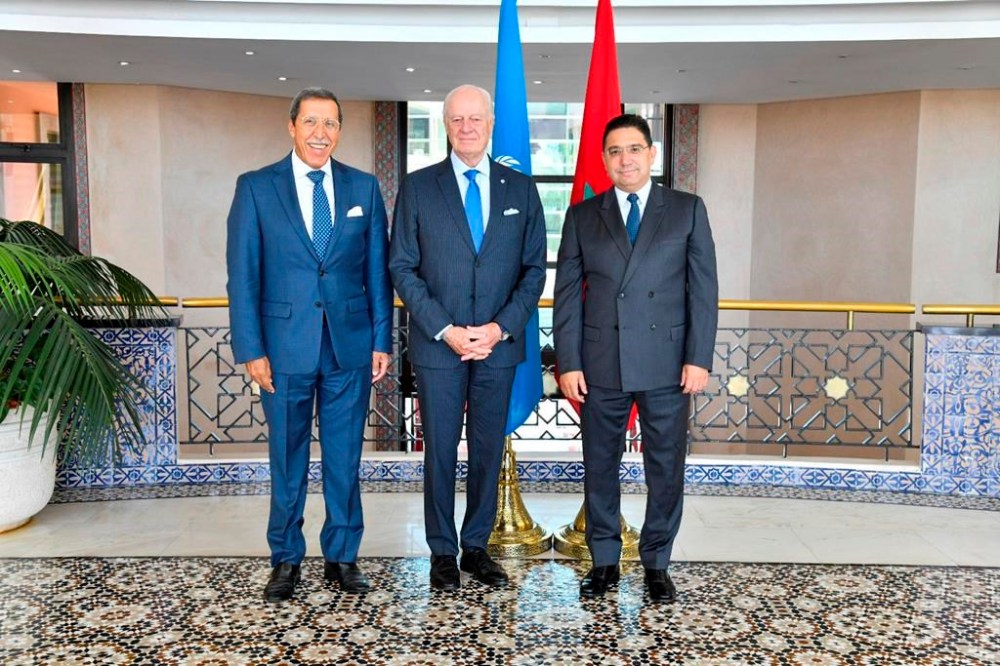
The visit was Staffan de Mistura’s first to the Western Sahara since he was appointed in 2021 to oversee U.N. efforts to guide negotiations that date back more than three decades.
Morocco annexed Western Sahara, a former Spanish colony in 1975, sparking a conflict with the pro-independence Polisario Front. The region is believed to have considerable offshore oil deposits and mineral resources and is slightly larger than the United Kingdom.
The U.N. brokered a 1991 cease-fire and established a peacekeeping mission to monitor the truce and help prepare a referendum on the territory’s future. Disagreements over who is eligible to vote have prevented the referendum from taking place. The Polisario Front renewed armed conflict in 2020, ending a 29-year truce.
The longstanding status quo was also punctured further later that year, when the United States broke with its past policy and recognized Morocco’s claim over the disputed territory as part of an agreement in which Morocco normalized relations with Israel.
De Mistura met with officials in Morocco’s capital on Friday after touring Dakhla and Laayoune, its two largest cities, for the first time. The United Nations said in a statement leading up to the trip that he “looked forward to further deepening consultations with all concerned on the prospects of constructively advancing the political process on Western Sahara,” and noted that the visit would precede the publication of a Western Sahara report to the Security Council next month.
Since taking office, U.S. President Joe Biden hasn’t altered the Trump-era recognition of Morocco’s claims. His administration has affirmed Washington’s support for the United Nations and de Mistura’s renewed efforts, including this week when Joshua Harris, deputy assistant secretary for North Africa, made a trip to the region, visiting Rabat, Algiers and camps in southern Algeria that thousands of Sahrawi refugees call home.

A statement from the U.S. Embassy in Morocco repeated Washington’s previously stated position that it views Morocco’s plan as “serious, credible, and realistic, and one potential approach to meet the aspirations of the people of Western Sahara.”
Morocco and neighboring Algeria, which has long supported the pro-independence Polisario Front, also affirmed their positions in statements coinciding with Harris’ and de Mistura’s trips, with both declaring their public support for the U.N. effort.
In talks with Harris, Lounès Magramane, Algeria’s foreign affairs minister, expressed support for “a political solution to the question of Western Sahara which guarantees the right of the Sahrawi people to self-determination,” according to a statement from the country’s official news agency, APS.
Morocco referenced its preferred plan to grant the region a form of self-governance that falls short of independence.
“Morocco advocates for a political solution grounded solely in the Moroccan Autonomy Initiative, within the framework of national sovereignty and territorial integrity,” Morocco’s Foreign Ministry said in a statement Friday.