

Canadians are consuming less: study
People expect their customer ‘journey’ to be satisfying and easy
Advertisement
Read this article for free:
or
Already have an account? Log in here »
To continue reading, please subscribe:

Digital Subscription
One year of digital access for only $205*
- Enjoy unlimited reading on winnipegfreepress.com
- Read the E-Edition, our digital replica newspaper
- Access News Break, our award-winning app
- Play interactive puzzles
*First annual payment billed as $205.00 + GST for one year. This annual subscription will automatically renew at $233.00 + GST every 52 weeks (10% off the regular annual price of $259.35). Offer available to new and qualified returning subscribers only. Cancel any time.
To continue reading, please subscribe:
Add Free Press access to your Brandon Sun subscription for only an additional
$1 for the first 4 weeks*
- Enjoy unlimited reading on winnipegfreepress.com
- Read the E-Edition, our digital replica newspaper
- Access News Break, our award-winning app
- Play interactive puzzles
*Your next Brandon Sun subscription payment will increase by $1.00 and you will be charged $17.95 plus GST for four weeks. After four weeks, your payment will increase to $24.95 plus GST every four weeks.
Read unlimited articles for free today:
or
Already have an account? Log in here »
Hey there, time traveller!
This article was published 11/09/2023 (1102 days ago), so information in it may no longer be current.
Economists typically get concerned when growth slows down or, heaven forbid, declines. That’s what’s eventually called a recession.
But a recent study by the Business Development Bank of Canada (BDC) shows one of the three top consumer trends in the country is that Canadians are actually consuming less.
The other two top trends in BDC’s just released Top Consumer Trends in Canada, are that Canadians expect their customer “journey” to be satisfying and easy and that consumers now have a high expectation that the companies they do business with are seen to be good corporate citizens.

Pierre Cléroux, BDC’s chief economist
Pierre Cléroux, BDC’s chief economist, does not see that “consuming less is more” as some kind of existential threat to the fundamentals of economics.
For one thing, increased immigration is providing population growth, which brings with it the need to acquire all of the goods and services that go along with having additional people in communities.
Cléroux is also not surprised that there is a desire among Canadians to consume less, because inflation and rising interest rates mean many Canadians have less money with which to buy things.
“In the last 12 months the average mortgage payment in Manitoba has increased by 21 per cent, “ Cléroux said. “So obviously consumers feel squeezed by inflation and by high interest rates.”
The other reason Canadians are feeling that “consuming less is more” is because of the 40 per cent response from consumers who say they want to reduce their carbon footprint.
“Environment is a priority for Canadians,” he said. “Our research shows that 69 per cent say they find pride in finding ways to save money when they buy product or services.”
The sentiment is to buy less but get more. But buying less is also cited as an action anyone can take to lower their environmental footprint and combat climate change.
The classic example from a consumption point of view is deciding to spend less on “disposable” fashion or pay more for enduring, long-lasting fashion.
When it comes to the importance of paying attention to the “complete customer journey,” BDC’s survey confirmed that it’s not just about business-to-consumer relationships, but business-to-business (B2B) ones as well.
After starting their construction supply wholesale business in 2019, co-founders Shaun Stewart and his partner, Glen Hendersen, were experienced business development professionals and had many relationships among the contractor community.
What they weren’t necessarily so proficient in was in the process end of the business.
They hired an IT expert, one who also had experience in enterprise resource planning.
They tried out three different customer relationship management (CRM) software solutions and settled on one.
“It’s the same system that many of our customers use so it allows us to better collaborate with them,” said Stewart.
He said that the point is not to upgrade digital tools just to keep up, but to make sure the investment creates some value for the customer.
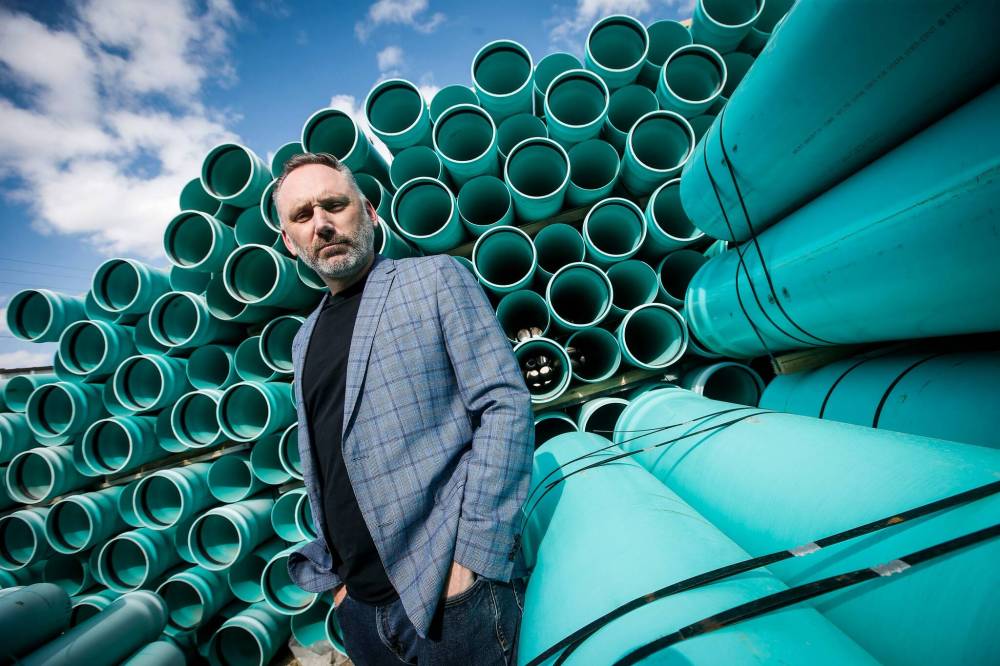
Shaun Stewart and his business partner tried out three different customer relationship management software solutions and settled on one.
Canadian business now has a reputation for lagging behind when it comes to investing in technology and productivity and is below the average among OECD countries in that regard.
BDC’s survey showed that 39 per cent of Canadian businesses have invested in digital tools that will deliver that seamless customer experience online (or in person). So that trend is catching on.
“But it is only 39 per cent,” Cléroux said. “There’s still some way to go for a lot of businesses to be able offer what consumers are looking for.”
And the thing is, the ones that do it are really performing well. While Stewart may not be able to quantify the impact its new CRM system is having on business, he knows it helps.
As to why more businesses aren’t doing it, considering the solid evidence out there that it makes a difference, Stewart is probably right when he says “change is scary.”
The other top trend in the BDC survey is something that did not show up in its two prior consumer trend surveys — that being a good corporate citizen is good for business.

“We’ve never seen that trend before,” said Cléroux. “People are worried about the environment and now they expect businesses to act accordingly. A big part of that is about the environment. Consumers want to see that businesses have a strategy to reduce their carbon footprint.”
The survey found that 57 per cent of consumers said they’ve stopped buying from a company because they did not agree with that company’s business practices.
“That’s very strong,” said Cléroux. “There is an expectation now that you have to be a good citizen as a business. Most businesses are, but now there’s a greater need for businesses to explain to consumers what they do in terms of things like diversity and environment.”
So clearly, despite the “anti-woke” rhetoric you hear from the U.S., in Canada at least that sort of stuff is very good for business.
martin.cash@freepress.mb.ca