

China economic data show signs slowdown may be easing, as central bank acts to support growth
Advertisement
Read this article for free:
or
Already have an account? Log in here »
To continue reading, please subscribe:

Digital Subscription
One year of digital access for only $205*
- Enjoy unlimited reading on winnipegfreepress.com
- Read the E-Edition, our digital replica newspaper
- Access News Break, our award-winning app
- Play interactive puzzles
*First annual payment billed as $205.00 + GST for one year. This annual subscription will automatically renew at $233.00 + GST every 52 weeks (10% off the regular annual price of $259.35). Offer available to new and qualified returning subscribers only. Cancel any time.
To continue reading, please subscribe:
Add Free Press access to your Brandon Sun subscription for only an additional
$1 for the first 4 weeks*
- Enjoy unlimited reading on winnipegfreepress.com
- Read the E-Edition, our digital replica newspaper
- Access News Break, our award-winning app
- Play interactive puzzles
*Your next Brandon Sun subscription payment will increase by $1.00 and you will be charged $17.95 plus GST for four weeks. After four weeks, your payment will increase to $24.95 plus GST every four weeks.
Read unlimited articles for free today:
or
Already have an account? Log in here »
Hey there, time traveller!
This article was published 15/09/2023 (1111 days ago), so information in it may no longer be current.
BEIJING (AP) — China’s factories picked up their pace and retail sales also gained momentum in August, the government reported Friday, suggesting the economy may be gradually recovering from its post-pandemic malaise.
However, despite busy activity in restaurants and stores, the figures showed continuing weakness in the all-important property sector, where real estate developers are struggling to repay heavy loads of debt in a time of slack demand. Investment in real estate fell 8.8% in August from the year before. The decline has been worsening since the beginning of the year.
Acting to relieve the burden on banks, the People’s Bank of China, or central bank, announced late Thursday that the reserve requirement for most lenders would be cut by 0.25 percentage points as of Friday.
That would free up more money for lending, “In order to consolidate the foundation for economic recovery and maintain reasonable and sufficient liquidity,” the central bank said.
Friday’s report showed retail sales rose 4.6% in August from a year earlier, with auto sales climbing 5.1%. Retail sales rose a meager 2.5% in July.
Consumers grew more cautious about spending in the past year, even as China loosened stringent policies to contain outbreaks of COVID-19.
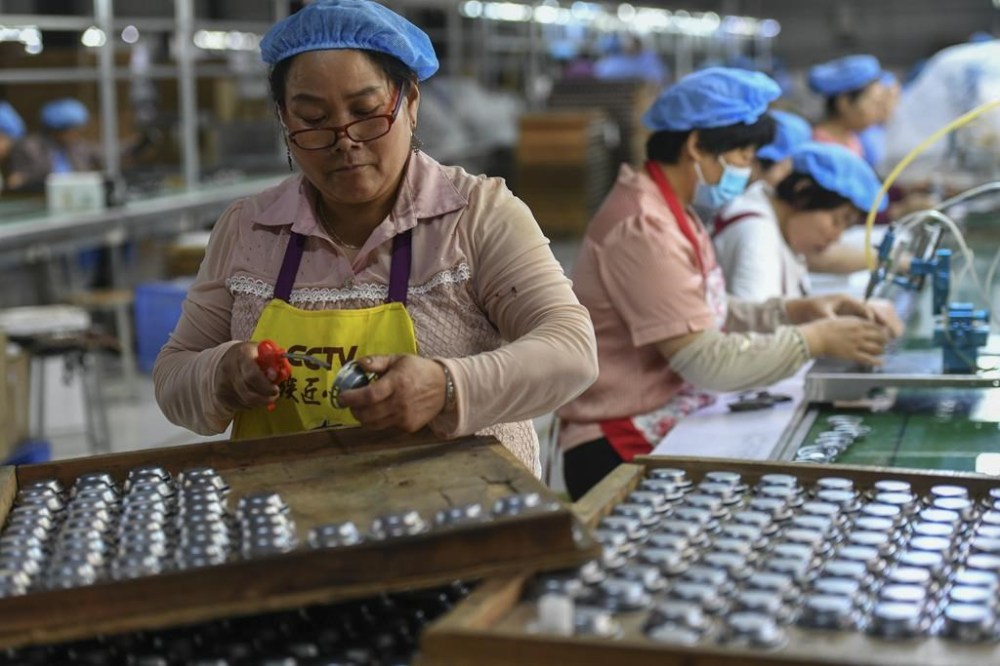
Industrial output grew at a 4.5% annual pace, up from 3.7% in July and the fastest rate since April.
“Overall, in August, major indicators improved marginally, the national economy recovered, high-quality development was solidly advanced, and positive factors accumulated,” Fu Linghui, spokesperson for the National Bureau of Statistics, told reporters.
But Fu added that there were “still many external factors of instability and uncertainty” and that domestic demand remains weak, so that “the foundation for economic recovery still needs to be consolidated.”
The trends in August were somewhat better than expected, Julian Evans-Pritchard of Capital Economics said in a report.
“Fiscal support shored up investment but the real bright spot was a healthy pick-up in consumer spending, suggesting that households may be turning slightly less cautious,” he said.
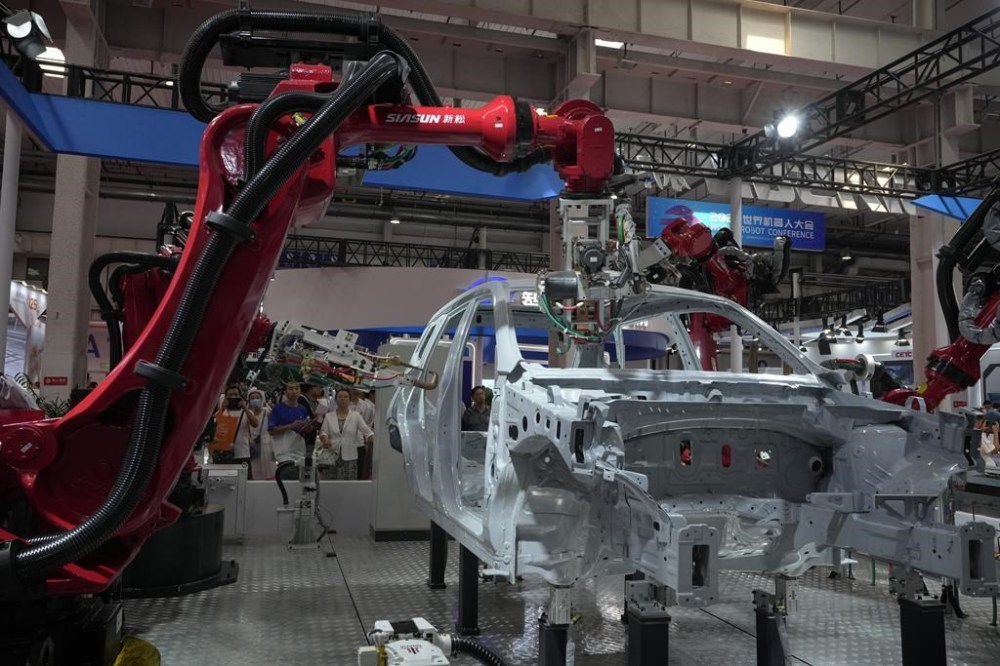

China’s economy expanded by 0.8% in the three months ending in June compared with the previous quarter, down from 2.2% in January-March. That is equivalent to a 3.2% annual rate, which would be among the weakest pace in decades.
Roughly one in five young workers is unemployed, a record high, adding to pressures on consumer spending.
The downturn in the housing market, which spills into many other sectors in addition to construction and materials, also has weighed on China’s recovery from severe disruptions of the past several years as the ruling Communist Party tried to eliminate waves of COVID-19 infections.
Share prices advanced Friday after the figures were released, with Hong Kong’s Hang Seng gaining 1.7% while the Shanghai Composite index rose 0.3%.
“There’s a growing sense of optimism among a cohort of investors who believe that Beijing’s recent initiatives to stimulate the economy and stabilize financial markets are showing signs of success,” Stephen Innes of SPI Asset Management said in a commentary.