

Scholz says that Germany needs to expand deportations of rejected asylum-seekers
Advertisement
Read this article for free:
or
Already have an account? Log in here »
To continue reading, please subscribe:

Digital Subscription
One year of digital access for only $205*
- Enjoy unlimited reading on winnipegfreepress.com
- Read the E-Edition, our digital replica newspaper
- Access News Break, our award-winning app
- Play interactive puzzles
*First annual payment billed as $205.00 + GST for one year. This annual subscription will automatically renew at $233.00 + GST every 52 weeks (10% off the regular annual price of $259.35). Offer available to new and qualified returning subscribers only. Cancel any time.
To continue reading, please subscribe:
Add Free Press access to your Brandon Sun subscription for only an additional
$1 for the first 4 weeks*
- Enjoy unlimited reading on winnipegfreepress.com
- Read the E-Edition, our digital replica newspaper
- Access News Break, our award-winning app
- Play interactive puzzles
*Your next Brandon Sun subscription payment will increase by $1.00 and you will be charged $17.95 plus GST for four weeks. After four weeks, your payment will increase to $24.95 plus GST every four weeks.
Read unlimited articles for free today:
or
Already have an account? Log in here »
Hey there, time traveller!
This article was published 20/10/2023 (1069 days ago), so information in it may no longer be current.
BERLIN (AP) — Chancellor Olaf Scholz says Germany needs to start deporting “on a large scale” migrants who don’t have the right to stay in the country, adding to increasingly tough talk on migration since his coalition performed badly in two state elections earlier this month.
Scholz’s comments in an interview with weekly Der Spiegel were published Friday, as a leading German opposition figure called for the center-left chancellor to dump his quarrelsome coalition partners and instead form a government with conservatives to deal with migration issues.
Scholz has signaled an increased desire to take personal charge of migration over the past two weeks, following a pair of regional elections in which voters punished his three-party coalition, which has squabbled publicly on a wide range of subjects. Mainstream conservatives won both votes and the far-right Alternative for Germany made significant gains.
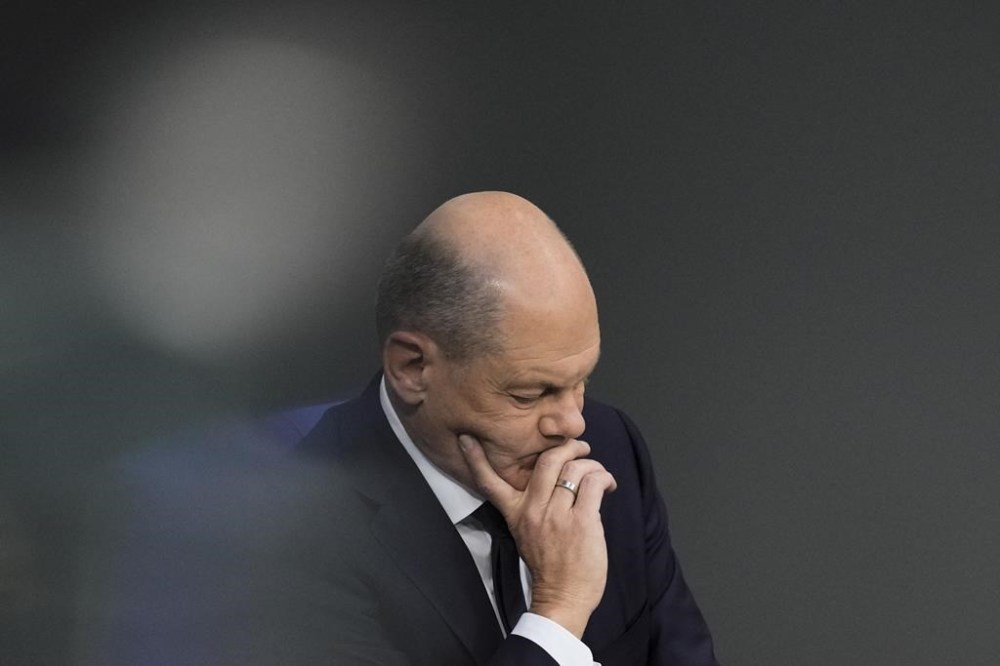
Last week, Scholz announced legislation to ease deportations of unsuccessful asylum-seekers. He met with opposition leader Friedrich Merz and two leading state governors to discuss ways of tackling migration — a subject on which his opponents have assailed the government relentlessly. On Monday, the government notified the European Commission of temporary border controls at the Polish, Czech and Swiss frontiers.
Shelters for migrants and refugees have been filling up in recent months as significant numbers of asylum-seekers add to more than 1 million Ukrainians who have arrived since the start of Russia’s war in their homeland.
In Friday’s interview, Scholz reiterated that “too many are coming.”
“We must finally deport on a large scale those who have no right to stay in Germany,” he was quoted as saying, adding that “we must deport more and faster.”

One of the opposition’s top figures, Bavarian governor Markus Soeder, earlier Friday suggested that Scholz “dismiss” his junior coalition partners — the environmentalist Greens and the pro-business Free Democrats — and form a “government of national common sense” with his conservative Union bloc, German news agency dpa reported. He argued that there needs to be a “fundamental turnaround in migration policy.”
Asked what the chancellor thought of that idea, Scholz spokesperson Steffen Hebestreit replied: “Nothing.”