

Yield with caution
Bonds are vital, but how they work can leave many scratching their heads
Advertisement
Read this article for free:
or
Already have an account? Log in here »
To continue reading, please subscribe:
Monthly Digital Subscription
$1 per week for 24 weeks*
- Enjoy unlimited reading on winnipegfreepress.com
- Read the E-Edition, our digital replica newspaper
- Access News Break, our award-winning app
- Play interactive puzzles
*Billed as $4.00 plus GST every four weeks. After 24 weeks, price increases to the regular rate of $19.95 plus GST every four weeks. Offer available to new and qualified returning subscribers only. Cancel any time.
Monthly Digital Subscription
$4.99/week*
- Enjoy unlimited reading on winnipegfreepress.com
- Read the E-Edition, our digital replica newspaper
- Access News Break, our award-winning app
- Play interactive puzzles
*Billed as $19.95 plus GST every four weeks. Cancel any time.
To continue reading, please subscribe:
Add Free Press access to your Brandon Sun subscription for only an additional
$1 for the first 4 weeks*
*Your next subscription payment will increase by $1.00 and you will be charged $16.99 plus GST for four weeks. After four weeks, your payment will increase to $23.99 plus GST every four weeks.
Read unlimited articles for free today:
or
Already have an account? Log in here »
Hey there, time traveller!
This article was published 21/10/2023 (879 days ago), so information in it may no longer be current.
Yields are rising. That’s bad news.
Yields are falling. That’s good news.
These days, it seems a lot of investment news turns on what bond yields are doing.
Yields indeed affect a lot, and not just your fixed income (bonds) investments, but stocks and even mortgages.
And they can make your head spin.
“There are lots of moving parts,” says Doug Nelson, Winnipeg-based portfolio manager with Nelson Portfolio Management Corporation.
“And to simply say yields move on one specific thing versus another is difficult.”
Still, understanding how bonds function can make yields and more generally investing less confusing.
First things first: What is a bond?
In short, it’s a loan.
Investors are lending to a company or government for a set period from a few months to decades.
In return, besides getting their money back at maturity (the term’s end)—unless the borrower goes bankrupt — investors are paid interest.
This is called the coupon.
Generally, the longer a bond’s maturity, the higher its coupon.
Coupons may also be higher if the lender is higher risk, like a corporation opposed to the Government of Canada.
Yet a bond’s expected return is not expressed by its coupon.
That’s referred to as its yield, though the coupon figures in this formula.
The yield is also based on the bond’s market value — driven by supply and demand.
When bonds are more in demand, their values rise, and their yields fall.
When investor demand for bonds falls — more sellers than buyers — their values decrease.
But their yields rise.
A key factor in whether bond yields rise or fall is the policy rate of central banks’ (i.e., the Bank of Canada and the U.S. Federal Reserve).

TREVOR HAGAN / WINNIPEG FREE PRESS files
Doug Nelson, portfolio manager with Nelson Portfolio Management Corp., says many bond portfolios are yielding seven per cent.
“When interest rates rise, bond prices go down,” says portfolio manager Darrin Erickson with Value Partners Investments in Winnipeg.
And when rates fall, bond prices increase, he adds.
“This is because bonds are valued and traded based on their yield to maturity.”
When the Bank of Canada hikes its overnight rate, Canadian “bond yields must also rise to keep pace.”
To do that, existing bonds’ prices — their value — must fall because investors won’t buy a bond with a two per cent coupon when new bond coupons are, for example, five per cent.
If you own bonds when interest rates rise, it feel painful because their value falls.
But this only results in a true loss if you sell them.
If you hold bonds to maturity, you receive the coupon along the way, and get your money back.
If you are a buyer, you’re purchasing bonds trading at a discount to their original price to compensate for their lower coupon so their yield matches today’s higher rates.
Many macroeconomic factors also affect bond yields, including unemployment, economic growth and inflation, says Konstantin Boehmer, co-head of fixed income at Mackenzie Investments in Toronto.
“If investors are expecting a recession, they tend to buy bonds.”
Then yields may fall, for example, on bad employment data because investors want bonds for steady income. In turn, their values increase with demand.
That’s good news if you own bonds.
This is why investors should hold bonds in a portfolio — besides the coupon income — because generally when stocks fall, bond values increase.
“That doesn’t always happen as we’ve seen in the last 18 months,” Boehmer notes.
At the pandemic’s end, ultra-low rates (and correspondingly low yields), revenge spending, upended supply chains and the war in Ukraine drove inflation well above central bankers’ desired rate of two to three per cent.
In turn, they hiked rates, making borrowing less attractive, slowing economic growth and, hopefully, inflation.
“So, 2022 was a difficult time because the portfolio’s defensive side — bonds — went down because inflation was high, and interest rates rose,” Nelson says.
Stocks fell too, making the period unique.
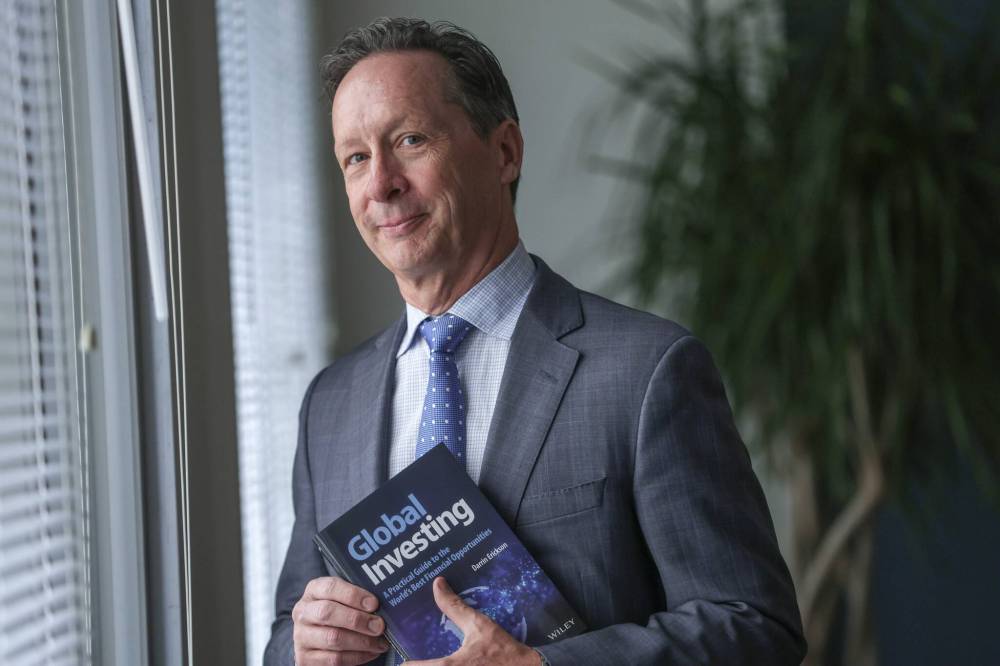
Darrin Erickson (Ruth Bonnevill / Winnipeg Free Press files)
Typically, bond yields rise gradually as stock markets rise.
But with rates rising more than 400 basis points in a few months to stem inflation — which may still not be stemmed — stock investors fear central bankers will go too far leading to a recession. Furthermore, stocks’ future returns — which aren’t guaranteed — become less attractive when lower risk bonds yield five per cent or more.
Despite being conservative investments, bonds can still leave investors unsettled today.
“We are now in ‘wait and see mode’ where central banks monitor inflation and other economic data to determine whether the rapid increase in interest rates already implemented is sufficient to tame inflation,” Erickson says.
As a result, yields surged recently over fears that strong economic data will further fuel inflation leading to more hikes.
(That too led to offered fixed mortgages — guided by bond yields — seeing their rates increase.)
“When growth drives inflation, that’s bonds’ kryptonite,” Boehmer says, because central bankers are more likely to raise rates.
Another worry is that rates will keep rising as inflation remains high even as the economy slows.
That’s called ‘stagflation,’ seen in the 1970s and early 1980s, Nelson says.
“There was high inflation, slow growth and an energy shortage and, so, interest rates went up.”
By 1981, rates were about 19 per cent.

Even more notable is rates trended downward since—a good thing if you owned bonds.
“Today is not unlike where we were then,” Nelson says.
Rates might go higher, but eventually they will fall, as will yields, boosting bond values.
Meanwhile, many bond portfolios (or bond funds) can now yield about seven per cent, Nelson notes.
“So why wouldn’t you consider buying and holding more bonds today when they yield good returns like that?”