

Panama’s Assembly looks to revoke contract for Canadian mining company after public outcry
Advertisement
Read this article for free:
or
Already have an account? Log in here »
To continue reading, please subscribe:

Digital Subscription
One year of digital access for only $205*
- Enjoy unlimited reading on winnipegfreepress.com
- Read the E-Edition, our digital replica newspaper
- Access News Break, our award-winning app
- Play interactive puzzles
*First annual payment billed as $205.00 + GST for one year. This annual subscription will automatically renew at $233.00 + GST every 52 weeks (10% off the regular annual price of $259.35). Offer available to new and qualified returning subscribers only. Cancel any time.
To continue reading, please subscribe:
Add Free Press access to your Brandon Sun subscription for only an additional
$1 for the first 4 weeks*
- Enjoy unlimited reading on winnipegfreepress.com
- Read the E-Edition, our digital replica newspaper
- Access News Break, our award-winning app
- Play interactive puzzles
*Your next Brandon Sun subscription payment will increase by $1.00 and you will be charged $17.95 plus GST for four weeks. After four weeks, your payment will increase to $24.95 plus GST every four weeks.
Read unlimited articles for free today:
or
Already have an account? Log in here »
Hey there, time traveller!
This article was published 01/11/2023 (1067 days ago), so information in it may no longer be current.
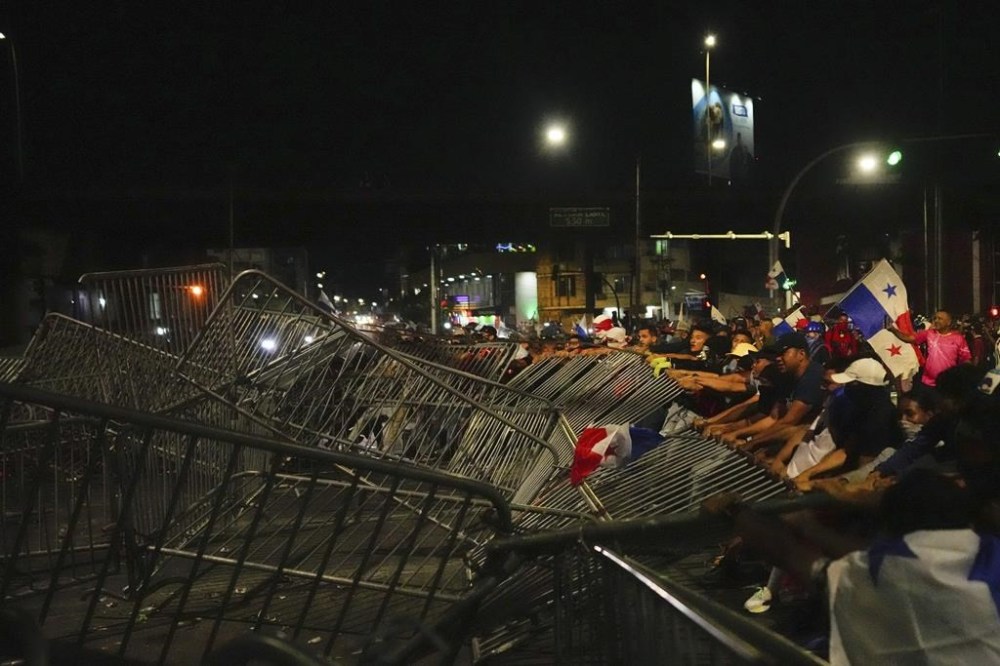
PANAMA CITY (AP) — Facing a second week of impassioned, nationwide protests, Panama’s National Assembly has nearly passed a new law revoking a controversial mining contract in an environmentally vulnerable part of country.
The bill passed a second debate late on Wednesday and now faces a final vote Thursday in which no changes can be made.
Panama’s legislature first agreed a contract extension with Canadian mining company First Quantum and it’s local subsidiary, Minera Panama, in March. The resulting protests — the largest since a cost of living crisis last July — have sparked a series of backtracks from President Laurentino Cortizo.
The new bill not only repeals that contract but extends a moratorium on all concessions for mining activities until the country’s Code of Mineral Resources is reformed.
Before legislators debated the extraordinary measure, Cortizo first proposed a national referendum on the contract. Eight lawsuits were also filed with Panama’s Supreme Court arguing it was unconstitutional.
Initially it was unclear how persuasive environmental objections would prove against the mine’s demonstrated economic promise. It is the largest private investment in Panama’s history and already creates roughly 3% of the country’s gross domestic product.
Now, however, popular protests have materialized into serious legislative and legal challenges, which pushed First Quantum’s shares into a 47% freefall since markets opened on the Toronto Stock Exchange at the start of this week.
Critics warned using a new law to revoke the contract could leave the government liable to legal action from Minera Panama. If, however, the Supreme Court declared the contract unconstitutional, lawyers said it would be annulled without the risk of possible multi-million dollar lawsuits.
While legislators argued, anti-riot police dispersed demonstrators around the Assembly building with rubber-bullet and tear gas. Earlier in the day nurses marched to the Supreme Court building to demand judges prioritize the constitutionality lawsuits.
The contract would allow 20-40 more years of open pit copper mining across 13,000 hectares of forested land just 75 miles (120 kilometers) west of the capital, in the state of Colon. Environmentalists argue continued mining would imperil drinking water and destroy more forest.
The mine is “in the middle of a jungle,” according to Minera Panama’s own contractor, Jan De Nu Group. In particular, it lies in Panama’s share of the Mesoamerican biological corridor, an important migratory route which studies estimate contains up to 10% of all known species.

In the last two decades, Panama has already lost roughly 8.5% of its total tree cover, mostly to agriculture, according to satellite image analysis by Global Forest Watch. Almost the same amount again has been disturbed by industrial activity.
While local protestors are concerned about drinking water, other advocates say the mine could threaten the Panama Canal, already driven by El Nino to its driest October since 1950.
While Minera Panama’s manager insisted in a September open letter that four rivers lie between the mine and the canal, the canal’s administrator expressed concern earlier this year that their water sources might conflict.
____
Follow AP’s climate coverage at: https://apnews.com/hub/climate-and-environment