

Voters in Virginia’s capital city again reject ballot measure on proposed casino
Advertisement
Read this article for free:
or
Already have an account? Log in here »
To continue reading, please subscribe:
Digital Subscription
One year of digital access for only $1.44 a week*
- Enjoy unlimited reading on winnipegfreepress.com
- Read the E-Edition, our digital replica newspaper
- Access News Break, our award-winning app
- Play interactive puzzles
*Billed as $5.77 plus GST every four weeks. After 52 weeks, price increases to the regular rate of $19.95 plus GST every four weeks. Offer available to new and qualified returning subscribers only. Cancel any time.
To continue reading, please subscribe:
Add Free Press access to your Brandon Sun subscription for only an additional
$1 for the first 4 weeks*
- Enjoy unlimited reading on winnipegfreepress.com
- Read the E-Edition, our digital replica newspaper
- Access News Break, our award-winning app
- Play interactive puzzles
*Your next Brandon Sun subscription payment will increase by $1.00 and you will be charged $17.95 plus GST for four weeks. After four weeks, your payment will increase to $24.95 plus GST every four weeks.
Read unlimited articles for free today:
or
Already have an account? Log in here »
Hey there, time traveller!
This article was published 06/11/2023 (1077 days ago), so information in it may no longer be current.
RICHMOND, Va. (AP) — Despite a high-dollar lobbying push, Richmond voters on Tuesday rejected for a second time a ballot measure that would have opened the door to a proposed casino resort in Virginia’s capital city.
Developers first tried in 2021, after the state Legislature paved the way for five casinos around the state if voters first gave their signoff. But Richmond residents voted down the project then and did so again Tuesday.
The project — branded the Richmond Grand Resort and Casino — was proposed for a former tobacco company site just off Interstate 95 in south Richmond. The development plan was a joint venture between Urban One, a publicly traded media company, and Churchill Downs, the Louisville-based operator of the Kentucky Derby that also runs gambling establishments across the country.
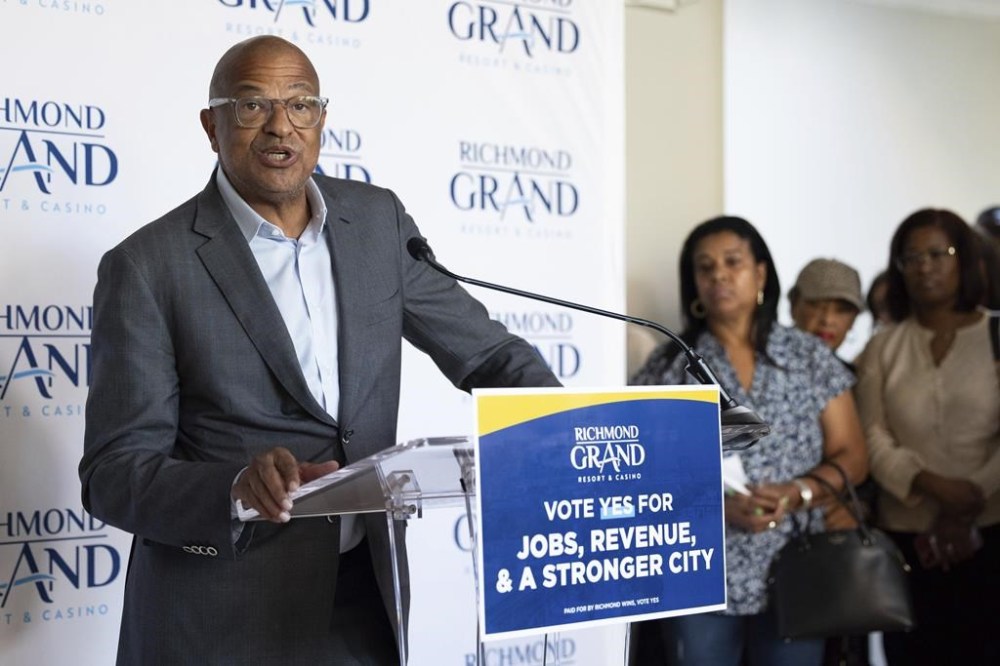
The developers made big promises about the job growth, tax revenue and entertainment options the facility would provide. They also poured around $10 million into a political committee that advocated for the project. Many city leaders, including Mayor Levar Stoney, a presumptive candidate for governor in 2025, were ardent supporters, along with local business and civil rights groups.
Opponents raised concerns about the vetting of the developers, the project’s site and the casino industry in general, arguing that it would exploit the poor and working class. They also objected to being asked to vote on the issue again.
“Richmond City officials should be embarrassed that they didn’t listen to the voters the first time. Hopefully, the message sent tonight by voters will send the casino industry packing, never to return,” said Victoria Cobb, president of the socially conservative Family Foundation of Virginia and head of an anti-casino effort, the Richmond Anti-Corruption League.
In the waning days of the campaign, the developers had to apologize to a leading project opponent — longtime Democratic Party activist Paul Goldman — after a guest radio host on an Urban One station made widely condemned antisemitic remarks about him.

“The people of Richmond have made the following clear: you can’t build a new city on old resentments,” Goldman said in a statement.
The proposal was voted down narrowly in 2021; Tuesday’s margin was far more lopsided.
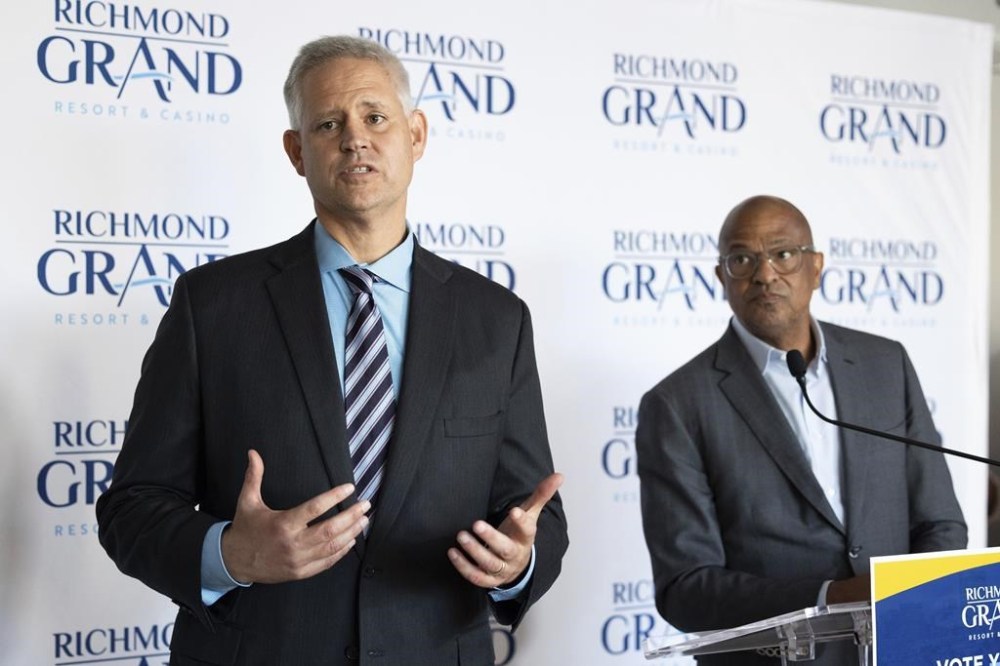
In 2020, Virginia politicians opened the door to casinos by approving legislation allowing five to be built around the state if the projects first secured voter approval. Supporters argued the casinos would be a dramatic economic boost to struggling areas.
Three have opened so far — in Bristol, Portsmouth and Danville — all relatively near the state’s border with North Carolina. A fourth is moving forward slowly in Norfolk.
Petersburg, an economically distressed city south of Richmond, previously sought a chance to hold its own referendum after Richmond’s initially failed. It could do so again during next year’s General Assembly session.