

US and Philippines sign a nuclear cooperation pact allowing US investment and technologies
Advertisement
Read this article for free:
or
Already have an account? Log in here »
To continue reading, please subscribe:

Digital Subscription
One year of digital access for only $205*
- Enjoy unlimited reading on winnipegfreepress.com
- Read the E-Edition, our digital replica newspaper
- Access News Break, our award-winning app
- Play interactive puzzles
*First annual payment billed as $205.00 + GST for one year. This annual subscription will automatically renew at $233.00 + GST every 52 weeks (10% off the regular annual price of $259.35). Offer available to new and qualified returning subscribers only. Cancel any time.
To continue reading, please subscribe:
Add Free Press access to your Brandon Sun subscription for only an additional
$1 for the first 4 weeks*
- Enjoy unlimited reading on winnipegfreepress.com
- Read the E-Edition, our digital replica newspaper
- Access News Break, our award-winning app
- Play interactive puzzles
*Your next Brandon Sun subscription payment will increase by $1.00 and you will be charged $17.95 plus GST for four weeks. After four weeks, your payment will increase to $24.95 plus GST every four weeks.
Read unlimited articles for free today:
or
Already have an account? Log in here »
Hey there, time traveller!
This article was published 17/11/2023 (1030 days ago), so information in it may no longer be current.
MANILA, Philippines (AP) — The United States and the Philippines have signed a nuclear cooperation pact under which U.S. investment and technologies are to help the Southeast Asian nation transition to cleaner energy and bolster its power supply.
Philippine President Ferdinand Marcos Jr. witnessed the signing of the deal by his energy secretary and U.S. Secretary of State Antony Blinken on Thursday on the sidelines of the Asia Pacific Economic Cooperation summit in San Francisco.
“We see nuclear energy becoming a part of the Philippines’ energy mix by 2032 and we are more than happy to pursue this path with the United States as one of our partners,” Marcos said at the signing ceremony.
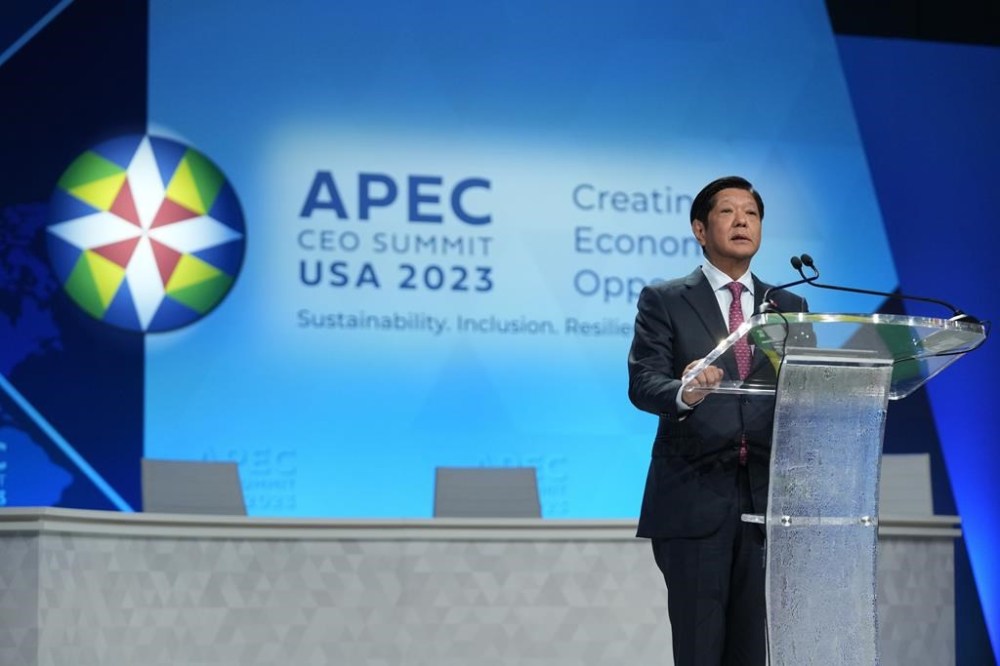
He said the pact, known as a Section 123 agreement, would support the development of reliable, affordable and sustainable power in the Philippines. It will also open doors for U.S. companies to invest and participate in nuclear power projects, he said.
Blinken said negotiations with the Philippines were completed within a year, the fastest for a Section 123 agreement, which is required under the U.S. Atomic Energy Act to allow the transfer of nuclear equipment and material for peaceful uses.
He noted that the Philippines has set an ambitious target of cutting greenhouse gas emissions by 75% by 2030. With its peak energy demand expected to quadruple by 2040, nuclear energy will help it meet its needs in a sustainable way, he said.
“With access to U.S. material and equipment, the U.S. and the Philippines will be able to work together to deploy advanced new technologies, including small modular reactors, to support climate goals as well as critical energy security and baseload power needs within the Philippines,” he said.

“In a nation of more than 7,000 islands, small modular reactors -– some just the size of a city bus -– can generate energy locally and conveniently,” he added.
The Philippines began building a nuclear generating plant, the Bataan Nuclear Power Plant, in the 1970s but it was never completed after questions were raised about its cost and safety, including its location near a major fault and the Pinatubo volcano.
The United States has 23 Section 123 agreements in force that govern peaceful nuclear cooperation with 47 countries, the International Atomic Energy Agency and Taiwan.
___
Ng reported from Kuala Lumpur, Malaysia.