

Deep-sea mining in the Arctic Ocean gets the green light from Norwegian lawmakers
Advertisement
Read this article for free:
or
Already have an account? Log in here »
To continue reading, please subscribe:

Digital Subscription
One year of digital access for only $205*
- Enjoy unlimited reading on winnipegfreepress.com
- Read the E-Edition, our digital replica newspaper
- Access News Break, our award-winning app
- Play interactive puzzles
*First annual payment billed as $205.00 + GST for one year. This annual subscription will automatically renew at $233.00 + GST every 52 weeks (10% off the regular annual price of $259.35). Offer available to new and qualified returning subscribers only. Cancel any time.
To continue reading, please subscribe:
Add Free Press access to your Brandon Sun subscription for only an additional
$1 for the first 4 weeks*
- Enjoy unlimited reading on winnipegfreepress.com
- Read the E-Edition, our digital replica newspaper
- Access News Break, our award-winning app
- Play interactive puzzles
*Your next Brandon Sun subscription payment will increase by $1.00 and you will be charged $17.95 plus GST for four weeks. After four weeks, your payment will increase to $24.95 plus GST every four weeks.
Read unlimited articles for free today:
or
Already have an account? Log in here »
Hey there, time traveller!
This article was published 05/12/2023 (1022 days ago), so information in it may no longer be current.
COPENHAGEN, Denmark (AP) — Norway’s minority center-left government and two large opposition parties made a deal Tuesday to open the Arctic Ocean to seabed mineral exploration despite warnings by environmental groups that it would threaten the biodiversity of the vulnerable ecosystems in the area.
Norway said in June it wanted to open parts of the Norwegian continental shelf for commercial deep sea mining in line with the country’s strategy to seek new economic opportunities and reduce its reliance on oil and gas.
The head of Greenpeace Norway, Frode Pleym, said the decision was “a disaster for the sea” and the mining would take place in “our last wilderness.”
“We do not know what consequences this will have for the ecosystems in the sea, for endangered species such as whales and seabirds, or for the fish stocks on which we base our livelihood,” he said.
Martin Sveinssønn Melvær of the Norwegian Bellona environmental group said the move was “completely contrary to scientific recommendations” and believed it was “a dangerous derailment in the fight against climate change to open up seabed minerals.”
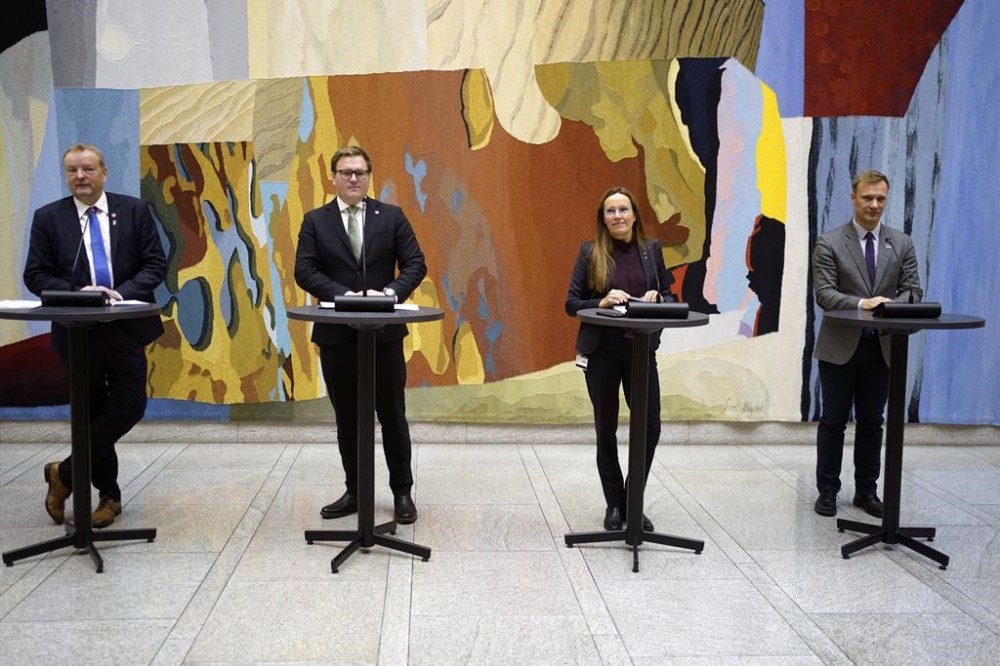
The government – made up of the Labor and the Center Party – made the deal with the conservatives from Hoeyre and the Progress Party, Norwegian news agency NTB said.
It said they had agreed on a step-by-step opening process where the Norwegian parliament, or Stortinget, will approve the first development projects, in the same way as it has done for certain extraction projects in the petroleum sector.

Terje Aasland, Norway’s minister for petroleum and energy, told Norwegian public broadcaster NRK that “we will do this carefully, we will do it step by step. We will collect knowledge, then we will assess whether it is possible to start with this extraction.”
The Scandinavian country, which is one of the world’s wealthiest countries due to its vast oil and gas reserves, says there are significant mineral resources on the seabed of the Norwegian continental shelf.
According to the Norwegian Petroleum Directorate, there are sulphides and manganese crusts containing metals and minerals that are crucial for making batteries, wind turbines, PCs and mobile phones.
If proven to be profitable, and if extraction can be done sustainably, seabed mineral activities can strengthen the economy, including employment in Norway, while ensuring the supply of crucial metals for the world’s transition to sustainable energy, the Ministry of Petroleum and Energy said in June.
The planned area is located southwest of the Arctic island of Svalbard.