

World Bank projects that Israel-Hamas war could push Lebanon back into recession
Advertisement
Read this article for free:
or
Already have an account? Log in here »
To continue reading, please subscribe:

Digital Subscription
One year of digital access for only $205*
- Enjoy unlimited reading on winnipegfreepress.com
- Read the E-Edition, our digital replica newspaper
- Access News Break, our award-winning app
- Play interactive puzzles
*First annual payment billed as $205.00 + GST for one year. This annual subscription will automatically renew at $233.00 + GST every 52 weeks (10% off the regular annual price of $259.35). Offer available to new and qualified returning subscribers only. Cancel any time.
To continue reading, please subscribe:
Add Free Press access to your Brandon Sun subscription for only an additional
$1 for the first 4 weeks*
- Enjoy unlimited reading on winnipegfreepress.com
- Read the E-Edition, our digital replica newspaper
- Access News Break, our award-winning app
- Play interactive puzzles
*Your next Brandon Sun subscription payment will increase by $1.00 and you will be charged $17.95 plus GST for four weeks. After four weeks, your payment will increase to $24.95 plus GST every four weeks.
Read unlimited articles for free today:
or
Already have an account? Log in here »
Hey there, time traveller!
This article was published 21/12/2023 (1004 days ago), so information in it may no longer be current.
BEIRUT (AP) — The ripple effects of the war in Gaza are likely to knock Lebanon’s fragile economy, which had begun making a tepid recovery after years of crisis, back into recession, the World Bank said in a report released Thursday.
Before the outbreak of the ongoing Israel-Hamas war on Oct. 7, the World Bank had projected that Lebanon’s economy would grow in 2023, by a meager 0.2%, for the first time since 2018, driven largely by remittances sent from Lebanese working abroad and by an uptick in tourism.
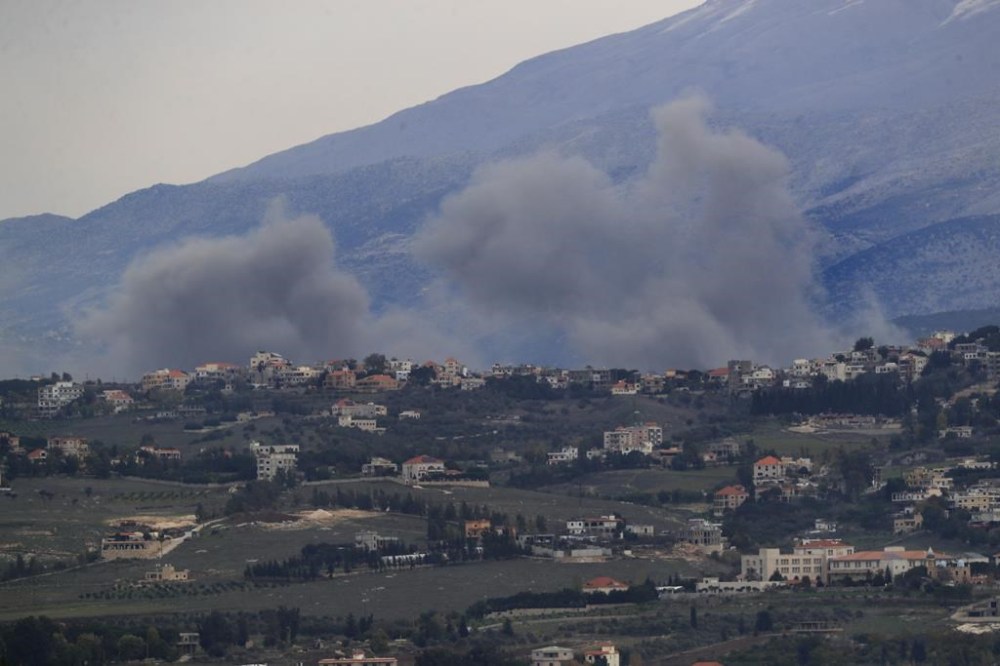
However, since the war in Gaza began, there have been near-daily clashes between the Lebanese militant group Hezbollah and Israeli forces along the Lebanon-Israel border, with fears of an escalation to a full-scale war. The tensions put a major damper on travel to Lebanon, at least temporarily.
Data analyzed by the World Bank in the economic monitor report shows that the percentage of scheduled flights to Lebanon that were actually completed plummeted from 98.8% on Oct. 7 to 63.3% on Nov. 4.
Arrivals have picked up as the low-level conflict on the border did not immediately escalate and as many Lebanese living abroad came home for the holidays. However, the World Bank projected that instead of growing slightly in 2023, Lebanon’s GDP will shrink by -0.6% to -0.9%.
The projections are based on the assumption that the border conflict will continue at its current level without any major escalation by the end of the year.

“Lebanon’s reliance on tourism and remittance inflows is neither a viable economic strategy nor an economic crisis resolution plan,” the report noted. “Because tourism tends to be volatile and subject to external and internal shocks … the sector cannot substitute for more sustainable and diverse drivers of growth.”
Lebanon fell into a protracted economic crisis in 2019, with inflation hitting triple digits and the local currency collapsing. The lira, which had been pegged at 1,500 to the dollar for a quarter century, now goes for around 90,000 on the black market.
Before the war, many of Lebanon’s leaders had been banking on tourism and remittances to drive an economic recovery, hoping to sidestep reforms required to clinch an International Monetary Fund bailout package. Lebanon reached a preliminary deal with the IMF in April 2022 for a $3 billion rescue package but has not completed most of the reforms required to finalize it.
Caretaker Deputy Prime Minister Saade Chami, one of the few Lebanese officials still pushing for an IMF deal, said Thursday that Lebanon had made “no progress to speak of” in recent months on implementing the rest of the required reforms. However, he pushed back against perceptions that the deal is dead.
IMF officials “are still engaged,” Chami said, “but they’re waiting for us to do what we are supposed to do.”