

‘Darkest before dawn’: Another tough year for office REITs but opportunities may lurk
Advertisement
Read this article for free:
or
Already have an account? Log in here »
To continue reading, please subscribe:

Digital Subscription
One year of digital access for only $205*
- Enjoy unlimited reading on winnipegfreepress.com
- Read the E-Edition, our digital replica newspaper
- Access News Break, our award-winning app
- Play interactive puzzles
*First annual payment billed as $205.00 + GST for one year. This annual subscription will automatically renew at $233.00 + GST every 52 weeks (10% off the regular annual price of $259.35). Offer available to new and qualified returning subscribers only. Cancel any time.
To continue reading, please subscribe:
Add Free Press access to your Brandon Sun subscription for only an additional
$1 for the first 4 weeks*
- Enjoy unlimited reading on winnipegfreepress.com
- Read the E-Edition, our digital replica newspaper
- Access News Break, our award-winning app
- Play interactive puzzles
*Your next Brandon Sun subscription payment will increase by $1.00 and you will be charged $17.95 plus GST for four weeks. After four weeks, your payment will increase to $24.95 plus GST every four weeks.
Read unlimited articles for free today:
or
Already have an account? Log in here »
Hey there, time traveller!
This article was published 03/01/2024 (984 days ago), so information in it may no longer be current.
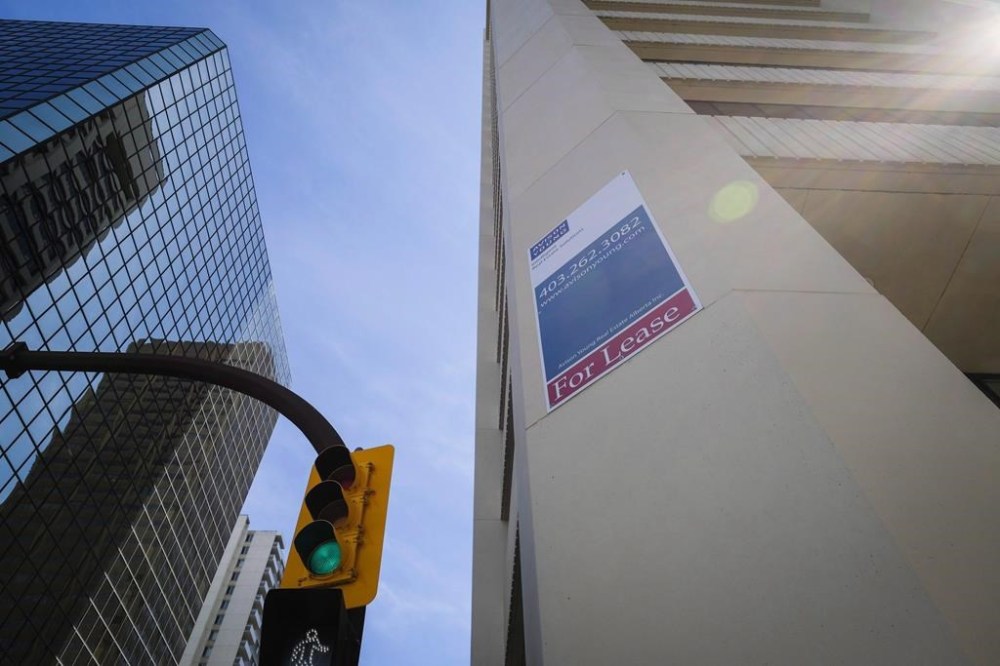
TORONTO – It’s poised to be another challenging year for office real estate investment trusts, but some money managers say there could be decent entry points in the sector for long-term investors.
“We are in a ‘darkest before dawn’ scenario heading into 2024 for office REITs — there is no denying they are cheap … but there are numerous headwinds that office landlords face,” said Michael McNabb, portfolio manager at Purpose Investments Inc., via email.
“I think a lot of investors forget that this was the hottest REIT asset class heading into 2020,” he said, when office vacancy rates were extremely tight and investors flocked to the sector for its monthly payouts.
But post-pandemic, McNabb said he’s noticed pedestrian traffic in Toronto’s PATH system — an underground walkway network in the downtown core — is still very low on Mondays and Fridays in particular.
“The office isn’t dead, but I do believe it has changed.”
The COVID-induced work-from-home shift has ravaged the office market as many employers re-evaluated their office footprint. Firms have also looked at reducing their real estate holdings as a way to rein in expenses to help cope with the current weaker economy.
“It is likely that 10 to 15 per cent of demand has been permanently destroyed with (work-from-home) trends,” said Maria Benavente, vice-president and real estate-focused portfolio manager at Dynamic Funds.
“We expect it to continue to be a market of haves and have-nots.”
A September report from Colliers Canada showed the national office vacancy rate rose to 14.1 per cent in the third quarter last year, up from 13 per cent in the third quarter of 2022.
Office vacancy rates have been rising for three and a half years and will likely continue to climb in the short term with remote working still prevalent, according to the report.
Meanwhile, average asking rents for offices neared a record high of $21.08 per square foot, driven mainly by the removal of older office buildings and landlords negotiating concessions beyond lower rent, the report said.
John Duda, Colliers’ president of real estate management services, Canada, said he expects a “slow uptick” in office space absorption by the end of 2024, but he’s not “anticipating a radical turnaround.”
Part of the issue is the disparity between what employers and workers want.
“What’s been preventing a more dramatic shift in back-to-the-office, it’s been the imbalance in the employment market,” Duda said in an interview.
“The employees have had a lot of power and that means they’re just not coming in and saying, ‘I won’t come in.’ But that is starting to shift and we’re noticing it particularly in the (downtown) cores; the busy level has picked up very significantly.”
Units in Slate Office REIT, Allied Properties REIT, True North Commercial REIT and Dream Office REIT are all down between 62 and 85 per cent since March 1, 2020.
Sentiment remains fairly negative on the sector and timing the recovery is difficult, said Benavente, pointing out how Calgary’s office market was still struggling to recover from the 2014 oil price collapse even before the pandemic.
“Office is a value investment — value requires patience and tolerance for volatility,” she said.
“We think there is some value; however, investors need to be selective and be laser-focused on balance sheet, liquidity and dividend coverage. We saw many office REITs being forced to cut their dividends, sometimes even twice.”
Slate Office REIT, for example, suspended its monthly distribution in mid-November to conserve cash. True North Commercial REIT slashed its monthly payout early last year.

Office REITs will do well when the economy begins to recover and businesses return to hiring mode, Benavente said. Banks also need to be willing to lend more freely to office landlords for activity to pick up in the sector.
McNabb said he’s still very cautious on the sector and wants to see vacancy rates improve. But he believes longer-term investors could start “picking away” at higher-quality companies, which could prove to be a good investment in time.
“Commercial real estate follows the simple economic rule of supply and demand … and currently supply is outstripping demand by a very wide margin,” McNabb said.
This report by The Canadian Press was first published Jan. 3, 2024.
Companies in this story: (TSX:SOT-U, TSX:D-U, TSX:AP-U, TSX:TNT-U)