

The lost art of motivating employees
Wayfair’s CEO urges work ethic, but sparks controversy
Advertisement
Read this article for free:
or
Already have an account? Log in here »
To continue reading, please subscribe:
Monthly Digital Subscription
$0 for the first 4 weeks*
- Enjoy unlimited reading on winnipegfreepress.com
- Read the E-Edition, our digital replica newspaper
- Access News Break, our award-winning app
- Play interactive puzzles
*No charge for 4 weeks then price increases to the regular rate of $19.95 plus GST every four weeks. Offer available to new and qualified returning subscribers only. Cancel any time.
Monthly Digital Subscription
$4.99/week*
- Enjoy unlimited reading on winnipegfreepress.com
- Read the E-Edition, our digital replica newspaper
- Access News Break, our award-winning app
- Play interactive puzzles
*Billed as $19.95 plus GST every four weeks. Cancel any time.
To continue reading, please subscribe:
Add Free Press access to your Brandon Sun subscription for only an additional
$1 for the first 4 weeks*
*Your next subscription payment will increase by $1.00 and you will be charged $16.99 plus GST for four weeks. After four weeks, your payment will increase to $23.99 plus GST every four weeks.
Read unlimited articles for free today:
or
Already have an account? Log in here »
Hey there, time traveller!
This article was published 13/01/2024 (728 days ago), so information in it may no longer be current.
In a year-end memo that ruffled feathers and stirred a tempest of reactions, Wayfair CEO Niraj Shah delivered a stark message to the company’s employees, calling for an embrace of longer working hours and a deeper integration of work into personal lives. The missive, a resounding departure from traditional holiday cheer, raised eyebrows and sparked debates about work culture and employee well-being.
Shah’s directive, urging employees not to shy away from working extended hours, attempted to resonate as a call for heightened dedication and commitment as Wayfair is just now seeing glimmers of profitability after a difficult and unprofitable year. “Working long hours, being responsive, blending work and life, is not anything to shy away from,” Shah proclaimed in the email. “There is not a lot of history of laziness being rewarded with success. Hard work is an essential ingredient in any recipe for success. I embrace this, and the most successful people I know do as well.”
His stance underscored the belief that diligence and hard work are indispensable components for achieving success in any endeavor — but was not warmly received.
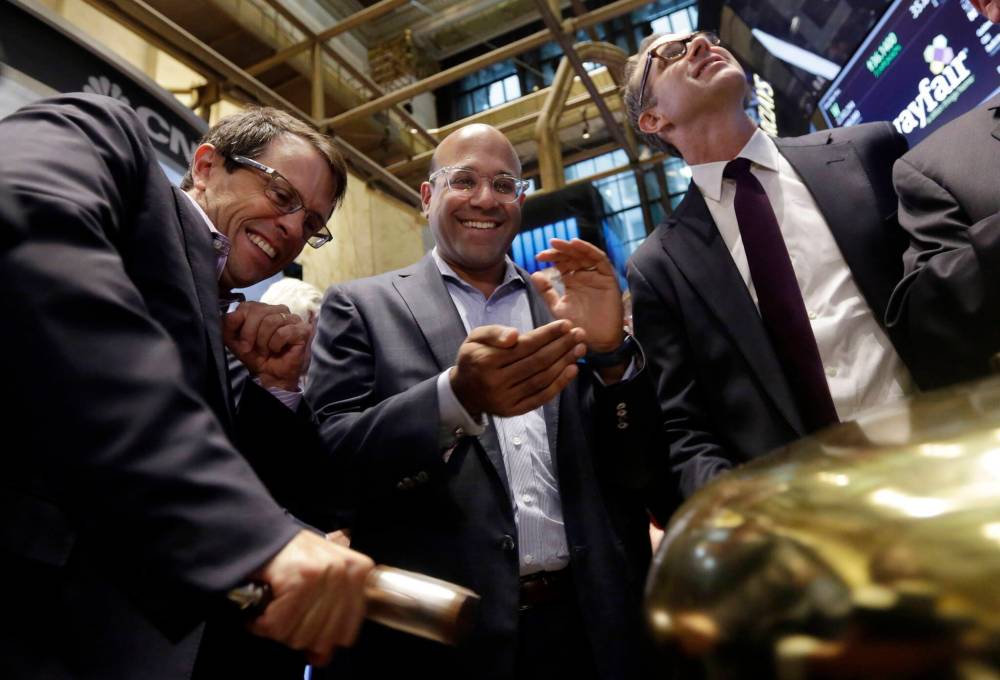
Richard Drew / The Associated Press
Wayfair CEO Niraj Shah (centre) offered a directive to his employees urging them to work extended hours.
The memo’s content stirred controversy, triggering a wave of reactions across various online platforms. Many voiced their dissent, labelling the CEO’s approach as draconian and signalling intentions to boycott Wayfair. Some expressed concern about the impact on employee well-being, suggesting that such stringent work expectations could breed dissatisfaction among the workforce. Wayfair did lay off five per cent of their workforce in 2023, so the remaining staff may be feeling that they are already shouldering extra workload and may still feel worried for their positions. A year-end note pushing them to work harder appears to have angered many employees instead of motivating them.
In response to the uproar, Wayfair issued a statement defending Shah’s communication, stating that the memo aimed to reinforce values contributing to the company’s success, including challenging norms, cost-efficiency, and collaborative effort for results. However, critiques persisted, with some experts suggesting that this strategy might be counterproductive, particularly in a labour market where employees have alternatives and other employers are more accommodating of work-life balance. Stringent work expectations without a corresponding increase in compensation could drive talent away rather than foster productivity.
The controversy surrounding Wayfair’s CEO highlights the ongoing discourse on work culture, employee well-being, and the evolving dynamics of the modern workplace. It serves as a stark reminder of the delicate balance between fostering dedication and ensuring a healthy work-life balance in today’s professional landscape.
It is understandable that employers may feel frustrated in this new era where employees are very aware of their rights and are prioritizing their work/life balance. Quiet quitting, where an employee does the bare minimum to get the job done, has continued to be an issue for employers as it has reduced productivity levels. The struggle to return staff to the office has also been a flashpoint between the parties because the employers want to rebuild workplace culture by bringing people back together while employees are more interested in the flexibility that working from home allows.

I was raised to believe that hard work will be rewarded. That showing up, being helpful, and, yes, working long hours, would single an employee out for reward and recognition. This remains true but in order to find the self-motivation to put in the hard work, it is important for employees to be aligned with the purpose and values of the organization, and their role in achieving good work. Employees are not particularly motivated to work hard so shareholders receive tidy dividends (unless they are themselves shareholders!) nor will they be eager to return to the office so that the CEO can justify the rent payment on the budget line.
The employer needs to be very aware of those putting in the hard work and have simple and effective ways of rewarding them. Innovative employee recognition practices have transcended traditional approaches, embracing creative and personalized methods to acknowledge and appreciate employees’ contributions. From peer-to-peer recognition platforms where employees call out their team members on Slack, to interactive social media shoutouts, companies are leveraging technology to foster a culture of appreciation.
Some businesses have adopted “micro-recognitions,” frequent and specific acknowledgments for small wins, enhancing motivation and morale. Others organize unique experiences, like team outings or personalized gifts tailored to individual preferences, fostering a deeper sense of connection and appreciation. Additionally, there’s a growing trend toward skill-based recognition, where employees are acknowledged and rewarded with continuous learning for their specific talents or expertise, further empowering them within their roles and showcasing their unique contributions. These innovative approaches not only reinforce a culture of appreciation but also contribute to a more engaged and motivated workforce, ultimately enhancing overall productivity and retention rates.
The idea of a year-end motivational memo may not be misplaced; however, it needs to be delivered to a workforce that has felt a year-long sense of belonging and appreciation. It also needs to outline the why. People are motivated to invest passionately in a cause when they understand and believe in the organization’s values. Crucially, by aligning each individual employee’s role with the organization’s mission and values, it instills a deeper connection to the work. It certainly takes more effort from employers than just insisting that employees be grateful for the job, but the end result is a driven and motivated workforce that is loyal to the organization and willing to work hard (but maybe not put in excessive amounts of overtime!).
Tory McNally, CPHR, B.Sc., vice-president, HR consulting is a human resource professional, radio personality, speaker, and problem solver. She can be reached at tory@legacybowes.com.