

Bernardo Arévalo faces huge challenges after finally being sworn in as Guatemala’s president
Advertisement
Read this article for free:
or
Already have an account? Log in here »
To continue reading, please subscribe:

Digital Subscription
One year of digital access for only $205*
- Enjoy unlimited reading on winnipegfreepress.com
- Read the E-Edition, our digital replica newspaper
- Access News Break, our award-winning app
- Play interactive puzzles
*First annual payment billed as $205.00 + GST for one year. This annual subscription will automatically renew at $233.00 + GST every 52 weeks (10% off the regular annual price of $259.35). Offer available to new and qualified returning subscribers only. Cancel any time.
To continue reading, please subscribe:
Add Free Press access to your Brandon Sun subscription for only an additional
$1 for the first 4 weeks*
- Enjoy unlimited reading on winnipegfreepress.com
- Read the E-Edition, our digital replica newspaper
- Access News Break, our award-winning app
- Play interactive puzzles
*Your next Brandon Sun subscription payment will increase by $1.00 and you will be charged $17.95 plus GST for four weeks. After four weeks, your payment will increase to $24.95 plus GST every four weeks.
Read unlimited articles for free today:
or
Already have an account? Log in here »
Hey there, time traveller!
This article was published 15/01/2024 (979 days ago), so information in it may no longer be current.
GUATEMALA CITY (AP) — Guatemala’s new president, Bernardo Arévalo, was left with huge challenges Monday after he was finally sworn into office, including his party’s lack of recognition in a Congress where he would not have a majority anyway.
After months of efforts to derail his inauguration, old guard legislators delayed Arévalo’s swearing-in by 10 hours on Sunday. The foot-dragging lasted right up to the ceremony that took place just after midnight.
Arévalo won an August election by a comfortable margin, but nothing has been straightforward since. He has said that he will request the resignation of Attorney General Consuelo Porras, who oversaw months of legal maneuvers to prevent his presidency, but it is unclear if he can get rid of her.

In his inauguration speech, Arévalo quickly acknowledged the country’s large Indigenous population, citing “historic debts … that we must resolve.” About 40% of Guatemalans belong to one of about two dozen Indigenous groups, and they are generally poorer and have less access to services of all kinds.
“There cannot be democracy without social justice, and social justice cannot prevail without democracy,” Arévalo said in his first speech as president, referring to the young and Indigenous Guatemalans.
In his first act as president, Arévalo visited the site outside the Attorney General’s Office where Indigenous protesters kept vigil for more than three months, demanding authorities respect the will of voters and for Porras to step down. He applauded the protesters for defending the country’s democracy.
It was an important gesture by Arévalo, who was criticized last week for including only one Indigenous person in his Cabinet. Indigenous people steadfastly supported him during the attempts to keep him from taking office . In October, hundreds blocked highways across the country for three weeks to pressure authorities.
Indigenous leaders took the opportunity Monday to urge Arévalo not to forget their support and the many basic needs of their communities. It was Indigenous and rural protests that helped stop the attorney general from jailing Arévalo or putting him on trial after he was elected.
On Sunday, hundreds of Arévalo’s supporters pushed past police lines to gather outside Congress to pressure lawmakers to follow the Constitution of Guatemala.
Members of Congress were supposed to attend the inauguration as a special session of the legislature. Lawmakers ended up yelling at each other and engaged in bitter infighting over whom to recognize as part of the congressional delegation.
The leadership commission tasked with doing that was packed with old-guard opponents of the president-elect, and Sunday’s delay was seen as a tactic to weaken Arévalo.
A progressive academic-turned-politician and son of a Guatemalan president credited with implementing key social reforms in the mid-20th century, Arévalo made confronting Guatemala’s entrenched corruption his main campaign pledge.
“We will not allow our institutions to submit again to corruption and impunity,” he said in his inaugural address.
That won’t be easy, either: His anti-corruption stance and outsider status are threats to deep-rooted interests in the Central American country, observers say.
Outgoing President Alejandro Giammattei, who was widely criticized for eroding the country’s democratic institutions, did not attend the inauguration.
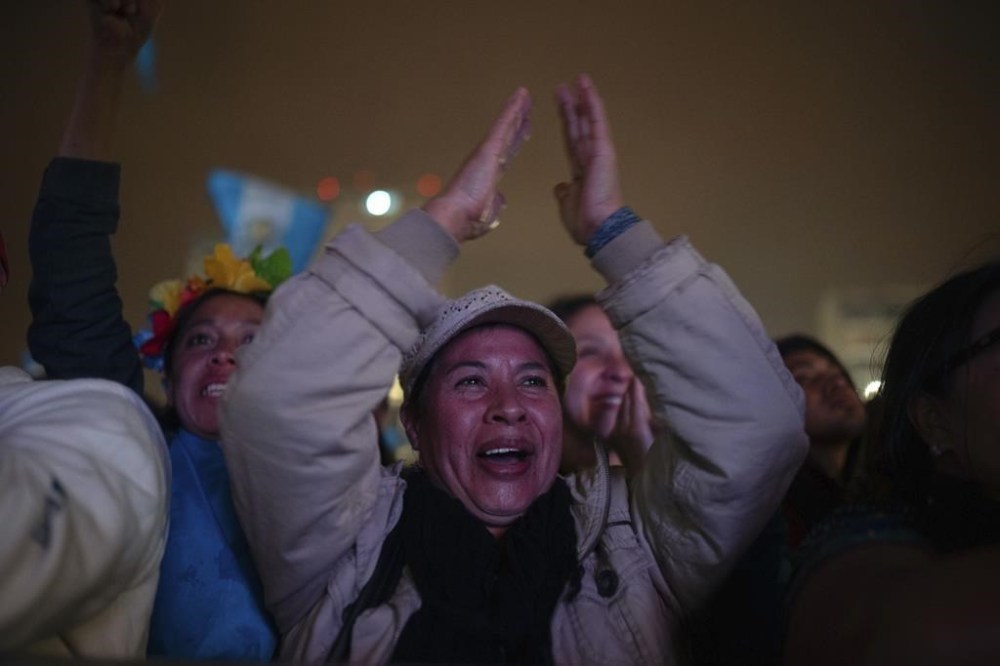
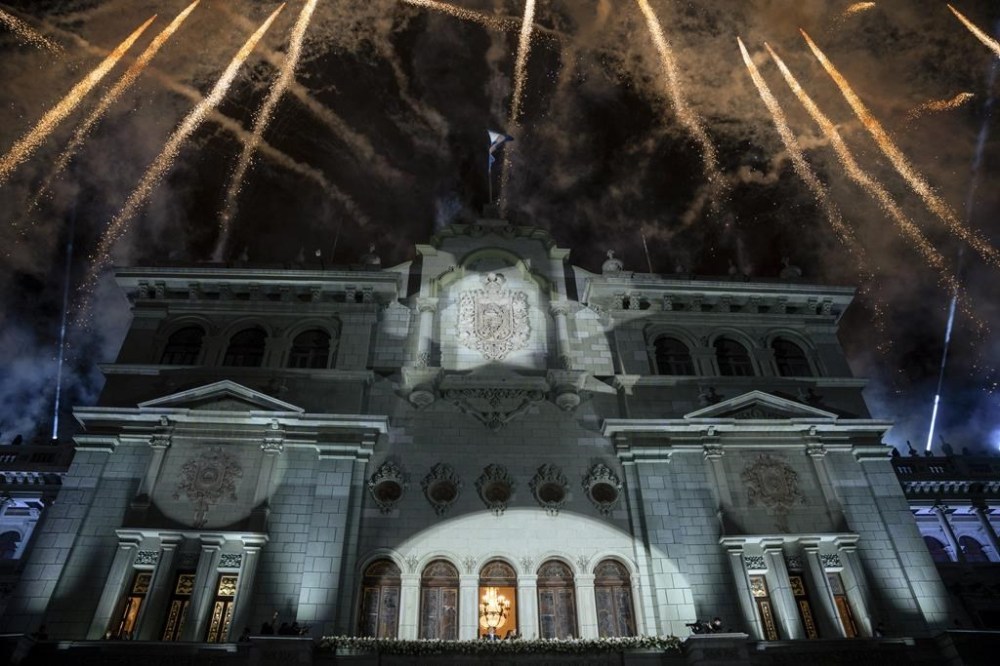
Arévalo’s supporters were forced to wait hours for a festive inauguration celebration in Guatemala City’s emblematic Plaza de la Constitución, but spirits remained high. For many Guatemalans, the inauguration represented not only the culmination of Arévalo’s victory at the polls, but also their successful defense of the country’s democracy.
“I am very happy,” retired teacher Manuel Perez, 60, said as he danced to a band playing salsa music. “I’m here because I’m Guatemalan and I love my country. I hope for a better life for everyone. We’re going to be here celebrating until dawn.”
Prosecutors sought to suspend Arévalo’s Seed Movement party — a move that could prevent its legislators from holding leadership positions in Congress — and to strip Arévalo of his immunity three times.
Prosecutors have alleged that the Seed Movement engaged in misdeeds in collecting signatures to register as a party years earlier, that its leaders encouraged a monthlong occupation of a public university, and that there was fraud in the election. International observers have denied that.

Arévalo got early and strong support from the international community. The European Union, Organization of American States and the U.S. government repeatedly demanded respect for the popular vote.
Washington went further, sanctioning Guatemalan officials and private citizens suspected of undermining the country’s democracy.
“We applaud the Guatemalan people for advancing the cause of democracy under challenging circumstances,” U.S. Secretary of State Antony Blinken said in a statement Monday. “We also commend Guatemala’s institutions, civil society, and the international community for safeguarding electoral integrity, voting systems, and processes.”
___
Follow AP’s coverage of Latin America at https://apnews.com/hub/latin-america