

Students and parents are frustrated by delays in hearing about federal financial aid for college
Advertisement
Read this article for free:
or
Already have an account? Log in here »
To continue reading, please subscribe:
Monthly Digital Subscription
$0 for the first 4 weeks*
- Enjoy unlimited reading on winnipegfreepress.com
- Read the E-Edition, our digital replica newspaper
- Access News Break, our award-winning app
- Play interactive puzzles
*No charge for 4 weeks then price increases to the regular rate of $19.95 plus GST every four weeks. Offer available to new and qualified returning subscribers only. Cancel any time.
Monthly Digital Subscription
$4.99/week*
- Enjoy unlimited reading on winnipegfreepress.com
- Read the E-Edition, our digital replica newspaper
- Access News Break, our award-winning app
- Play interactive puzzles
*Billed as $19.95 plus GST every four weeks. Cancel any time.
To continue reading, please subscribe:
Add Free Press access to your Brandon Sun subscription for only an additional
$1 for the first 4 weeks*
*Your next subscription payment will increase by $1.00 and you will be charged $16.99 plus GST for four weeks. After four weeks, your payment will increase to $23.99 plus GST every four weeks.
Read unlimited articles for free today:
or
Already have an account? Log in here »
Hey there, time traveller!
This article was published 19/02/2024 (689 days ago), so information in it may no longer be current.
NEW YORK (AP) — For many students, the excitement of being accepted into their first-choice college is being tempered this year by a troublesome uncertainty over whether they’ll get the financial aid they need to attend.
The financial aid decisions that usually go out with acceptance letters are being delayed because of a later-than-expected rollout of a revised Free Application for Federal Student Aid, the form commonly known as FAFSA that schools use to compute financial aid.
The result: Students and their parents are putting off their college decisions.
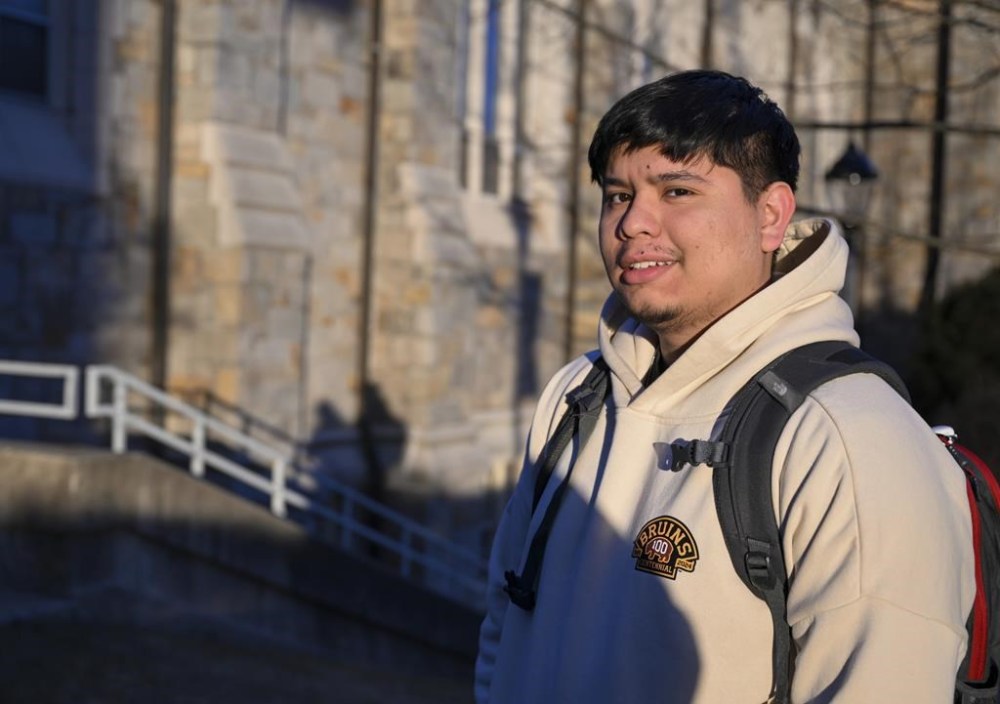
“We are not going to make a decision without knowing what we’re committing to financially; it would be irresponsible to do that,” said Jenny Nicholas of Keene, New Hampshire. She wants to make sure that her son, a high school senior, goes to a college that is most affordable for their family.
The Education Department said the form would be easier for parents to fill out and used a new formula to compute eligibility for aid that took inflation into account. But it wasn’t ready in October, when the forms for the coming school year are usually released. During a soft launch in December, it was difficult for many people to access the form. And the initial release didn’t include the updated inflation tool.
Schools won’t get the information they need to award financial aid until next month, forcing them to adapt. Some have moved away from the popular May 1 deadline for students to accept their offers of admission.
Just this past week, Virginia Tech, for example, said it had moved its admissions deposit deadline for first-year college students to May 15. “Understandably so, families are concerned about the FAFSA process this year, and they are telling us that they need more time to make fully informed decisions,” Juan Espinoza, interim vice provost for enrollment management, said in a statement.
The school said it anticipated notifying families about financial aid in mid-April.
“We can’t make a decision until we see a financial aid package,” said Agata James, a mother of a New York high school senior from Queens. “Everything is in limbo.”
James’ son decision is torn between two colleges, one in his home state and the other an out-of-state university that is his dream school. But James says the decision will come down to what she can afford without accumulating a large amount of student loan debt.
The Education Department has said it is working to alleviate the consequences of the delays. Some of these steps taken are reducing verification requirements, sending federal experts to under-resourced schools and allocating money for technical assistance to non-profit groups.
“We are determined to get this right,” Education Secretary Miguel Cardona said in a statement this month. “We must, and we will.”
More than 17 million students use the FAFSA every year to receive financial aid for their college education. As of mid-February, more than 4 million forms have been successfully submitted, the department said.
Rachel Reniva of Dothan, Alabama, said the financial aid decision will affect not only her son’s future but also her entire family’s.
Even though the Education Department said the new application would be simpler to use, some students and parents still are having trouble filing.
Jesus Noyola, a sophomore attending Rensselaer Polytechnic Institute in Troy, New York, said he hasn’t been able to submit his form because of an error in the parent portion of the application.
“It’s disappointing and so stressful since all these issues are taking forever to be resolved,” said Noyola, who receives grants and work-study to fund his education.
Other errors have been linked to Social Security numbers, said Travis Hill, director for Dallas County Promise, a college success program in Texas.
Parents without legal immigration status are not able to submit their portion of the application because they don’t have a Social Security number. Other parents are also encountering errors linking their Social Security number with their child’s FAFSA application.

“I’m feeling stressed,” said Lorenzo Jaramillo, 17, a high school senior who is looking to major in computer engineering. Although Jaramillo lives in Toronto, he is a U.S. citizen and thus eligible for financial aid.
Helen Faith, director of the Office of Financial Aid at the University of Wisconsin-Madison, said she worries that the delays will harm both students and schools.
“What ends up happening is that our underrepresented and most fragile populations are the ones that are disproportionately affected,” said Hill.
——
The Associated Press receives support from Charles Schwab Foundation for educational and explanatory reporting to improve financial literacy. The independent foundation is separate from Charles Schwab and Co. Inc. The AP is solely responsible for its journalism.