

What recession? Professional forecasters raise expectations for US economy in 2024
Advertisement
Read this article for free:
or
Already have an account? Log in here »
To continue reading, please subscribe:

Digital Subscription
One year of digital access for only $205*
- Enjoy unlimited reading on winnipegfreepress.com
- Read the E-Edition, our digital replica newspaper
- Access News Break, our award-winning app
- Play interactive puzzles
*First annual payment billed as $205.00 + GST for one year. This annual subscription will automatically renew at $233.00 + GST every 52 weeks (10% off the regular annual price of $259.35). Offer available to new and qualified returning subscribers only. Cancel any time.
To continue reading, please subscribe:
Add Free Press access to your Brandon Sun subscription for only an additional
$1 for the first 4 weeks*
- Enjoy unlimited reading on winnipegfreepress.com
- Read the E-Edition, our digital replica newspaper
- Access News Break, our award-winning app
- Play interactive puzzles
*Your next Brandon Sun subscription payment will increase by $1.00 and you will be charged $17.95 plus GST for four weeks. After four weeks, your payment will increase to $24.95 plus GST every four weeks.
Read unlimited articles for free today:
or
Already have an account? Log in here »
Hey there, time traveller!
This article was published 26/02/2024 (925 days ago), so information in it may no longer be current.
NEW YORK (AP) — This year looks to be a much better one for the U.S. economy than business economists were forecasting just a few months ago, according to a survey released Monday.
The economy looks set to grow 2.2% this year after adjusting for inflation, according to the National Association for Business Economics. That’s up from the 1.3% that economists from universities, businesses and investment firms predicted in the association’s prior survey, which was conducted in November.
It’s the latest signal of strength for an economy that’s blasted through predictions of a recession. High interest rates meant to get inflation under control were supposed to drag down the economy, the thinking went. High rates put the brakes on the economy, such as by making mortgages and credit card bills more expensive, in hopes of starving inflation of its fuel.
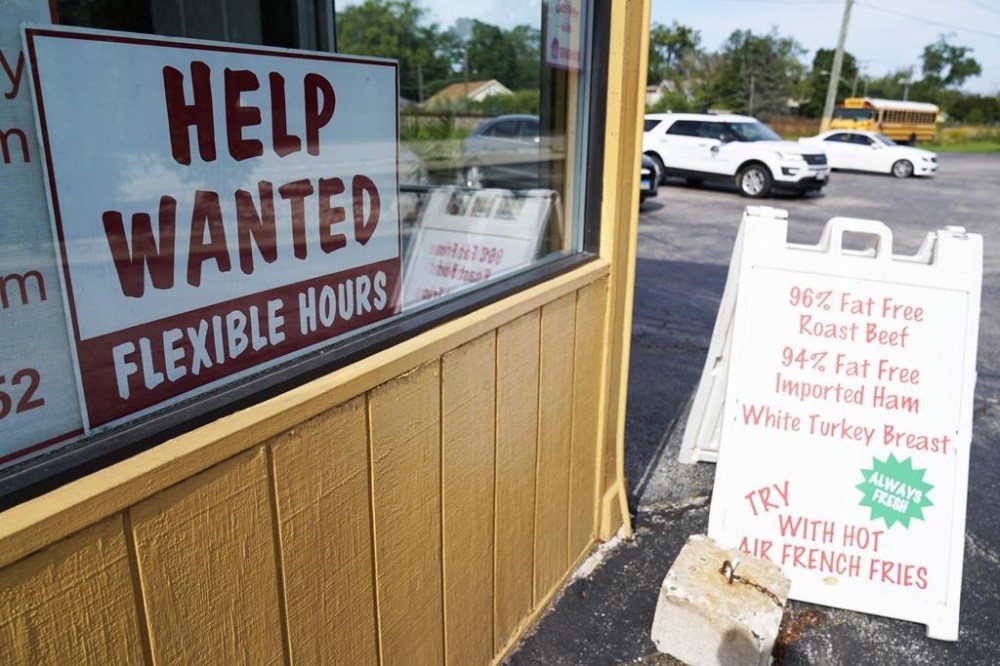
But even with rates very high, the job market and U.S. household spending have remained remarkably resilient. That in turn has raised expectations going forward. Ellen Zentner, chief U.S. economist at Morgan Stanley and president of the NABE, said a wide range of factors are behind the 2024 upgrade, including spending by both the government and households.
Economists also more than doubled their estimates for the number of jobs gained across the economy this year, though it would still likely be down from the previous one.
Offering another boost is the fact that inflation has been cooling since its peak two summers ago.
While prices are higher than customers would like, they’re not increasing as quickly as they were before. Inflation has slowed enough that most of the surveyed forecasters expect interest rate cuts to begin by mid-June.
The Federal Reserve, which is in charge of setting short-term rates, has said it will likely cut them several times this year. That would relax the pressure on the economy, while goosing prices for stocks and other investments.

Of course, rate changes take a notoriously long time to snake through the economy and take full effect. That means past hikes, which began two years ago, could still ultimately tip the economy into a recession.
In its survey, NABE said 41% of respondents cited high rates as the most significant risk to the economy. That was more than double any other response, including fears of a possible credit crunch or a broadening of the wars in Ukraine or the Middle East.