

Alta. government announces new rules for electricity generators
Advertisement
Read this article for free:
or
Already have an account? Log in here »
To continue reading, please subscribe:
Digital Subscription
One year of digital access for only $1.44 a week*
- Enjoy unlimited reading on winnipegfreepress.com
- Read the E-Edition, our digital replica newspaper
- Access News Break, our award-winning app
- Play interactive puzzles
*Billed as $5.77 plus GST every four weeks. After 52 weeks, price increases to the regular rate of $19.95 plus GST every four weeks. Offer available to new and qualified returning subscribers only. Cancel any time.
To continue reading, please subscribe:
Add Free Press access to your Brandon Sun subscription for only an additional
$1 for the first 4 weeks*
- Enjoy unlimited reading on winnipegfreepress.com
- Read the E-Edition, our digital replica newspaper
- Access News Break, our award-winning app
- Play interactive puzzles
*Your next Brandon Sun subscription payment will increase by $1.00 and you will be charged $17.95 plus GST for four weeks. After four weeks, your payment will increase to $24.95 plus GST every four weeks.
Read unlimited articles for free today:
or
Already have an account? Log in here »
Hey there, time traveller!
This article was published 11/03/2024 (812 days ago), so information in it may no longer be current.
Alberta’s government is updating its electricity market rules with new temporary measures it says will help lower consumers’ utility bills.
The new measures are aimed at the practice of “economic withholding,” a strategy regularly used by power generators in Alberta’s unique-to-Canada free-market electricity system.
Under Alberta’s competitive market design, electricity suppliers submit offers into the energy market known as the power pool every hour. The Alberta Electric System Operator then dispatches the suppliers’ electricity, starting with the lowest-priced offers and moving higher until the province’s power needs for that hour are met.
Economic withholding is when power producers deliberately hold back some of their supply, offering it at a higher price. It’s a gamble that can pay off if the operator needs that power, since the producer makes more money, but backfires if the province’s power needs are met before it gets to the higher-priced offer.
The practice is not illegal, but has been highly criticized recently as one of the factors contributing to soaring consumer power bills in the province, as well as a growing number of occurrences where power prices in the province have been higher during off-peak periods than during periods of peak demand.
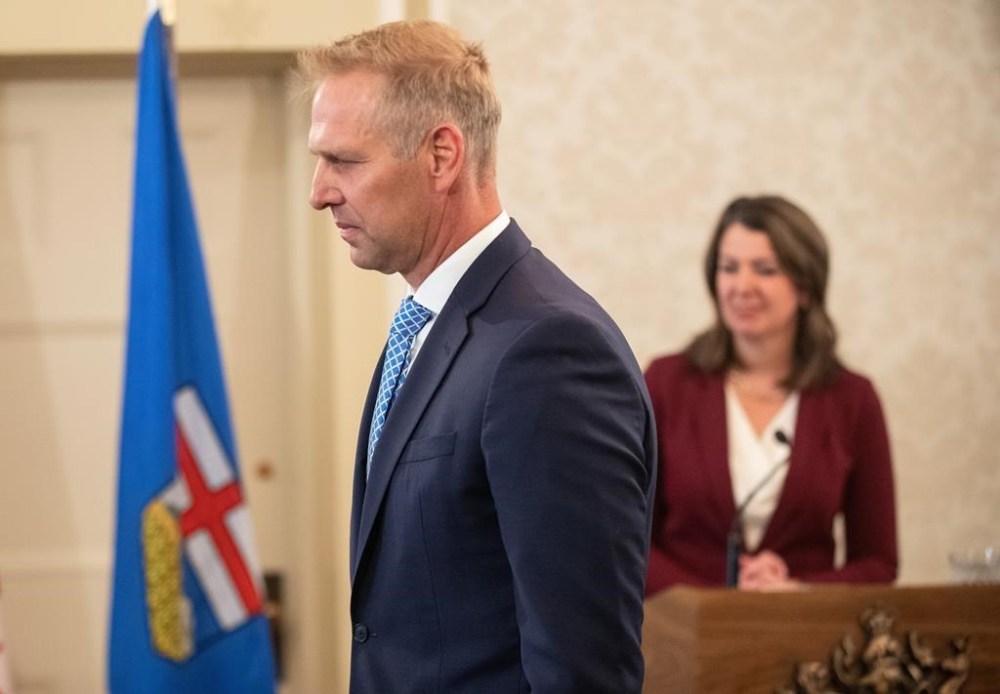
“Our government is committed to Alberta’s unique and investor-driven energy-only market. However, the market’s rules were designed 25 years ago, and some are no longer optimal for the system today,” said Utilities Minister Nathan Neudorf in a news release.
“This will truly make a difference by helping lower Albertans’ utility bills.”
The new rules will limit the offer price of natural gas generating units owned by large providers, if net revenues cross a predefined threshold. They will also require natural gas generating assets to be made available, as directed by the AESO, in certain circumstances such as extreme weather and other times of peak demand.
The government said the changes will still allow generators to earn revenue while ensuring Albertans have access to affordable and reliable power.
But Joel MacDonald, founder of electricity price comparison site energyrates.ca, said Alberta is one of only two jurisdictions in North America to have an energy-only electricity market whereby generators are not paid to have standby generating capacity. Instead, they are only paid for the electricity they actually dispatch to the grid.
That means, MacDonald said, that if the government sets the ceiling for economic withholding too low, power producers will feel the impact on their bottom line and may be more hesitant to invest in building new generating capacity.
“It will in the short-term reduce those high prices during peak periods, but we’re going to have, long-term, less generation. Less power plants are going to be built,” he said.
“If a lot of Albertans were very concerned about rolling brownouts mid-winter, this would actually make that potential crisis more likely to happen.”
Neudorf announced the changes in a speech at the annual conference of the Independent Power Producers Society of Alberta in Banff on Monday.
The industry group, known as IPPSA, represents Alberta’s electricity generators. The group has not yet replied to a request for comment.
The changes announced Monday are just the start of what could be a series of significant changes to Alberta’s electricity market. The rules that govern the province’s current system were designed at a time when the bulk of Alberta’s power needs came from coal, and don’t necessarily work for a system that is now driven by natural gas and renewables.
In a particularly high-profile example, Alberta was forced to declare an emergency grid alert in January when the system — under pressure from a number of natural gas plant outages as well as wind that was not blowing — came close to buckling.
Alberta is also locked in a heated dispute with Ottawa over the federal government’s proposed Clean Electricity Regulations, which Alberta has said cannot be achieved by 2035 without jeopardizing the stability and affordability of the province’s power system.
Under Premier Danielle Smith, the provincial government has a number of reviews underway looking at grid reliability, the future energy mix and electricity market design.

Jason Wang, senior electricity analyst with clean energy think-tank the Pembina Institute, said he had hoped Neudorf would use Monday’s IPPSA conference to provide more clarity about the province’s future direction than he did.
“Essentially what we know is there will be further changes to the market. But it needs to be timely and recognize the urgency of the energy transition and climate issues,” Wang said.
“If we get years of market uncertainty for developers without any indication of what the end result is going to look like, that could really slow down the net-zero transition.”
This report by The Canadian Press was first published March 11, 2024.
Note to readers: This is a corrected story. An earlier version gave the wrong year for when Alberta has said it cannot meet the federal Clean Energy Regulations