

Small biz advocacy group wins court challenge against the Corporate Transparency Act
Advertisement
Read this article for free:
or
Already have an account? Log in here »
To continue reading, please subscribe:

Digital Subscription
One year of digital access for only $205*
- Enjoy unlimited reading on winnipegfreepress.com
- Read the E-Edition, our digital replica newspaper
- Access News Break, our award-winning app
- Play interactive puzzles
*First annual payment billed as $205.00 + GST for one year. This annual subscription will automatically renew at $233.00 + GST every 52 weeks (10% off the regular annual price of $259.35). Offer available to new and qualified returning subscribers only. Cancel any time.
To continue reading, please subscribe:
Add Free Press access to your Brandon Sun subscription for only an additional
$1 for the first 4 weeks*
- Enjoy unlimited reading on winnipegfreepress.com
- Read the E-Edition, our digital replica newspaper
- Access News Break, our award-winning app
- Play interactive puzzles
*Your next Brandon Sun subscription payment will increase by $1.00 and you will be charged $17.95 plus GST for four weeks. After four weeks, your payment will increase to $24.95 plus GST every four weeks.
Read unlimited articles for free today:
or
Already have an account? Log in here »
Hey there, time traveller!
This article was published 12/03/2024 (944 days ago), so information in it may no longer be current.
NEW YORK (AP) — The National Small Business Association has successfully challenged a law designed to combat money laundering but that small businesses contend is too burdensome.
A federal court in Alabama on March 1 ruled that the Corporate Transparency Act is unconstitutional.
The law requires businesses to report owners and beneficial owners to an agency called the Financial Crimes Enforcement Network. The aim was to cut down on shell corporations and money laundering.
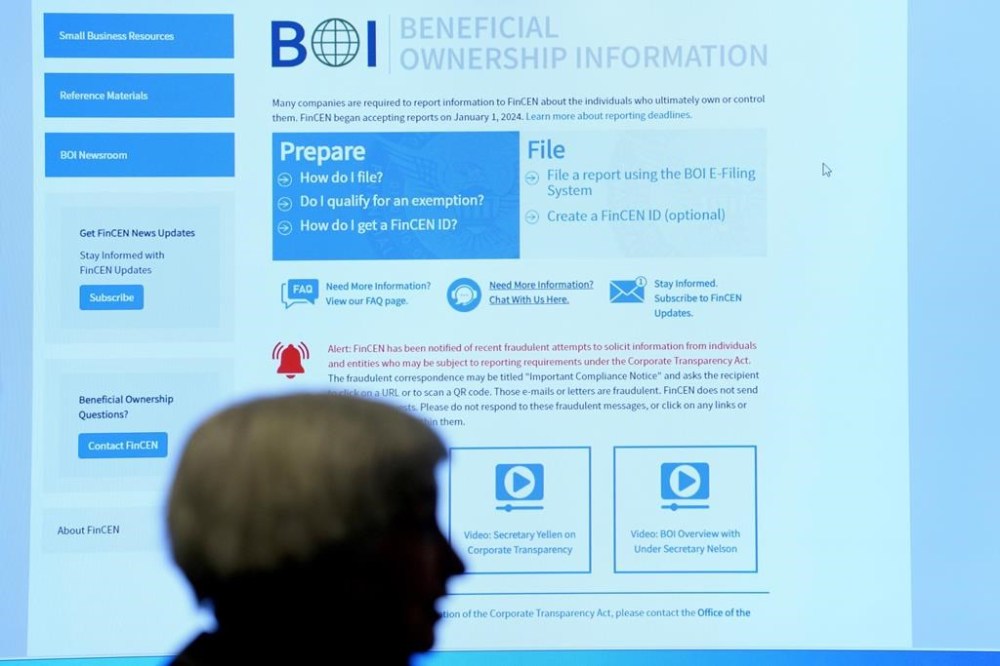
Small business advocates say the reporting requirements are too onerous — and an example of congressional overreach. An estimated 32 million small businesses must register personal information with FinCEN, such as a photo ID and home address.
The Alabama case applies specifically to the 65,000-plus members of National Small Business Association, the nation’s oldest advocacy group for small businesses, which is the plaintiff in the case. The Justice Department on Monday said it is appealing the ruling.

Deadlines to report the information have already been pushed back: to Jan. 1, 2025, from Jan. 1, 2024 for existing businesses, while businesses that were created after Jan. 1 have 90 days to comply.
“The CTA has from the very beginning been poor policy that unfairly targets America’s small businesses,” said Todd McCraken, president and CEO of the NSBA. “This ruling justifies the concerns of millions of American businesses about how the CTA is not only a bureaucratic overreach, but a constitutional infringement.”