

Manitoba has raw materials for Prairie green economy
Advertisement
Read this article for free:
or
Already have an account? Log in here »
To continue reading, please subscribe:

Digital Subscription
One year of digital access for only $205*
- Enjoy unlimited reading on winnipegfreepress.com
- Read the E-Edition, our digital replica newspaper
- Access News Break, our award-winning app
- Play interactive puzzles
*First annual payment billed as $205.00 + GST for one year. This annual subscription will automatically renew at $233.00 + GST every 52 weeks (10% off the regular annual price of $259.35). Offer available to new and qualified returning subscribers only. Cancel any time.
To continue reading, please subscribe:
Add Free Press access to your Brandon Sun subscription for only an additional
$1 for the first 4 weeks*
- Enjoy unlimited reading on winnipegfreepress.com
- Read the E-Edition, our digital replica newspaper
- Access News Break, our award-winning app
- Play interactive puzzles
*Your next Brandon Sun subscription payment will increase by $1.00 and you will be charged $17.95 plus GST for four weeks. After four weeks, your payment will increase to $24.95 plus GST every four weeks.
Read unlimited articles for free today:
or
Already have an account? Log in here »
Hey there, time traveller!
This article was published 22/03/2024 (931 days ago), so information in it may no longer be current.
The dynamics of the post-COVID-19 pandemic economy are keeping economists on their toes.
The inflation spike has just about run its course, especially in Manitoba, which clocked in with the lowest increase in the consumer price index of all the provinces in February (partly thanks to Premier Wab Kinew’s artificially lowered gas prices), even though it rose by one-10th of one per cent from January.
Economists are looking to early summer, at the earliest, for cuts to the Bank of Canada’s key interest rate, but actual GDP growth is going to have to wait at least until the second half of this year.
Those were some of the views shared at the Manitoba Association of Business Economists annual outlook conference Friday in Winnipeg.
The pandemic introduced supply chain bottlenecks and an exacerbation of the widespread concern over the availability of skilled workers, but those issues appear now to have subsided.
Soon the economic concerns are going to be maintaining current employment levels, never mind searching for people to fill positions. (Although that will likely remain the case when it comes to deploying the latest technology, such as artificial intelligence.)
At the MABE conference, Chris Ferris, senior economist at Economic Development Winnipeg, said the expectation is for unemployment to hold steady in Manitoba through 2025 at 6.4 per cent, up from 4.5 per cent in 2021.
Tony Stillo, director of economics for Canada at Oxford Economics, said the expectation is unemployment levels in Canada will level off and rise slightly in the coming year.
Although he noted the Bank of Canada expects the economy will have a soft landing, Oxford Economics also believes high interest rates, weaker profits and muted sales prospects will postpone business investment until the second half of the year.
Even as economists continue to grapple with the pandemic wild card, the increasing impact of climate change will likely continue to mess with their models.
That’s why, regardless of how much you believe late MP Jim Carr’s “Framework to Build a Green Prairie Economy” is just rhetorical nicety, it’s hard to argue with its function as another aid in the transition to a green economy that is underway.
Chris Minaker, director of policy, planning and external relations at PrairiesCan, and Keelan Dagdick, an economist at that department, presented the workings of the framework at the MABE conference.
The idea is the more investors — including the proprietors of small- and medium-sized enterprises — are able to focus on the transition to a green economy, the better.
More than $40 million has already been spoken for out the $100 million towards the Green Prairie Economy.
When it was announced in December by PrairiesCan Minister Dan Vandal, the $100 million over three years was to “kick start” the efforts to encourage greater collaboration on investment opportunities, leverage additional funding and attract new investments across the Prairies. The suggestion being there could be more investment to come.
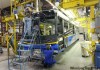
Of those initial investments, $10 million went to bus maker NFI Group Inc. and $30 million to Arctic Gateway Group to invest in the Port of Churchill.
While NFI has had its own pandemic-related obstacle course to manoeuvre through, it is already more than a decade into its investments in building zero-emission buses. It’s far from out of the woods — its share price is still only one-third of what it was before the pandemic – but it has a growing share of the North American market for zero-emission buses.
People can say what they want about the viability of electric vehicles, the fact is the per cent of NFI’s order book for them continues to grow. It continues to sell diesel-powered buses but more and more battery-electric, hydrogen fuel cell and trolley buses are in the mix.
And that trend is not going to reverse.
The $30-million investment in the Port of Churchill — which was matched by the province — would have been justified regardless of imperative to transition to a green economy.
Manitoba cannot rest on the inevitability of the oil and gas sector in Alberta or uranium and potash (and oil and gas) in Saskatchewan or the auto sector in Ontario.
Manitoba’s economy is terribly diversified — which is a blessing and a curse. While it needs to ensure existing cylinders keep firing, it also needs to be on the lookout for other potential sources of growth.
The combination of the existence of critical minerals (for the EV battery market), an existing advanced manufacturing sector and the potential to develop the continent’s only Arctic Ocean port represent a singular combination for Manitoba.
In the context of the transition to a green economy, those are pretty good raw materials to work with.
martin.cash@freepress.mb.ca
Related Articles
Canada's auto sector faces an EV renaissance, but local job protection is a concern
Advertisement Advertise With Us
Advertisement Advertise With Us