

Need to improve Canadian productivity has reached emergency level, BoC official says
Advertisement
Read this article for free:
or
Already have an account? Log in here »
To continue reading, please subscribe:

Digital Subscription
One year of digital access for only $205*
- Enjoy unlimited reading on winnipegfreepress.com
- Read the E-Edition, our digital replica newspaper
- Access News Break, our award-winning app
- Play interactive puzzles
*First annual payment billed as $205.00 + GST for one year. This annual subscription will automatically renew at $233.00 + GST every 52 weeks (10% off the regular annual price of $259.35). Offer available to new and qualified returning subscribers only. Cancel any time.
To continue reading, please subscribe:
Add Free Press access to your Brandon Sun subscription for only an additional
$1 for the first 4 weeks*
- Enjoy unlimited reading on winnipegfreepress.com
- Read the E-Edition, our digital replica newspaper
- Access News Break, our award-winning app
- Play interactive puzzles
*Your next Brandon Sun subscription payment will increase by $1.00 and you will be charged $17.95 plus GST for four weeks. After four weeks, your payment will increase to $24.95 plus GST every four weeks.
Read unlimited articles for free today:
or
Already have an account? Log in here »
Hey there, time traveller!
This article was published 26/03/2024 (896 days ago), so information in it may no longer be current.
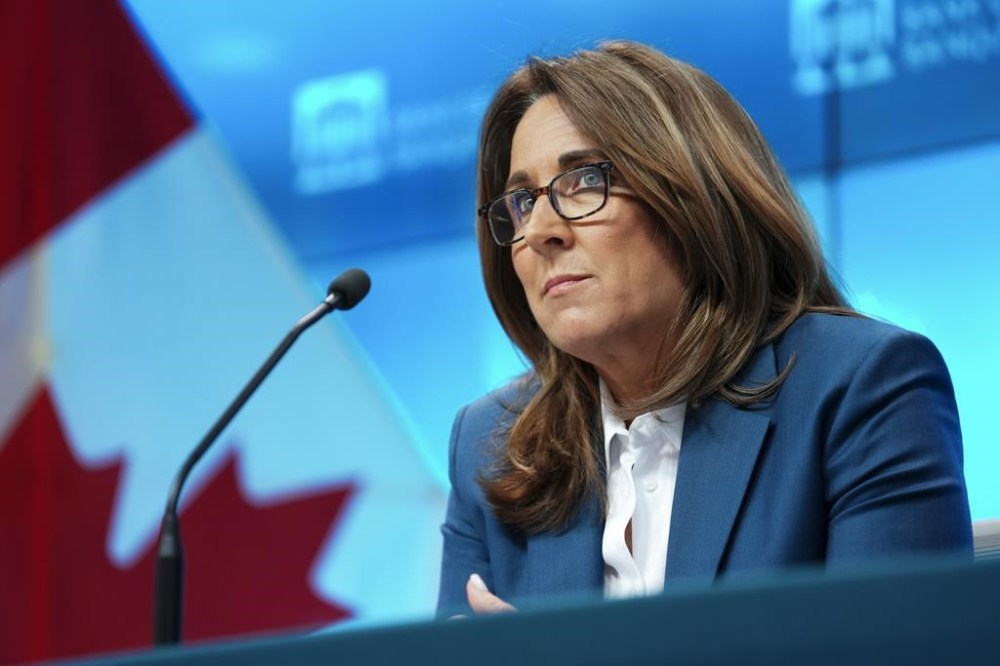
HALIFAX – A senior Bank of Canada official says the need to improve productivity has reached an emergency level as the economy faces a future where inflation may be more of a threat than in the past few decades.
“You know those signs that say ‘In an emergency, break the glass?’ Well, it’s time to break the glass,” Bank of Canada senior deputy governor Carolyn Rogers said in a speech Tuesday.
Rogers said Canadian labour productivity eked out a small gain at the end of last year, but that came after six straight quarters where productivity fell.
She noted the U.S. has seen productivity gains coming out of the pandemic as firms found their footing, but Canada has not seen the same.
“In fact, the level of productivity in Canada’s business sector is more or less unchanged from where it was seven years ago,” Rogers said.
The need to improve productivity comes as Rogers said many of the forces that helped create a benign environment for inflation in the past are going to fade away, or even reverse.
“We know that changing demographics and the economic impacts of climate change will tend to put upward pressure on prices. Persistent global trade tensions also raise the risk of future inflation,” she said.
The Bank of Canada’s next interest rate decision and monetary policy report is set for April 10.
Inflation has been cooling in recent months, coming in at an annual rate of 2.8 per cent in February. Economists will be watching to see what the central bank, which is targeting an annual inflation rate of two per cent, will have to say about cuts to its key interest rate target.
Rogers said Tuesday that productivity is a way to inoculate an economy against inflation.

“An economy with low productivity can grow only so quickly before inflation sets in. But an economy with strong productivity can have faster growth, more jobs and higher wages with less risk of inflation,” she said.
Canada’s lagging productivity has been a chronic problem.
Rogers said when you compare Canada’s recent productivity record with that of other countries, what sticks out is how much the country lags on investment in machinery, equipment and intellectual property.
She also said Canada needs to focus on making sure the training and education we provide teach the skills we need, while a more competitive business environment would help drive greater innovation and efficiency.
This report by The Canadian Press was first published March 26, 2024.