

Feel the finance
Scotiabank’s new Money Style quiz infuses some levity into personal finance while leveraging behavioural science to help Canadians better understand their emotions surrounding finances while, just maybe, boosting empathy for others’ wallet worries, too
Advertisement
Read this article for free:
or
Already have an account? Log in here »
To continue reading, please subscribe:

Digital Subscription
One year of digital access for only $205*
- Enjoy unlimited reading on winnipegfreepress.com
- Read the E-Edition, our digital replica newspaper
- Access News Break, our award-winning app
- Play interactive puzzles
*First annual payment billed as $205.00 + GST for one year. This annual subscription will automatically renew at $233.00 + GST every 52 weeks (10% off the regular annual price of $259.35). Offer available to new and qualified returning subscribers only. Cancel any time.
To continue reading, please subscribe:
Add Free Press access to your Brandon Sun subscription for only an additional
$1 for the first 4 weeks*
- Enjoy unlimited reading on winnipegfreepress.com
- Read the E-Edition, our digital replica newspaper
- Access News Break, our award-winning app
- Play interactive puzzles
*Your next Brandon Sun subscription payment will increase by $1.00 and you will be charged $17.95 plus GST for four weeks. After four weeks, your payment will increase to $24.95 plus GST every four weeks.
Read unlimited articles for free today:
or
Already have an account? Log in here »
Hey there, time traveller!
This article was published 20/04/2024 (864 days ago), so information in it may no longer be current.
Financial institutions offer plenty of online tools — from calculators for mortgage qualification to retirement income forecasting.
Yet, Scotiabank is taking a more touchy-feely approach with its new Money Style quiz by Scotia Advice+, available for anyone to try free online, to better understand our feelings about money.
“We know from research that there are a lot of emotions tied up around money that cause a lot of arguments, stigma and judgment, and so we wanted to offer this quiz to foster more productive, less stressful conversations,” says Tanya Eisener, senior vice-president of retail customer value at Scotiabank, based in Toronto.
Paul Chiasson / The Canadian Press
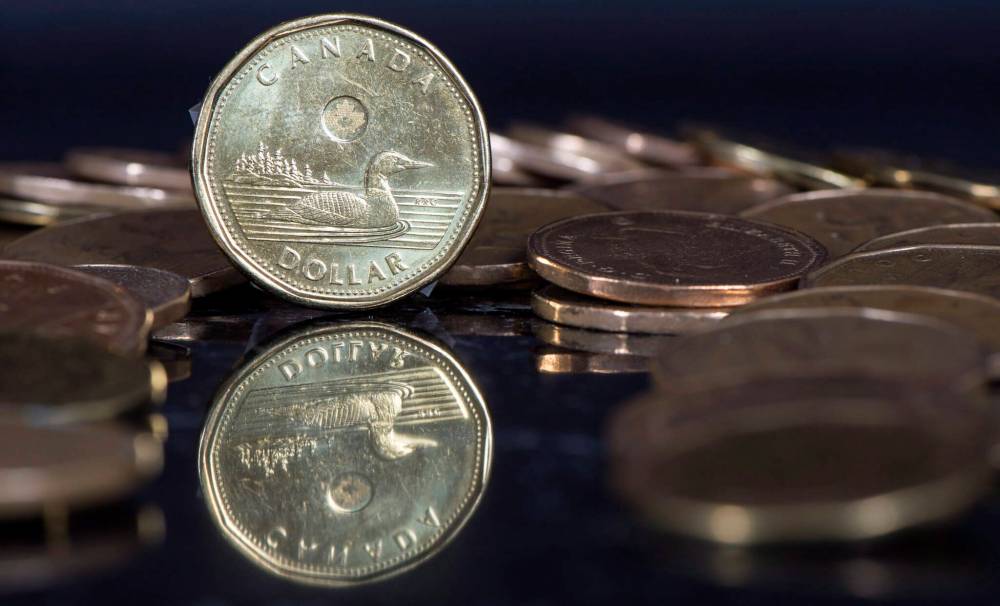
The Canadian dollar coin, the Loonie, is displayed Friday, January 30, 2015 in Montreal. A new survey suggests one in three Canadians are pessimistic about the future of their finances and one in four are extremely concerned about being able to afford basic needs.THE CANADIAN PRESS/
The quiz asks a series of multiple choice questions like, ‘The bill arrives at a group lunch with friends. You’re most likely to:
◼ Wait to see who makes the first move
◼ Ask for your own bill
◼ Do nothing. (You’ve already cornered the server and settled up for your share)
◼ Throw it all on your credit card
◼ Suggest everyone splits it evenly
◼ Pay for your order, and the meal of someone who just had a birthday
And your answer to this and other questions ultimately provides you with your dominant ‘Money Style’ which, for example, might be ‘Belonging: “Money is a means for me to feel included.”’
If it sounds a tad whimsical, it’s indeed meant to be fun, a characteristic typically not associated with most online financial tools.
“I’ve been studying the understanding of how people think and behave for many, many years,” says Dr. Adam Palanica, a behavioural neuroscientist at Scotiabank.
Most of his work is used for human resources around employee engagement. This time, however, his expertise went into developing the Money Style quiz hopefully to make discussions about money more approachable, especially given most people are generally averse to talking about it.
If nothing else, the quiz will give people a little bit of insight into their financial behaviour, putting a new spin on financial literacy. Consider it a tool promoting emotional financial literacy that leverages decades of behavioural science research.
“The quiz might seem trivial, but it’s really the first tool of its kind that boils down emotions around what people want money to do for them,” he says.
Although unique to the Canadian landscape, many U.S. financial firms do offer similar quizzes.
All of them build on the increasingly fertile ground of research about how people view money differently and how that may affect their behaviour for better and for worse, says Dr. Chi Liao, an associate professor of finance at the Asper School of Business at the University of Manitoba, whose research focuses on behavioural economics.
“For example, there are what’s called the ‘big five personality traits’ with research looking at how those affect financial management and investment behaviour.”
These characteristics are, by the way, openness to experience, conscientiousness, extroversion, agreeableness, and neuroticism.
We all display all of these traits to varying degrees at different times — though some we may embody more often and deeply than others, she adds.
“Neuroticism and openness, for example, have been linked to equity investing, so people with high neuroticism often have low openness to allocating money to the stock market,” Liao says, noting the former trait is generally associated with higher levels of anxiety and negativity.
Typically, behavioural research has been embraced by corporations to market products and services more effectively to consumers. Yet the research can also help consumers make better decisions by revealing biases about money we may never otherwise realize.
For example, one of the most famous behavioural economists, Dr. Daniel Kahneman, who died in March and won the Nobel Prize for Economics, focused most of his research on decisionmaking, finding we’re more infallible than we think.
Prospect theory, which Kahneman developed with Dr. Amos Tversky in the 1970s, alludes to this.
“The fact that losses hurt more than gains is a very important part of prospect theory,” Liao explains. “For example, if you lose $100, it hurts about twice as much as it feels good to win $100.”
Why is that an important insight?
It helps explain why people have less trouble selling profitable investments than losing ones, she says.
“It just hurts more to realize a loss and admit we made a bad decision, so we tend to hold onto them longer” often to our detriment.
Another area of Kahneman’s research examined how assumptions lead to bad decisions without us realizing we’re even making assumptions.
Liao adds that assumptions are “important rules of thumb that from an evolutionary standpoint help us survive.”
After all, we simply can’t think through every decision we make at every moment. But unconsciously snap decisions about money — and other areas of life — can lead to less-than-ideal outcomes, she adds.

Now, whether the ‘Money Style’ quiz helps Canadian consumers raise more awareness about our emotion around money, so we make better decisions remains to be seen.
Yet Palanica notes that, for those who take it, they’re not only more likely to come out with a better understanding of their emotional financial goals; they might have more insight into their partner’s feelings about money, too.
“At the end of the day, that’s the goal: helping people have more honest, empathetic conversations with each other about money.”
Joel Schlesinger is a Winnipeg-based freelance journalist
joelschles@gmail.com