

Affordability anxiety
Inflation pressure weighs heavy on Manitobans’ dream of homeownership: poll

Advertisement
Read this article for free:
or
Already have an account? Log in here »
To continue reading, please subscribe:
Digital Subscription
One year of digital access for only $1.44 a week*
- Enjoy unlimited reading on winnipegfreepress.com
- Read the E-Edition, our digital replica newspaper
- Access News Break, our award-winning app
- Play interactive puzzles
*Billed as $5.77 plus GST every four weeks. After 52 weeks, price increases to the regular rate of $19.95 plus GST every four weeks. Offer available to new and qualified returning subscribers only. Cancel any time.
To continue reading, please subscribe:
Add Free Press access to your Brandon Sun subscription for only an additional
$1 for the first 4 weeks*
- Enjoy unlimited reading on winnipegfreepress.com
- Read the E-Edition, our digital replica newspaper
- Access News Break, our award-winning app
- Play interactive puzzles
*Your next Brandon Sun subscription payment will increase by $1.00 and you will be charged $17.95 plus GST for four weeks. After four weeks, your payment will increase to $24.95 plus GST every four weeks.
Read unlimited articles for free today:
or
Already have an account? Log in here »
Hey there, time traveller!
This article was published 23/04/2024 (767 days ago), so information in it may no longer be current.
Maybe if apartment rental rates stopped increasing, Anjali Soni would be closer to buying a home.
Currently, she’s facing a $200 per month jump for her three-bedroom rental suite. “That is too much,” the University of Winnipeg student says.
The 21-year-old business student and her roommates are searching for a new place to live; their lease is up soon. Soni hopes to buy a home in the next five years, after graduation — some point when she’s “a little more settled.”
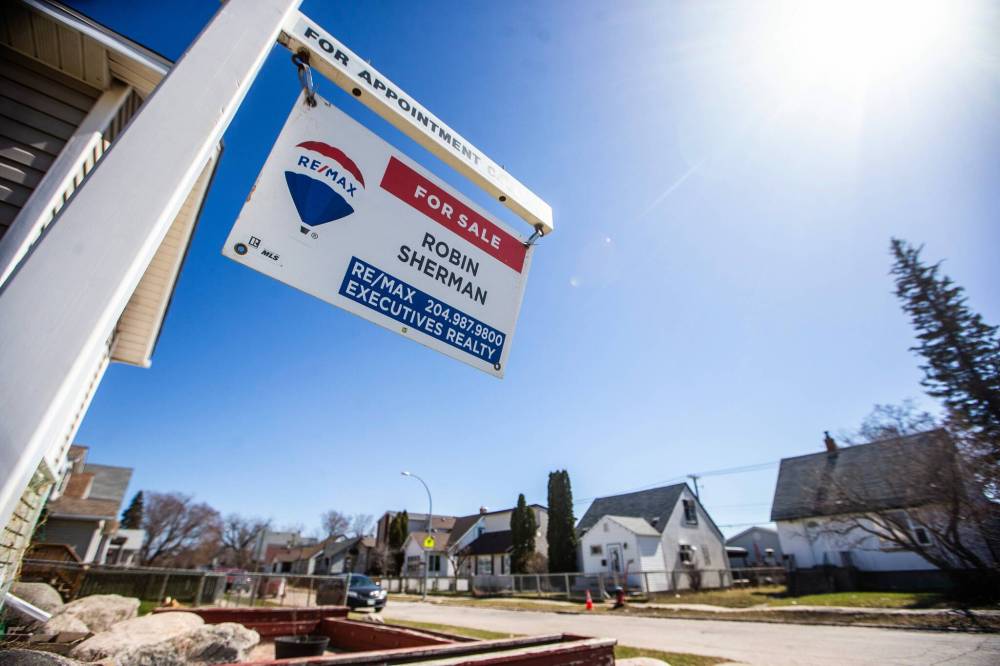
MIKAELA MACKENZIE / FREE PRESS
A for-sale sign in the Weston neighbourhood Tuesday. More than half of Manitoba and Saskatchewan respondents to an RBC poll say inflation is eroding their ability to save for a home.
But homeownership seems expensive, too, even if Manitoba prices are cheaper than other major Canadian markets, Soni added.
Fifty-eight per cent of 182 Manitoba and Saskatchewan respondents to a recent RBC national survey said inflation is eroding their ability to save money for a home. Nearly two-thirds of those respondents — 62 per cent — further reported they needed a second job or “side hustle” to afford a house.
Across Canada, half of the RBC poll’s 2,824 subjects felt inflation was dampening their chances of homeownership.
The RBC 30th annual homeownership poll results come on the heels of a similar survey from CIBC, which found three in four Canadians who don’t own property believe buying a home is out of reach. RBC released its findings Tuesday; CIBC’s came earlier in April.
Sura Mahdi and her husband are saving to build a home. Higher interest rates have kept them in the rental market, but even rental rates are “insane,” Mahdi said.
She’s been in the same Winnipeg apartment for four years. What began as a $1,100/month, two-bedroom has become nearly $2,000, including $135 monthly for parking.
“I’d rather pay towards a mortgage, but it’s just the interest rates,” she said. “Slowly, we’ll, you know, hopefully, buy a house.”
Meantime, the couple has been more mindful with groceries. Mahdi is caring for her one-year-old son; she’s not rushing a home purchase.
Manitoba’s rent increase guideline caps lease increases to three per cent this year, but there are a number of exceptions. Rental units already costing $1,615-plus per month and units first occupied after March 2005 are not covered by the rent increase cap.
Federal and provincial governments have rolled out measures to reduce the cost of apartment builds. Even so, you can’t create an apartment to charge $1,100/month anymore, one developer told the Free Press.
Labour costs have risen 33 per cent since the start of the COVID-19 pandemic and prices on materials like lumber have “skyrocketed” and not come down, the president of the Manitoba Home Builders’ Association said in February.
More than half of Prairies respondents to RBC’s survey, or 58 per cent, expect financial support from family is necessary to buy a home. One-fifth said they must buy a home with other family members as co-owners.
It’s something Hannah Bassett, a mortgage specialist, sometimes recommends to clients.
“Homeownership isn’t just available to everyone anymore,” the Ideal Mortgage Solutions employee said. Single applicants tend to struggle more than dual-income households, she added.
As the cost of nearly everything has increased, some prospective homebuyers have had to take on new debt, impacting the type of mortgage they can obtain.
Last week, the federal government unleashed a suite of announcements to boost home affordability in its 2024 budget. Bassett believes, generally, they won’t have a “huge impact” on the Manitoba market.
Ottawa promised to increase spending on funding and incentives for new housing builds and to allocate federal land for housing.
“In the long-term, we might see the actual impact of increased supply,” Bassett said. “In the near-term, I think we’re still dealing with increased demand and limited supply.”
In October 2023, the Canada Mortgage and Housing Corp. recorded a two per cent vacancy rate for Manitoba apartment units. Winnipeg house listings in March remained around the five-year average — 673 places available — but the city’s population continues to grow.
Bassett recommends potential homebuyers list where they’re spending money and prioritize savings over discretionary spending.
Half of Prairies respondents to RBC’s poll said their current financial habits wouldn’t allow them to save enough money for a home, compared to 45 per cent nationally.
Across Canada, two-thirds of respondents who own homes are concerned about their next home purchase, RBC found.
“It really just depends on what you’re looking for, what you want,” said Janice Bain, who bought her home roughly 10 years ago.

She and her husband lived modestly to afford it, she added. Bain doesn’t believe she could purchase a grander house now, but she’d likely be able to rebuy her current home.
The Manitoba Real Estate Association’s president noted, historically, the keystone province has been more affordable than its peers. The lobbyist “commends” Ottawa for its recent budget measures related to housing, Sandy Donald wrote in a statement.
RBC conducted its homeownership survey from Jan. 25 through Feb. 23, using an online panel from Leger, a market research company. Since the survey was conducted online, no margin of error can be attributed.
An average detached Winnipeg home cost $434,224 in March, according to Winnipeg Regional Real Estate Board data. It’s eight per cent higher than the five-year average.
gabrielle.piche@winnipegfreepress.com
Gabrielle Piché reports on business for the Free Press. She interned at the Free Press and worked for its sister outlet, Canstar Community News, before entering the business beat in 2021. Read more about Gabrielle.
Every piece of reporting Gabrielle produces is reviewed by an editing team before it is posted online or published in print — part of the Free Press‘s tradition, since 1872, of producing reliable independent journalism. Read more about Free Press’s history and mandate, and learn how our newsroom operates.
Our newsroom depends on a growing audience of readers to power our journalism. If you are not a paid reader, please consider becoming a subscriber.
Our newsroom depends on its audience of readers to power our journalism. Thank you for your support.
Gabrielle Piché reports on business for the Free Press. She interned at the Free Press and worked for its sister outlet, Canstar Community News, before entering the business beat in 2021. Read more about Gabrielle.
Every piece of reporting Gabrielle produces is reviewed by an editing team before it is posted online or published in print — part of the Free Press‘s tradition, since 1872, of producing reliable independent journalism. Read more about Free Press’s history and mandate, and learn how our newsroom operates.
Our newsroom depends on a growing audience of readers to power our journalism. If you are not a paid reader, please consider becoming a subscriber.
Our newsroom depends on its audience of readers to power our journalism. Thank you for your support.
Advertisement Advertise With Us
Advertisement Advertise With Us