

Despite numbers showing a healthy economy overall, lower-income spenders are showing the strain
Advertisement
Read this article for free:
or
Already have an account? Log in here »
To continue reading, please subscribe:
Monthly Digital Subscription
$0 for the first 4 weeks*
- Enjoy unlimited reading on winnipegfreepress.com
- Read the E-Edition, our digital replica newspaper
- Access News Break, our award-winning app
- Play interactive puzzles
*No charge for 4 weeks then price increases to the regular rate of $19.00 plus GST every four weeks. Offer available to new and qualified returning subscribers only. Cancel any time.
Monthly Digital Subscription
$4.75/week*
- Enjoy unlimited reading on winnipegfreepress.com
- Read the E-Edition, our digital replica newspaper
- Access News Break, our award-winning app
- Play interactive puzzles
*Billed as $19 plus GST every four weeks. Cancel any time.
To continue reading, please subscribe:
Add Free Press access to your Brandon Sun subscription for only an additional
$1 for the first 4 weeks*
*Your next subscription payment will increase by $1.00 and you will be charged $16.99 plus GST for four weeks. After four weeks, your payment will increase to $23.99 plus GST every four weeks.
Read unlimited articles for free today:
or
Already have an account? Log in here »
Hey there, time traveller!
This article was published 09/05/2024 (575 days ago), so information in it may no longer be current.
NEW YORK (AP) — Cracks are showing in one of the main pillars keeping the economy out of a recession: resilient spending by U.S. households.
Consumer goods giants from PepsiCo to Kraft Heinz have described recently how the combination of high inflation and higher interest rates is hurting their lower-income customers.
It’s the culmination of everything getting more expensive amid high inflation, even if it’s not as bad as before, and the drag of higher interest rates because of more expensive credit-card and other payments.
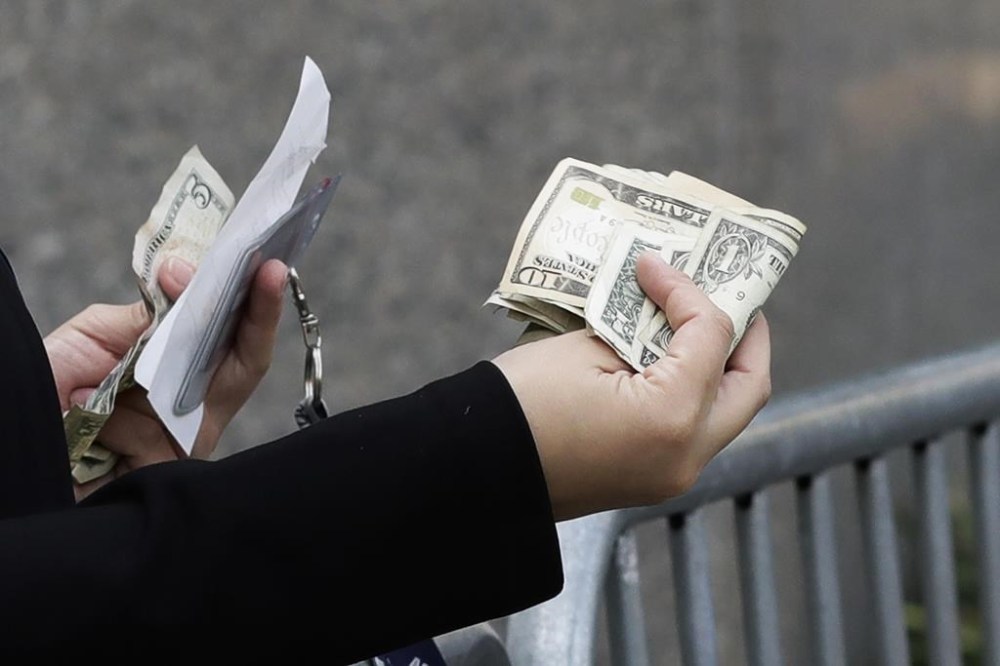
Remarkably resilient spending by U.S. consumers overall has been one of the main reasons the economy has avoided a recession, at least so far. Capitulation at the lower end of the spectrum could be the first crack for the economy.
“The lower income consumer in the U.S. is stretched,” PepsiCo CEO Ramon Laguarta said late last month when reporting better profit than expected, and “is strategizing a lot to make their budgets get to the end of the month. And that’s a consumer that is choosing what to buy, where to buy, and making a lot of choices.”
At Tyson Foods, during a conference call to discuss its better-than-expected results for the latest quarter, one of the first questions asked by a Wall Street analyst was for executives of the company to describe how they see the state of the U.S. consumer.
“As you know, the consumer is under pressure, especially the lower income households,” Chief Growth Officer Melanie Boulden said.
She said the producer of beef, pork, chicken and prepared foods has seen customers shift away from fine dining and toward quick-service restaurants. It’s also seen customers drop down from those not-as-expensive restaurants to eating more at home.

Kraft Heinz CEO Carlos Arturo Abrams-Rivera also said lower-income customers are pulling back from restaurants and convenience stores. That’s even as higher-income earners buy more Kraft Heinz products because they’re spending more on travel and entertainment.
At Mondelez International, Chief Financial Officer Luca Zaramella recently told analysts that U.S. sales of some products particularly popular with lower-income households have been weakening, such as Chips Ahoy cookies.
Much of the commentary recently has come from big food and drink companies, but several retailers will be joining them in upcoming weeks. Walmart, Dollar General and others will offer more evidence about how well or not lower-income Americans are faring.
Of course, it’s not just the lowest-earning households bothered by higher prices for seemingly everything.
“We’re in an environment where the consumer is being price discriminating and, again, that’s not just something that’s low income,” McDonald’s CEO Chris Kempczinski said after reporting his company’s latest quarterly results. “I think all consumers are looking for good value, for good affordability, and so we’re focused on that action.”