

Bank of Canada needs to rebuild public trust after inflation: governor Tiff Macklem
Advertisement
Read this article for free:
or
Already have an account? Log in here »
To continue reading, please subscribe:

Digital Subscription
One year of digital access for only $205*
- Enjoy unlimited reading on winnipegfreepress.com
- Read the E-Edition, our digital replica newspaper
- Access News Break, our award-winning app
- Play interactive puzzles
*First annual payment billed as $205.00 + GST for one year. This annual subscription will automatically renew at $233.00 + GST every 52 weeks (10% off the regular annual price of $259.35). Offer available to new and qualified returning subscribers only. Cancel any time.
To continue reading, please subscribe:
Add Free Press access to your Brandon Sun subscription for only an additional
$1 for the first 4 weeks*
- Enjoy unlimited reading on winnipegfreepress.com
- Read the E-Edition, our digital replica newspaper
- Access News Break, our award-winning app
- Play interactive puzzles
*Your next Brandon Sun subscription payment will increase by $1.00 and you will be charged $17.95 plus GST for four weeks. After four weeks, your payment will increase to $24.95 plus GST every four weeks.
Read unlimited articles for free today:
or
Already have an account? Log in here »
Hey there, time traveller!
This article was published 12/06/2024 (844 days ago), so information in it may no longer be current.
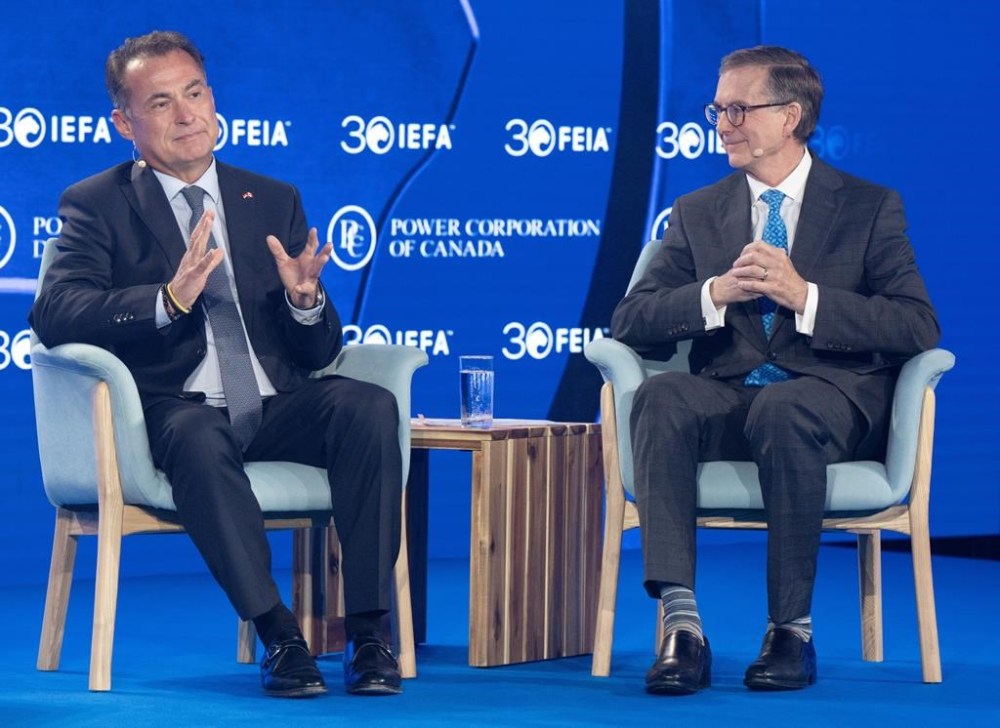
MONTREAL – Public trust in the Bank of Canada has been dented by post-pandemic inflation and it needs to be rebuilt, governor Tiff Macklem said on Wednesday.
“For many of our citizens, this has been their first experience with high inflation, and it has been painful,” Macklem said during a panel discussion at the 2024 Conference of Montreal, alongside Deutsche Bundesbank president Joachim Nagel and BNP Paribas Canada CEO Sonja Volpe.
“Inflation harms people and the economy, and it corrodes trust in our market-based system.”

Macklem said the Bank of Canada needs to find ways to explain its policies to a wide range of audiences, including families trying to navigate uncertain times.
“We need to meet people where they are and ensure they understand what we’re doing and why we’re doing it,” he said.
He said the recent bout of inflation has made people feel cheated and angry as their paycheques don’t stretch as far as they did before.
“Recent history has been a stark reminder that inflation is our common enemy,” he said.
Last week, the central bank announced a quarter-point cut to its key interest rate, the first since a steep hiking cycle that began in March 2022 in an effort to curb inflation.
Since then, the economy has cooled and so has inflation, giving the central bank enough confidence to start lowering interest rates.
Macklem said it’s reasonable to expect more cuts on the horizon, but that the central bank is taking it “one meeting at a time.”
On Wednesday, the U.S. Federal Reserve kept its own rate steady, as the Canadian economy has weakened faster under the weight of rate hikes. Macklem acknowledged the divergence between the two central banks’ policies, but said it isn’t currently a cause for concern.
“There are limits to that divergence … but we’re not close to that limit,” he said.
Macklem also said businesses and central banks need to be prepared for heightened volatility in supply chains amid climate change, geopolitical tensions and technological change.
“But the challenges of the future are rarely the same as those of the past,” he said. “Supply shocks are likely to be more important going forward.”
He added that though interest rates are easing in some economies, global interest rates are unlikely to return to pre-pandemic levels.
Rates in the years after the financial crisis were “unusually low,” said Macklem.

“The new normal won’t be the old normal.”
Macklem also raised concerns about productivity in Canada, which he said has been declining out of the pandemic instead of picking up as expected.
With structural factors including demographic shifts and deglobalization that could increase inflationary pressures, raising productivity is important, he said, adding that “weak investment in Canada” is a big part of the problem.
“Productivity makes your businesses more internationally competitive, it pays for higher wages … it creates fiscal space. And for monetary policy, it means the economy can grow faster without creating inflation.”
This report by The Canadian Press was first published June 12, 2024.
Related Articles
Bank of Canada boss on national myth-busting tour
Advertisement Advertise With Us
Advertisement Advertise With Us