

Myanmar’s economy in crisis as civil strife disrupts trade and livelihoods
Advertisement
Read this article for free:
or
Already have an account? Log in here »
To continue reading, please subscribe:
Digital Subscription
One year of digital access for only $1.44 a week*
- Enjoy unlimited reading on winnipegfreepress.com
- Read the E-Edition, our digital replica newspaper
- Access News Break, our award-winning app
- Play interactive puzzles
*Billed as $5.77 plus GST every four weeks. After 52 weeks, price increases to the regular rate of $19.95 plus GST every four weeks. Offer available to new and qualified returning subscribers only. Cancel any time.
To continue reading, please subscribe:
Add Free Press access to your Brandon Sun subscription for only an additional
$1 for the first 4 weeks*
- Enjoy unlimited reading on winnipegfreepress.com
- Read the E-Edition, our digital replica newspaper
- Access News Break, our award-winning app
- Play interactive puzzles
*Your next Brandon Sun subscription payment will increase by $1.00 and you will be charged $17.95 plus GST for four weeks. After four weeks, your payment will increase to $24.95 plus GST every four weeks.
Read unlimited articles for free today:
or
Already have an account? Log in here »
Hey there, time traveller!
This article was published 12/06/2024 (860 days ago), so information in it may no longer be current.
BANGKOK (AP) — Myanmar, once a thriving emerging economy, is struggling to regain momentum as the country’s civil war increasingly disrupts trade and livelihoods.
World Bank economists estimate the country’s economy grew at a 1% annual pace in the year that ended in March, more slowly than earlier expected, according to a report i ssued Wednesday. They expect a similar rate of growth for this fiscal year.
The report says nearly a third of all people in the country are living in poverty and the economy is about 10% smaller than before the pandemic.
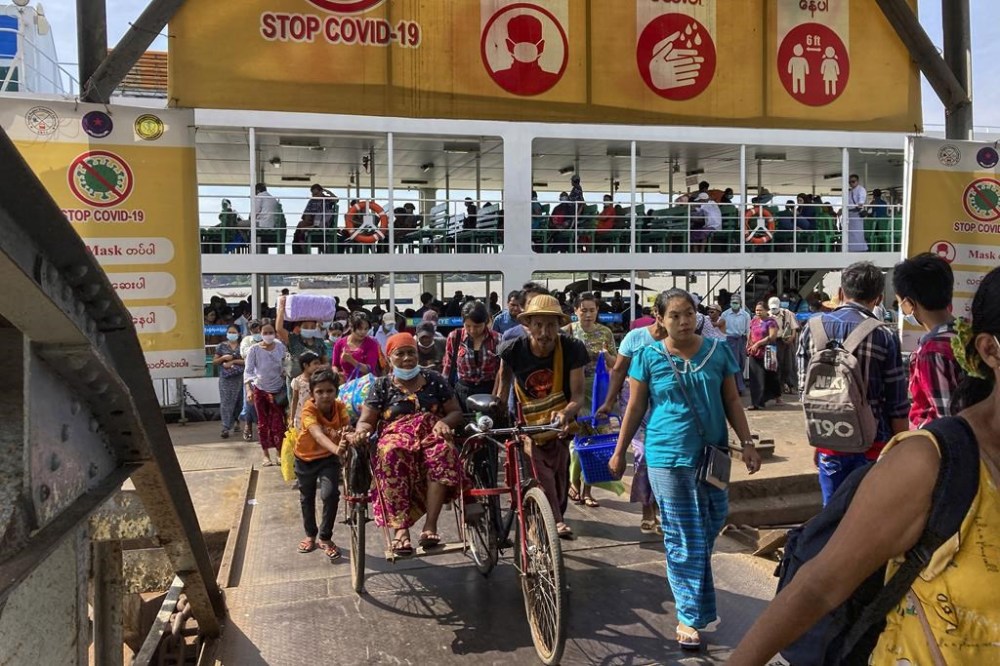
The World Bank’s survey in April “suggests little to no improvement in economic activity over the past six months,” it said.
Pro-democracy guerillas and ethnic minority armed forces have been battling the Myanmar military after the army ousted the elected government of Aung San Suu Kyi in early 2021. In recent months, the military has been stretched thin by increasing pressure from the resistance forces, suffering a series of unprecedented battlefield defeats.
“The economic outlook remains very weak, implying little respite for Myanmar’s households over the near to medium term,” the report says. “The business environment will continue to be constrained by conflict, trade and logistics disruptions, macroeconomic volatility, regulatory uncertainty, and power outages.”
More than 3 million people are thought to have become displaced from their homes due to armed conflict across much of the country. Meanwhile, the value of Myanmar’s currency, the kyat, has sank and many imported goods are in short supply. The report said about a third of factories surveyed by the World Bank reported facing electricity outages.
In the half-year that ended in March, Myanmar’s exports declined 13% from a year earlier while imports dropped by 20%, the report said.

Before the military takeover, garment factories were a thriving source of jobs, especially for young women, and of export revenues for the newly industrializing economy. But global brands have been pulling out of the country, and manufacturing exports fell by nearly a fifth in the half-year until March.
Worsening already significant labor shortages, as Myanmar’s military rulers have expanded conscription to supplement their troops, workers have fled overseas or to rural areas, the report noted.