

US proposes rules to stop Americans from investing in Chinese technology with military uses
Advertisement
Read this article for free:
or
Already have an account? Log in here »
To continue reading, please subscribe:

Digital Subscription
One year of digital access for only $205*
- Enjoy unlimited reading on winnipegfreepress.com
- Read the E-Edition, our digital replica newspaper
- Access News Break, our award-winning app
- Play interactive puzzles
*First annual payment billed as $205.00 + GST for one year. This annual subscription will automatically renew at $233.00 + GST every 52 weeks (10% off the regular annual price of $259.35). Offer available to new and qualified returning subscribers only. Cancel any time.
To continue reading, please subscribe:
Add Free Press access to your Brandon Sun subscription for only an additional
$1 for the first 4 weeks*
- Enjoy unlimited reading on winnipegfreepress.com
- Read the E-Edition, our digital replica newspaper
- Access News Break, our award-winning app
- Play interactive puzzles
*Your next Brandon Sun subscription payment will increase by $1.00 and you will be charged $17.95 plus GST for four weeks. After four weeks, your payment will increase to $24.95 plus GST every four weeks.
Read unlimited articles for free today:
or
Already have an account? Log in here »
Hey there, time traveller!
This article was published 21/06/2024 (809 days ago), so information in it may no longer be current.
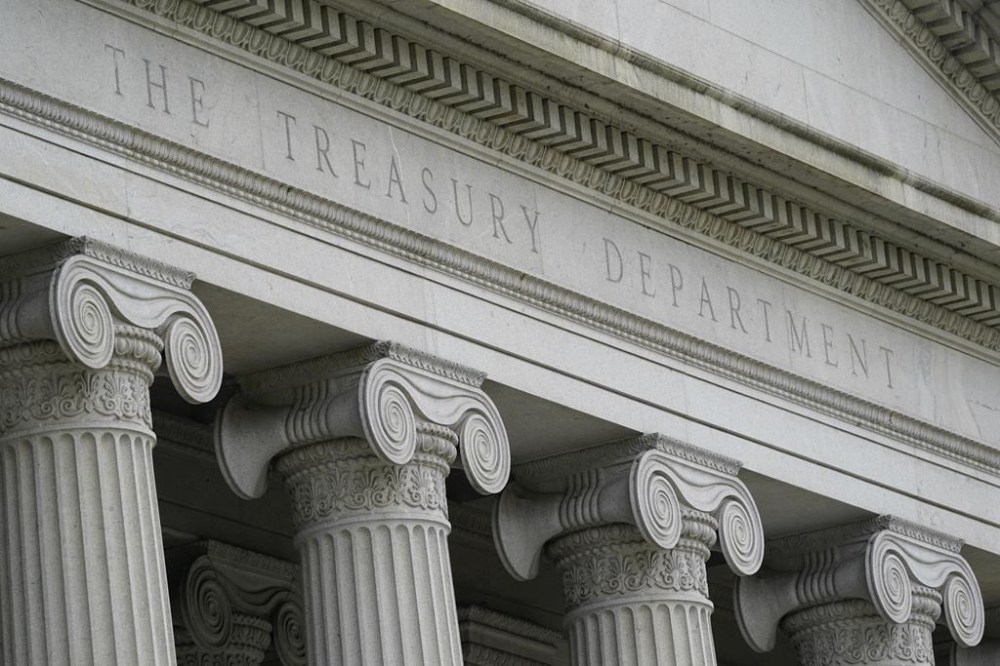
WASHINGTON (AP) — The Treasury Department on Friday fleshed out a proposed rule that would restrict and monitor U.S. investments in China for artificial intelligence, computer chips and quantum computing.
The proposed rule stems from President Joe Biden’s August 2023 executive order regarding the access that “countries of concern” have to American dollars that fund advanced technologies, which the U.S. government says would enhance their military, intelligence, surveillance and cyber capabilities. The order identified China, Hong Kong and Macau as countries of concern.
The Biden administration has sought to stymie the development of technologies by China, the world’s second-largest economy, that could give it a military edge or enable it to dominate emerging sectors such as electric vehicles.
In addition to the proposed rule, Democrat Biden has also placed a stiff tariff on Chinese EVs, an issue with political implications as the president and Republican Donald Trump are both trying to show voters who can best stand up to China, a geopolitical rival and major trading partner.
The proposed rule outlines the required information that U.S. citizens and permanent residents must provide when engaging in transactions in this area, as well as what would be considered a violation of the restrictions.
It specifically would prohibit American investors from funding AI systems in China that could be used for weapons targeting, combat and location tracking, among other military applications, according to a senior Treasury official who previewed the rule for reporters on the condition of anonymity.
J. Philip Ludvigson, a partner at King & Spalding and a former Treasury official for Investment Security, said “companies and investors are now getting a much better look at what will be expected of them” under the new outbound investment program. “These added details are particularly important because the private sector will be shouldering the many due diligence and compliance burdens associated with making new investments,” he said.
Craig Allen, president of the U.S.-China Business Council, a nonprofit organization of American firms that do business in China, said his organization “supports the Biden administration’s efforts to protect U.S. national security while also ensuring robust commercial exchange with China for the benefit of American companies, workers and our economy.”

Treasury is seeking comment on the proposal through Aug. 4, 2024, and after that is expected to issue a final rule.
Biden administration officials, including Treasury Secretary Janet Yellen, have insisted that they have no interest in “decoupling” from China — however, tensions between the two nations have increased in recent years.
After the U.S. military in February 2023 shot down a suspected Chinese spy balloon off the Carolina coast after it traversed sensitive military sites across North America, China threatened repercussions.
Since then, incidents between the two nations based on national security concerns have regularly occurred.
For instance, Biden in May issued an order blocking a Chinese-backed cryptocurrency mining firm from owning land near a Wyoming nuclear missile base, calling its proximity to the base a “national security risk.”