The Supreme Court strips the SEC of a critical enforcement tool in fraud cases
Advertisement
Read this article for free:
or
Already have an account? Log in here »
To continue reading, please subscribe:

Digital Subscription
One year of digital access for only $205*
- Enjoy unlimited reading on winnipegfreepress.com
- Read the E-Edition, our digital replica newspaper
- Access News Break, our award-winning app
- Play interactive puzzles
*First annual payment billed as $205.00 + GST for one year. This annual subscription will automatically renew at $233.00 + GST every 52 weeks (10% off the regular annual price of $259.35). Offer available to new and qualified returning subscribers only. Cancel any time.
To continue reading, please subscribe:
Add Free Press access to your Brandon Sun subscription for only an additional
$1 for the first 4 weeks*
- Enjoy unlimited reading on winnipegfreepress.com
- Read the E-Edition, our digital replica newspaper
- Access News Break, our award-winning app
- Play interactive puzzles
*Your next Brandon Sun subscription payment will increase by $1.00 and you will be charged $17.95 plus GST for four weeks. After four weeks, your payment will increase to $24.95 plus GST every four weeks.
Read unlimited articles for free today:
or
Already have an account? Log in here »
Hey there, time traveller!
This article was published 27/06/2024 (830 days ago), so information in it may no longer be current.
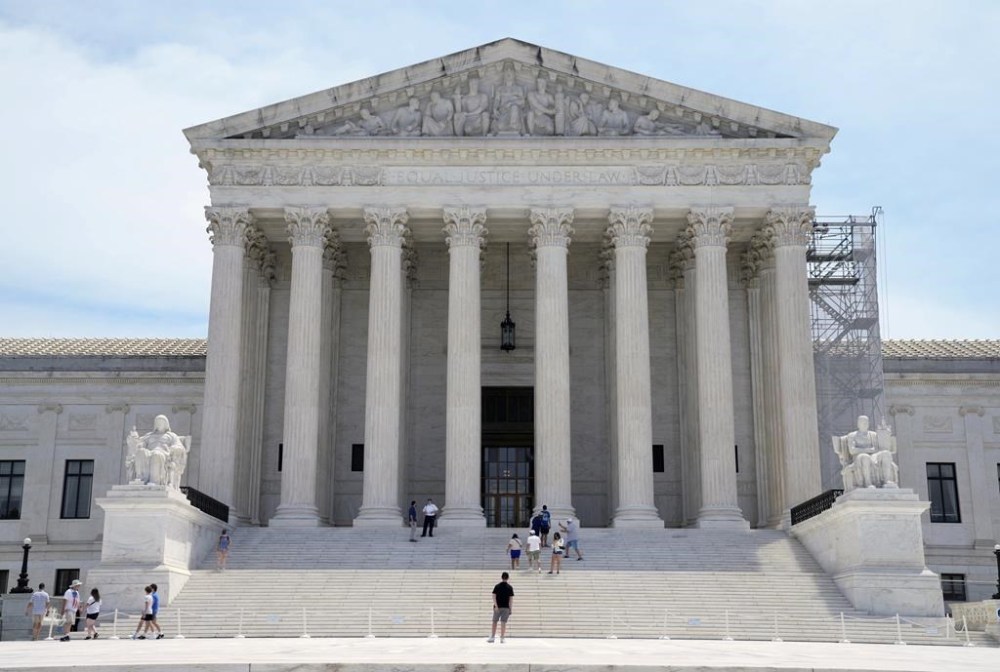
WASHINGTON (AP) — The Supreme Court on Thursday stripped the Securities and Exchange Commission of a major tool in fighting securities fraud in a decision that also could have far-reaching effects on other regulatory agencies.
The justices ruled in a 6-3 vote that people accused of fraud by the SEC, which regulates securities markets, have the right to a jury trial in federal court. The in-house proceedings the SEC has used in some civil fraud complaints violate the Constitution, the court said.
“A defendant facing a fraud suit has the right to be tried by a jury of his peers before a neutral adjudicator,” Chief Justice John Roberts wrote for the court’s conservative majority.
Justice Sonia Sotomayor, who read from her dissent in the courtroom, said that “litigants who seek to dismantle the administrative state” would rejoice in the decision.
Federal agencies that oversee safety in mines and other workplaces are among many that can only impose civil penalties in in-house, administrative proceedings, Sotomayor wrote, joined by Justices Ketanji Brown Jackson and Elena Kagan.
“For those and countless other agencies, all the majority can say is tough luck; get a new statute from Congress,” she wrote.
The case is among several this term in which conservative and business interests are urging the nine-member court to constrict federal regulators. The court’s six conservatives already have reined them in, including in a decision last year that sharply limited environmental regulators’ ability to police water pollution in wetlands.
The SEC was awarded more than $5 billion in civil penalties in the 2023 government spending year that ended Sept. 30, the agency said in a news release. It was unclear how much of that money came through in-house proceedings or lawsuits in federal court.
The agency had already reduced the number of cases it brings in administrative proceedings pending the Supreme Court’s resolution of the case.
The high court rejected arguments advanced by President Joe Biden’s Democratic administration that relied on a 50-year-old decision in which the court ruled that in-house proceedings did not violate the Constitution’s right to a jury trial in civil lawsuits.
The justices ruled in the case of Houston hedge fund manager George R. Jarkesy. The SEC appealed to the Supreme Court after a divided panel of the New Orleans-based 5th U.S. Circuit Court of Appeals threw out stiff financial penalties against Jarkesy and his Patriot28 investment adviser.
The appeals court found that the SEC’s case against Jarkesy, resulting in a $300,000 civil fine and the repayment of $680,000 in allegedly ill-gotten gains, should have been heard in a federal court instead of before one of the SEC’s administrative law judges.

Jarkesy’s lawyers noted that the SEC wins almost all the cases it brings in front of the administrative law judges but only about 60% of cases tried in federal court.
The appeals court also said Congress unconstitutionally granted the SEC “unfettered authority” to decide whether the case should be tried in a court of law or handled within the executive branch agency. And it said laws shielding the commission’s administrative law judges from being fired by the president are unconstitutional.
Those issues got virtually no attention during arguments in November, and the court chose to resolve the case only on the right to a jury trial.
___
Follow the AP’s coverage of the U.S. Supreme Court at https://apnews.com/hub/us-supreme-court.