

Japan issues new yen banknotes packed with 3D hologram technology to fight counterfeiting
Advertisement
Read this article for free:
or
Already have an account? Log in here »
To continue reading, please subscribe:
Monthly Digital Subscription
$1 per week for 24 weeks*
- Enjoy unlimited reading on winnipegfreepress.com
- Read the E-Edition, our digital replica newspaper
- Access News Break, our award-winning app
- Play interactive puzzles
*Billed as $4.00 plus GST every four weeks. After 24 weeks, price increases to the regular rate of $19.95 plus GST every four weeks. Offer available to new and qualified returning subscribers only. Cancel any time.
Monthly Digital Subscription
$4.99/week*
- Enjoy unlimited reading on winnipegfreepress.com
- Read the E-Edition, our digital replica newspaper
- Access News Break, our award-winning app
- Play interactive puzzles
*Billed as $19.95 plus GST every four weeks. Cancel any time.
To continue reading, please subscribe:
Add Free Press access to your Brandon Sun subscription for only an additional
$1 for the first 4 weeks*
*Your next subscription payment will increase by $1.00 and you will be charged $16.99 plus GST for four weeks. After four weeks, your payment will increase to $23.99 plus GST every four weeks.
Read unlimited articles for free today:
or
Already have an account? Log in here »
Hey there, time traveller!
This article was published 03/07/2024 (654 days ago), so information in it may no longer be current.
TOKYO (AP) — Japan issued its first new banknotes in two decades Wednesday, yen packed with 3D hologram technology to fight counterfeiting.
Prime Minister Fumio Kishida praised as historic the state-of-the-art anti-counterfeit traits of the new 10,000 yen, 5,000 yen and 1,000 yen bills.
“I hope the people will like the new bills, and they will help energize the Japanese economy,” he told reporters at the Bank of Japan.
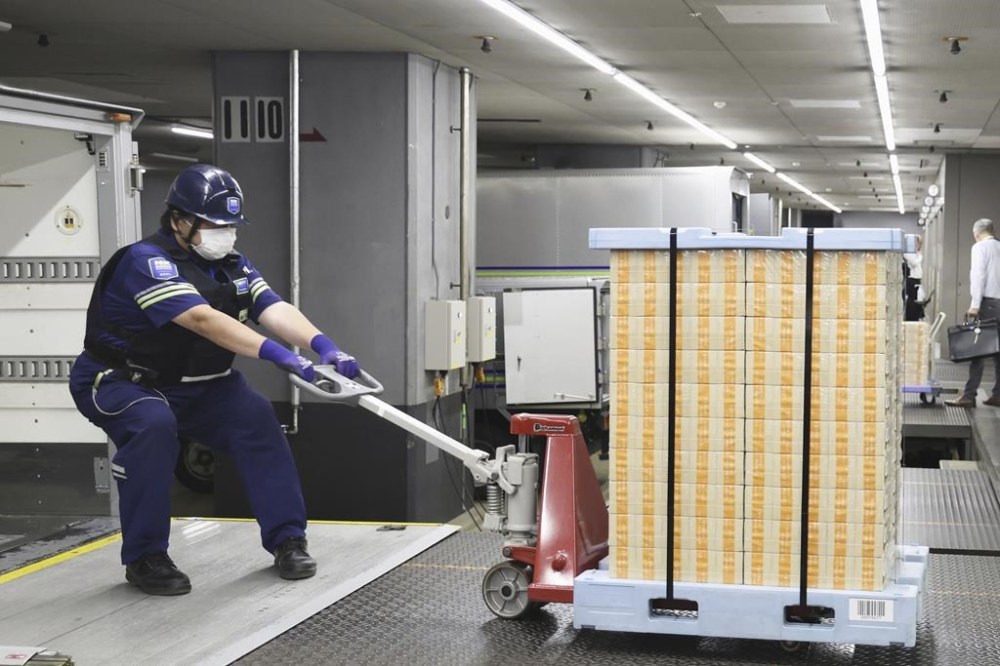
While the new bills were released with fanfare, currency already in use will remain valid. In fact, people will still need older bills to use most vending machines and to pay bus fares, local media reported.
Kishida noted the people featured on the bills celebrate Japanese capitalism, women’s equality and scientific innovation.
The 10,000 yen bill, worth about $62 at the current exchange rate, has the face of Eiichi Shibusawa, known as “the father of Japanese capitalism,” a key figure in building Japan’s modern economy. He is credited with founding hundreds of companies.
The 5,000 yen bill, worth about $30, features Umeko Tsuda, a pioneer feminist and educator who founded a college. The 1,000 yen note, worth about $6.20, portrays physician and bacteriologist Shibasaburo Kitasato, who was instrumental in the research of tetanus and the bubonic plague.
The backs of each of the bills feature Tokyo Station, wisteria flowers and ukiyo-e artist Katsushika Hokusai’s Mount Fuji, respectively.
The new bills also feature larger printing so they’re easier to read, especially for the nation’s aging population.
By the end of March next year, nearly 7.5 billion new banknotes will have been printed, according to the government. The amount of money in the new bills going out in a single day is estimated at 1.6 trillion yen ($10 billion).
It may take some time for ordinary people to get hold of the new bills. They first are going to banks and other financial organizations. Then, they’ll be distributed to automatic teller machines and stores, according to the Bank of Japan.
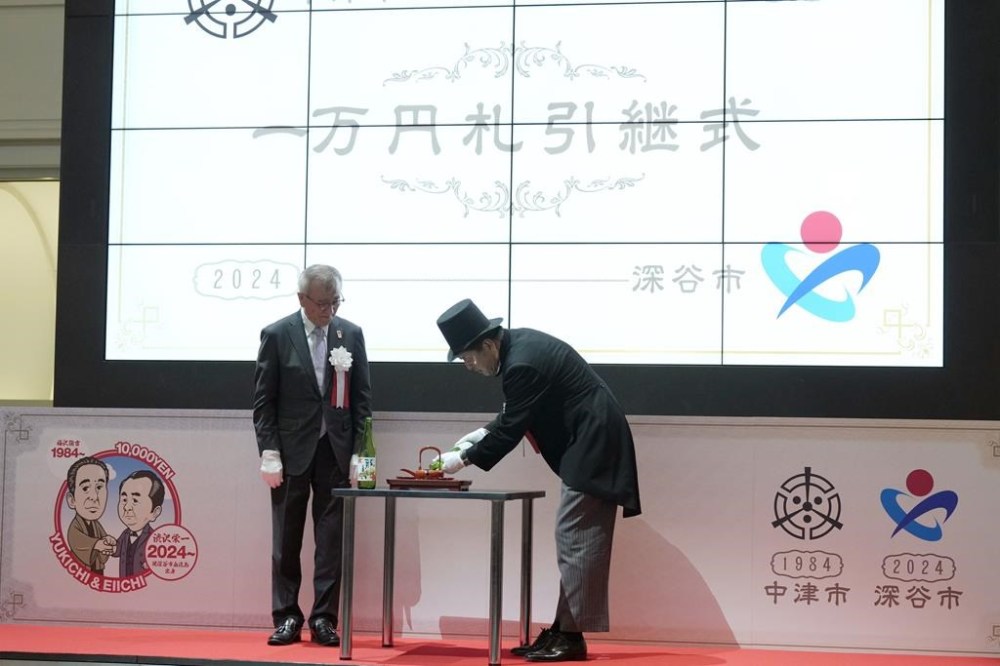

A majority of transactions in Japan still are done in cash and cashless payments have been slower to catch on than in many other countries.
“Although the world is moving toward cashless interactions, we believe cash remains important as a way for safely settling payments anywhere and anytime,” said Bank of Japan Gov. Kazuo Ueda.
___
AP videographer Mayuko Ono contributed to this report.
Yuri Kageyama is on X: https://twitter.com/yurikageyama