

China’s Communist Party will signal its approach to the country’s challenges at a meeting this week
Advertisement
Read this article for free:
or
Already have an account? Log in here »
To continue reading, please subscribe:

Digital Subscription
One year of digital access for only $205*
- Enjoy unlimited reading on winnipegfreepress.com
- Read the E-Edition, our digital replica newspaper
- Access News Break, our award-winning app
- Play interactive puzzles
*First annual payment billed as $205.00 + GST for one year. This annual subscription will automatically renew at $233.00 + GST every 52 weeks (10% off the regular annual price of $259.35). Offer available to new and qualified returning subscribers only. Cancel any time.
To continue reading, please subscribe:
Add Free Press access to your Brandon Sun subscription for only an additional
$1 for the first 4 weeks*
- Enjoy unlimited reading on winnipegfreepress.com
- Read the E-Edition, our digital replica newspaper
- Access News Break, our award-winning app
- Play interactive puzzles
*Your next Brandon Sun subscription payment will increase by $1.00 and you will be charged $17.95 plus GST for four weeks. After four weeks, your payment will increase to $24.95 plus GST every four weeks.
Read unlimited articles for free today:
or
Already have an account? Log in here »
Hey there, time traveller!
This article was published 14/07/2024 (805 days ago), so information in it may no longer be current.
BEIJING (AP) — China’s ruling Communist Party started a four-day meeting Monday that is expected to lay out a strategy for self-sufficient economic growth in an era of heightened national security concerns and restrictions on access to American technology.
While the meeting typically focuses on such long-term issues, business owners and investors will also be watching to see if the party announces any immediate measures to try to counter a prolonged real estate downturn and persistent malaise that has suppressed China’s post-COVID-19 recovery.
“There’s a lot of unclarity of policy direction in China,” which is weighing on consumer and investor confidence, said Bert Hofman, the former World Bank country director for China and a professor at the National University of Singapore. “This is a point in time where China needs to show its cards.”
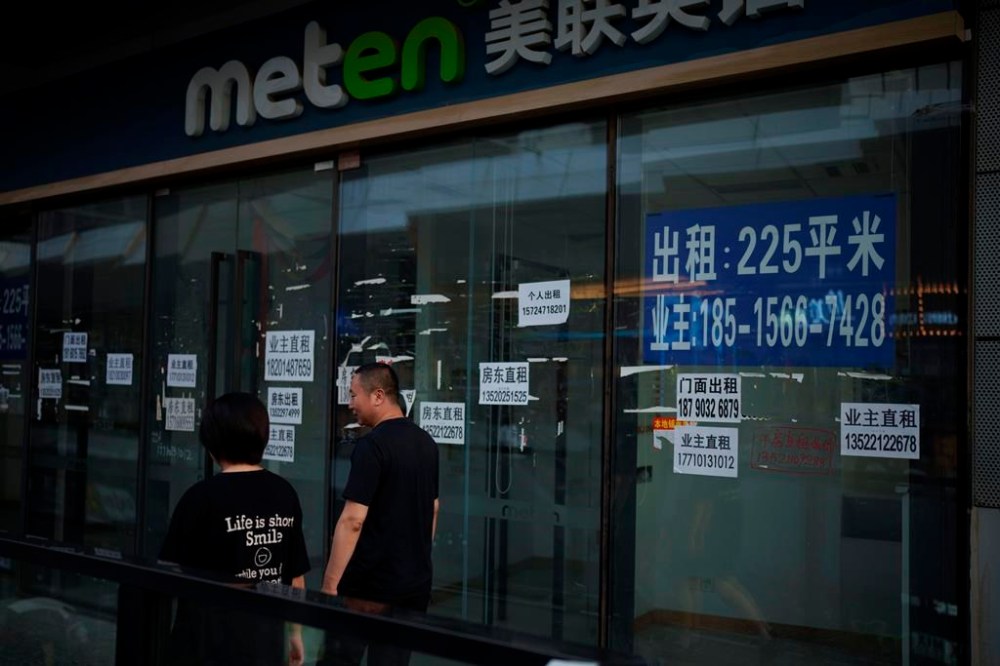
Economic growth slowed to 4.7% on an annual basis in the April to June quarter, the government reported Monday.
Chinese leader Xi Jinping addressed the closed-door meeting on Monday, expounding on a draft of its coming decision on “deepening reform and advancing Chinese modernization,” the official Xinhua News Agency said.
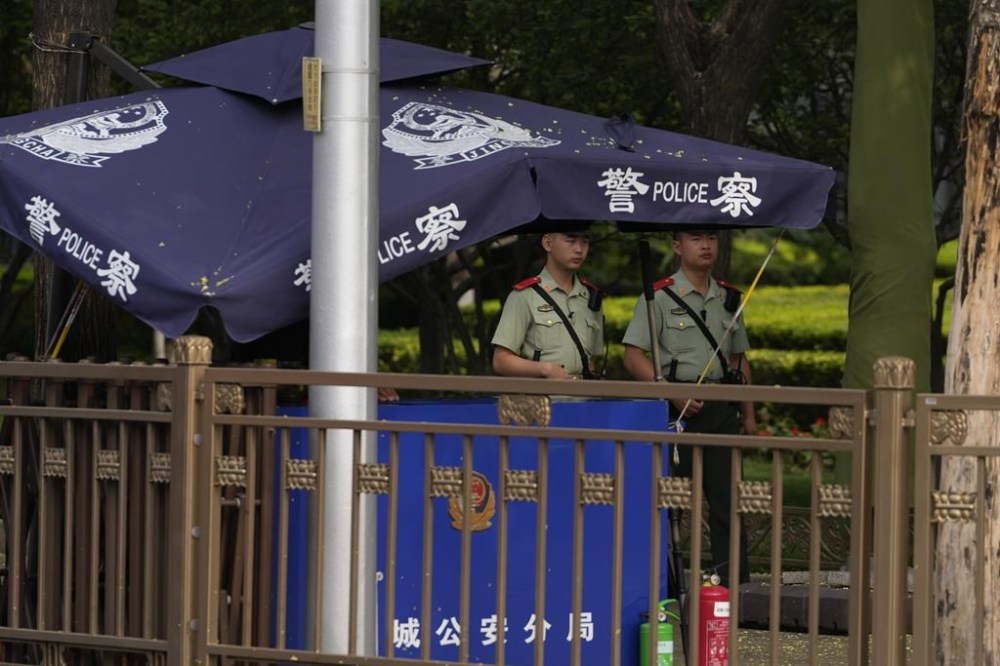
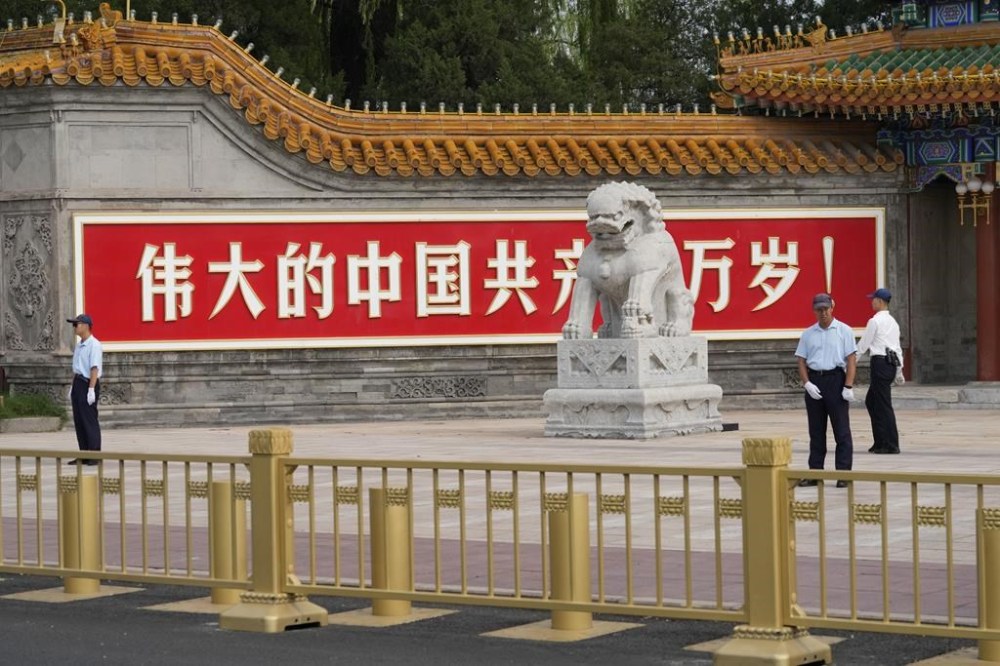
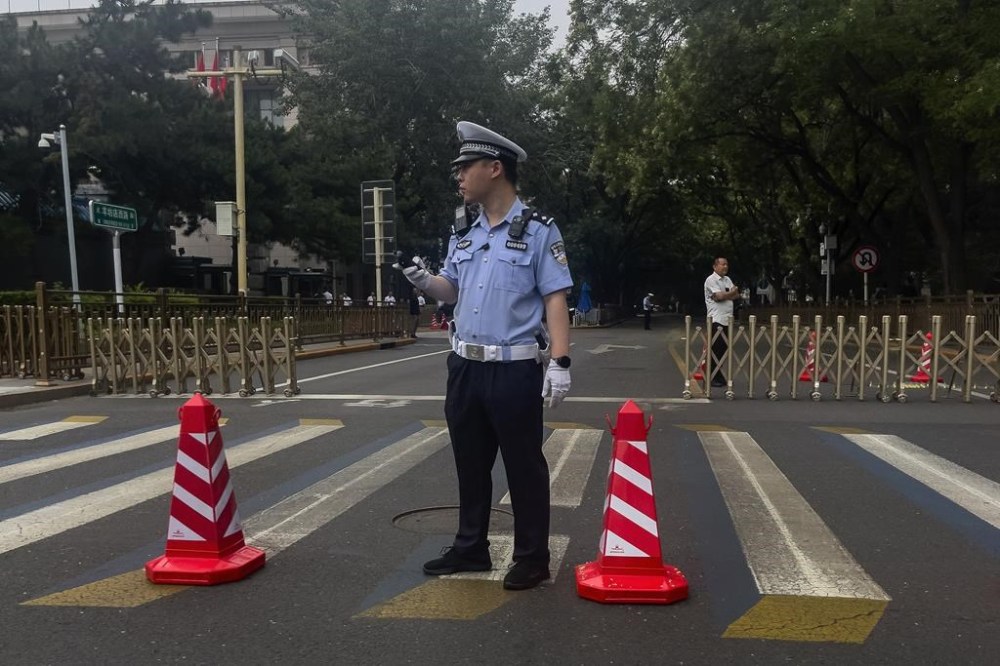
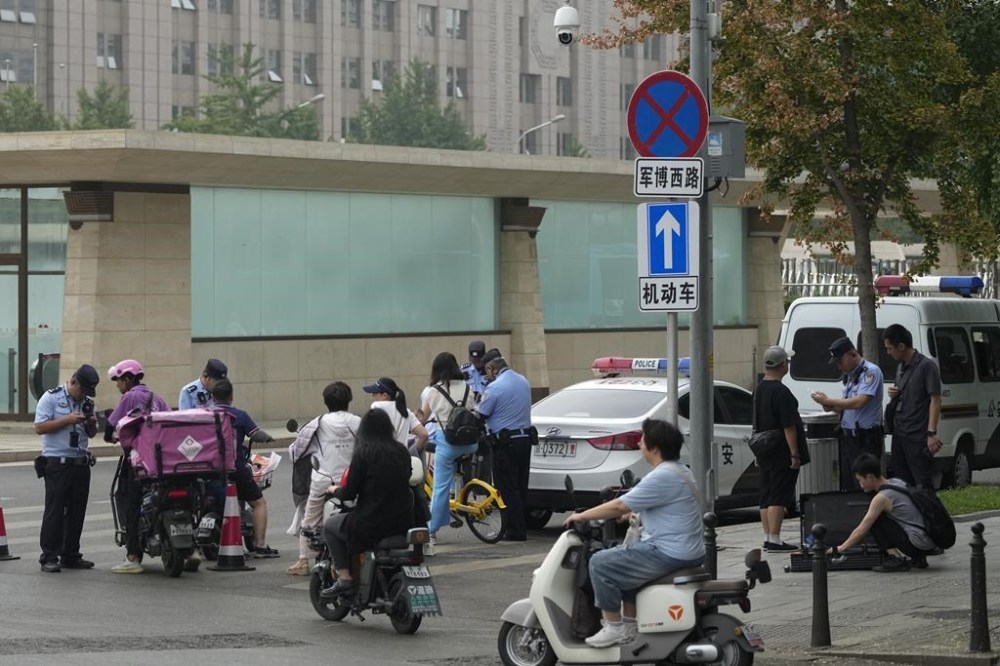
Security was tightened in central Beijing, as it generally is for major government events, with uniformed guards posted in some subway stations and neighborhood-watch people wearing red armbands stationed in public areas.
The decision will send a message to local government officials and others about the future direction of policy. The general expectation is that it will confirm a path laid out by Chinese leader Xi Jinping, though some hope for some fine-tuning to address concerns that increasing government control over business and society is stifling economic growth.
What is the “third plenum” and why does it matter?
The Communist Party’s 205-member Central Committee is holding its third plenum, or the third plenary session of a five-year term that started in 2022. This year’s meeting was expected to be held last year, but was delayed.
Historically, this third meeting has emerged as one at which major economic and policy decisions have been set, though not every time. Analysts say the plenum often sets longer-term directions impacting the economy.
1. In 1978, the meeting endorsed the “reform and opening up” of former leader Deng Xiaoping, the transformation from a planned economy to a more market-based economy that propelled China’s growth in the ensuing decades.
2. In 1993, it endorsed a “socialist market economy” that sealed the victory of reformers battling against conservatives warning about the dangers of economic liberalization.
3. In 2013, in another endorsement of reform, it said that the market would become the decisive force in the allocation of resources.
The last pronouncement, made a year after Xi became leader, didn’t come to be. Within a couple of years, the party began backtracking before setting off in a new direction in 2017, Hofman said.
What issues are at stake?
Under Xi, the Communist Party has decided that the party needs to be at the center of efforts to take China to the next level of development. China is the world’s second-largest economy, but with a population of 1.4 billion people, it is also still a middle-income country.
The government has reined in China’s high-flying tech giants, such as Alibaba, the fintech and e-commerce giant. As the United States became more adversarial, Xi pushed Chinese companies and universities to try to develop the high-end semiconductors and other technology that is being blocked by U.S. restrictions on exports to China.
Free-market advocates are concerned this government-led approach is discouraging the entrepreneurial spirit. Another worry is that the rising importance of national security will take a toll on economic growth. The government has investigated companies that transferred economic data overseas in what appears to be a widening definition of what constitutes a breach of the law.
A major change in direction is not expected and would be momentous if it were to happen. Instead, the degree to which the meeting acknowledges concerns about the business environment and national security could signal whether there will be some policy adjustments.
What policy shifts might happen?
Further support for high-tech industries that are considered vital for national security and future growth is all but certain, along with related industrial policies.
But the party faces demands on other fronts. Alexander Davey, an analyst at the Mercator Institute for China Studies in Germany, said they are watching how the government will balance two major prerogatives: economic growth and social equity.
Local governments are heavily in debt, with multiple cities suspending transit services because they could not afford to keep running them. In February last year, the city of Shangqiu, home to more than 7 million people, temporarily shut down bus lines.
“There may be a bit of a shift, does the central government issue more debt to local government so they can run their services?” Davey said. The trade off will be between vast resources poured into science and tech development, areas deemed vital to national security, and social services.
Investors will be on the lookout for indications that the government, having increased its control over the economy, will take any steps to create a more favorable environment for private companies.
Then, there is the real estate market. In April, the government announced policies that signaled a shift in its approach by funding direct purchases of unsold homes.

“A notable first-half shift in China’s property stance,” said Yifan Hu, chief investment officer for greater China at UBS bank, in a statement. “This ongoing pressure underscores the need for additional easing, which we think will be forthcoming given the supportive policy tone.”
___
Wu reported from Bangkok.
___
This story has been corrected to show China’s population is 1.4 billion, not 1.4 million.