

Stock market today: Asian shares mostly fall as dive for Big Tech stocks hits Wall St rally
Advertisement
Read this article for free:
or
Already have an account? Log in here »
To continue reading, please subscribe:

Digital Subscription
One year of digital access for only $205*
- Enjoy unlimited reading on winnipegfreepress.com
- Read the E-Edition, our digital replica newspaper
- Access News Break, our award-winning app
- Play interactive puzzles
*First annual payment billed as $205.00 + GST for one year. This annual subscription will automatically renew at $233.00 + GST every 52 weeks (10% off the regular annual price of $259.35). Offer available to new and qualified returning subscribers only. Cancel any time.
To continue reading, please subscribe:
Add Free Press access to your Brandon Sun subscription for only an additional
$1 for the first 4 weeks*
- Enjoy unlimited reading on winnipegfreepress.com
- Read the E-Edition, our digital replica newspaper
- Access News Break, our award-winning app
- Play interactive puzzles
*Your next Brandon Sun subscription payment will increase by $1.00 and you will be charged $17.95 plus GST for four weeks. After four weeks, your payment will increase to $24.95 plus GST every four weeks.
Read unlimited articles for free today:
or
Already have an account? Log in here »
Hey there, time traveller!
This article was published 17/07/2024 (809 days ago), so information in it may no longer be current.
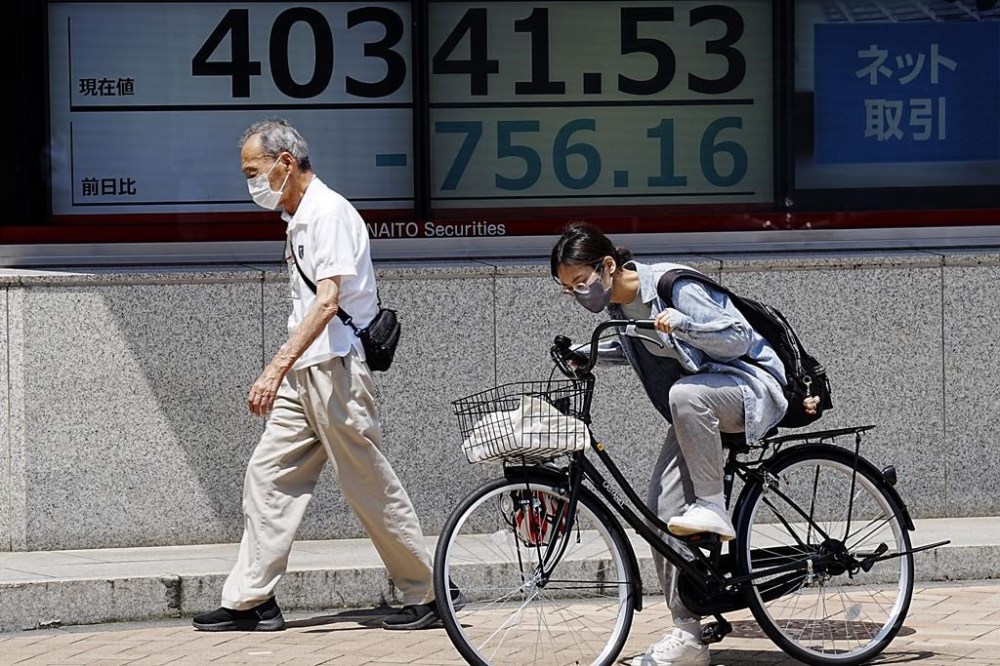
TOKYO (AP) — Asian shares were mostly lower Thursday, with Tokyo’s benchmark dipping more than 2%, after Wall Street’s record-breaking rally slammed into a wall of worries over potentially worsening trade tensions with China.
By early afternoon, Japan’s Nikkei 225 index was down 1.9% at 40,324.17.
The markets’ spotlight was squarely on chip companies after a report from Bloomberg News said President Joe Biden is considering the most severe trade restrictions available if companies like the Netherlands’ ASML and Japan’s Tokyo Electron continue to ship advanced semiconductor technology to China.
The U.S. government has blocked Chinese access to advanced chips and the equipment to make them, citing security concerns, and urged its allies to follow suit.
Tech-related shares weighed on Tokyo trading. Tokyo Electron’s shares plunged 9.4% and chip equipment maker Advantest’s shares sank 4.6%. Lasertec Corp. fell 6.2%.
The strengthening yen also added to worries about exporter shares in Japan, as a weak yen is a boon for the nation’s giant exporters like Toyota Motor Corp.
The U.S. dollar rose to 156.49 Japanese yen from 156.19 yen. It was trading above 161 yen most of last week but had fallen in recent sessions. The euro cost $1.0936, inching down from $1.0941.
The recent currency fluctuations are a result of U.S. politics taking “center stage,” according to Tan Jing Yi of Mizuho Bank. Former President Donald Trump has been expressing concerns about an overly strong dollar as a disadvantage for the U.S. since it makes American-made products relatively more expensive in overseas markets.
Elsewhere in Asia, Hong Kong was the regional outlier, gaining 0.3% to 17,776.73. The Shanghai Composite index edged 0.1% lower to 2,959.25.
Investors are awaiting word on policies to help rev up China’s slowing economy as a top-level meeting of the ruling Communist Party wraps up in Beijing on Thursday.
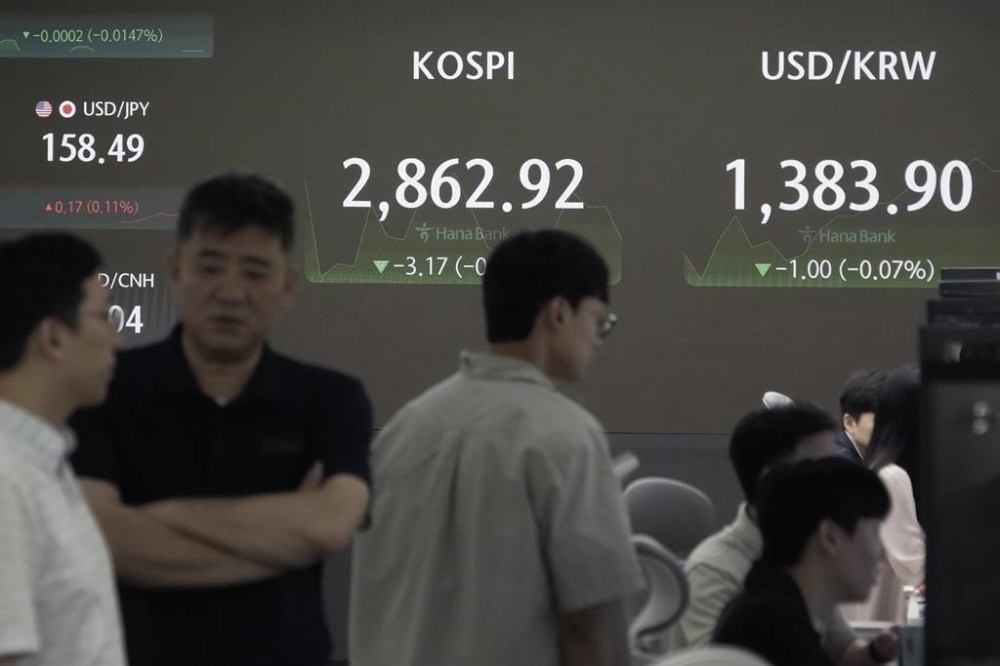
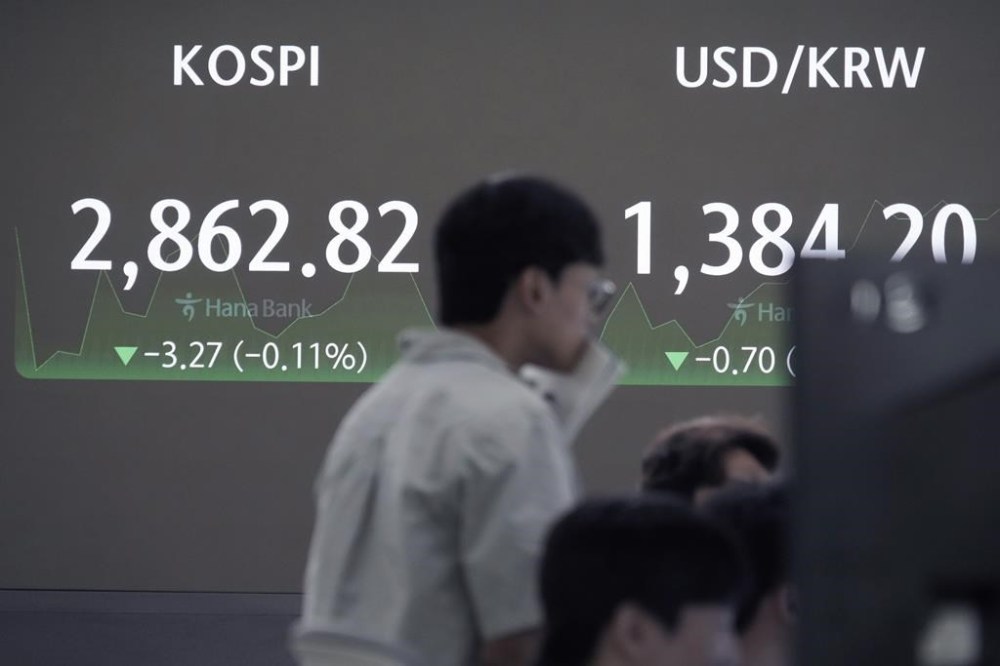
Australia’s S&P/ASX 200 fell 0.2% to 8,041.80. South Korea’s Kospi declined 1.4% to2,803.95.
Taiwan’s Taiex lost 2.1% as giant chip maker TSMC sank 3.2% after losing 8% overnight in U.S. trading.
Apart from concerns over further controls over sales of chips and equipment to China, Taiwan shares fell after former President Donald Trump criticized the self-governed island claimed by Beijing, which the U.S. is obligated by treaty to defend if it is attacked.
“Taiwan should pay us for defense,” Trump said according to a transcript of an interview published by Bloomberg. “Taiwan took our chip business from us, I mean, how stupid are we?” he said.
Wednesday on Wall Street, losses for Nvidia and other Big Tech heavyweights dragged the Nasdaq composite to a 2.8% decline, its worst drop since 2022. It closed at 17,996.92.
The S&P 500 dropped 1.4% to 5,588.27.
Advanced Micro Devices fell 10.2%, and Broadcom dropped 7.9%.
The Dow Jones Industrial Average climbed 0.6% to 41,198.08.
That was a continuation of a recent trend that market watchers have called encouraging, one where more stocks are rising rather than just a handful of dominant elites. The smaller stocks in the Russell 2000 were coming off a big five-day winning streak on hopes that interest rates are about to get easier and the U.S. economy will avoid a recession, though the index fell 1.1% Wednesday to hand back some of the gains.

ASML saw its U.S.-traded shares drop 12.7% even though it reported sales for the spring that came in at the high end of its forecasted range.
Big Tech stock movements have an outsized effect on indexes like the S&P 500, which give more weight to companies of bigger size. That was a boon in recent years, when a small group of companies known as “the Magnificent Seven” soared almost regardless of what the overall economy and interest rates were doing. That helped mask underlying weaknesses as the economy struggled through high interest rates meant to snuff out inflation.
In energy trading early Thursday, benchmark U.S. crude rose 61 cents to $83.46 a barrel. Brent crude, the international standard, gained 42 cents to $85.50 a barrel.
___
AP Business Writer Stan Choe contributed.