Great Lakes industry pledge catches on New Gimli processor seeks to be link in growing fishing waste value chain
Read this article for free:
or
Already have an account? Log in here »
To continue reading, please subscribe:

Digital Subscription
One year of digital access for only $205*
- Enjoy unlimited reading on winnipegfreepress.com
- Read the E-Edition, our digital replica newspaper
- Access News Break, our award-winning app
- Play interactive puzzles
*First annual payment billed as $205.00 + GST for one year. This annual subscription will automatically renew at $233.00 + GST every 52 weeks (10% off the regular annual price of $259.35). Offer available to new and qualified returning subscribers only. Cancel any time.
To continue reading, please subscribe:
Add Free Press access to your Brandon Sun subscription for only an additional
$1 for the first 4 weeks*
- Enjoy unlimited reading on winnipegfreepress.com
- Read the E-Edition, our digital replica newspaper
- Access News Break, our award-winning app
- Play interactive puzzles
*Your next Brandon Sun subscription payment will increase by $1.00 and you will be charged $17.95 plus GST for four weeks. After four weeks, your payment will increase to $24.95 plus GST every four weeks.
Read unlimited articles for free today:
or
Already have an account? Log in here »
Hey there, time traveller!
This article was published 24/07/2024 (783 days ago), so information in it may no longer be current.
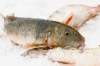
The majority of fish caught commercially in the Great Lakes are sent to landfills or processed into animal feed. However, over the past several months, fishing companies have been pledging to find different uses for their catches and remains — and a Winnipeg-based Crown corporation is the latest signee.
Freshwater Fish Marketing Corp., which markets and trades freshwater catch, has pledged to productively use 100 per cent of product caught in the Great Lakes — that it purchases — by 2025.
Annually, the entity buys roughly one million kilograms of fish from Lake Superior.
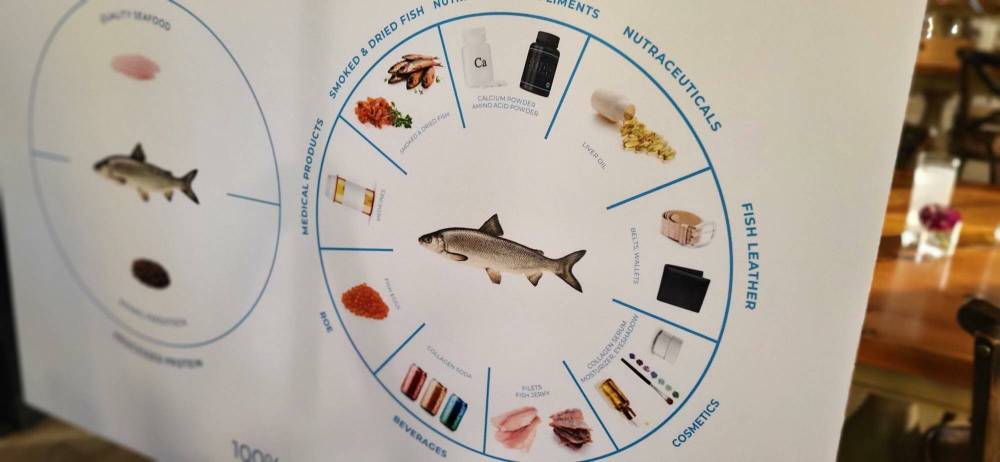
Its commitment comes as a Manitoba company, Canukshuk Animal Science, builds a Gimli-based processing plant to convert fish waste into pet treats.
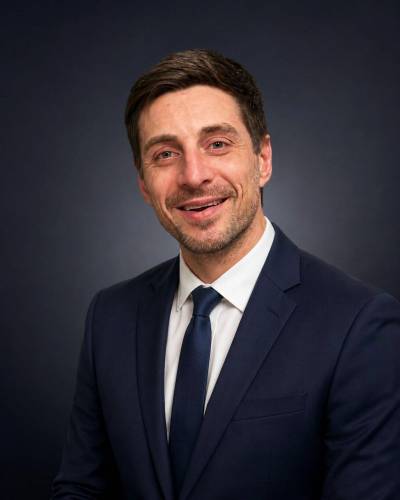
“The waste is crazy,” Canukshuk Animal Science director Bo Meng said of the fishing industry.
Meng and business partners learned about the “big problem” around a decade ago. He’s spent the past six years crafting a 20,000-square-foot facility to transform unwanted fish, and undesired parts, into jerky and kibble.
Pet food is one of the many options companies are considering for fish remains use, said John Schmidt, program manager for the Great Lakes St. Lawrence Governors & Premiers.
The Chicago-based GSGP focuses on growing the economy around the Great Lakes. It brings together chief executives from bordering provinces and U.S. states, and it’s led the charge behind the “100% Great Lakes Fish Pledge,” which it started around four months ago.
It’s following Iceland.
Decades ago, the Nordic island nation diversified its fish products beyond the typical fillet. A single cod went from a $12 value to, in some cases, more than $5,000, Schmidt relayed.
The Nordic people got creative as their cod population declined. North America’s Great Lakes are in a similar situation: the whitefish population is decreasing.
There’s no widely accepted reason for it, Schmidt said — some spectators blame the environment, others point to newly introduced species. The area is governed by a strict quota system, so overfishing isn’t the culprit, Schmidt underlined.
The annual whitefish catch in 2013 was around 13 million pounds; in 2022, it was about seven million. That’s a roughly 45 per cent decrease in the number of fish people are allowed to catch, Schmidt calculated.
Meanwhile, roughly 60 per cent of those fish are being discarded.
“The waste is crazy.”–Bo Meng, Canukshuk Animal Science director
“It’s been more difficult for (fishers) and people along the fish value chain to get money,” Schmidt noted. “(Iceland) saw this tremendous increase in value — why don’t we try to do it here?”
Recently, the GSGP has been testing fish leather, collagen, fertilizer and protein hydrolysates (which can be used in bouillon cubes and pet food). Schmidt wore a belt made with walleye and perch remains.
The GSGP and Western University (London, Ont.) are creating a value chain to locate fish waste and determine where it would make sense to establish new businesses. The team is also reviewing current companies who might have capacity to process Great Lakes fish.
“In my view, it’s something (that) should’ve been done years ago,” said Meng.
He expects Canukshuk Animal Science’s facility to be operational next year.
Freshwater Fish Marketing Corp. will be the company’s biggest supplier, according to Meng.
The federal Crown corporation didn’t accommodate an interview request by Free Press print deadline.
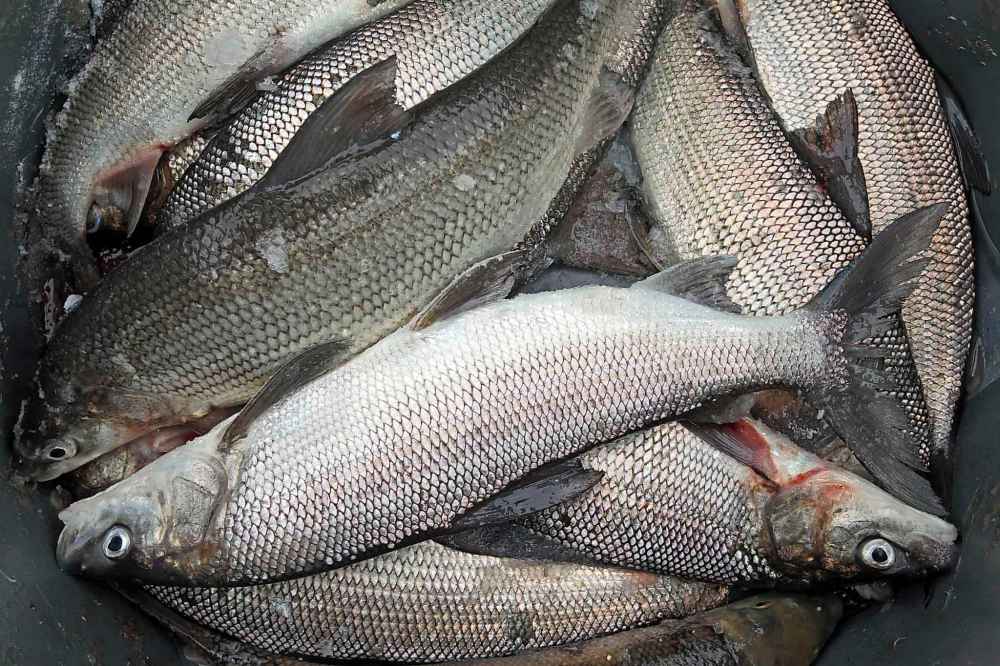
Often, freshwater fish not desirable for sale get caught in nets and die, Meng relayed.
The catches may not taste good; they might be too costly to process for human consumption. Those are the bites Canukshuk Animal Science is looking for. Those, and the skin and carcasses of fish used for fillets.
Carcasses will be purged through a bone-meat separator, Meng explained. Fish can be dehydrated through a special machine using biomass fuel — or woodchips — specially created at the University of Manitoba, he said.
He envisions selling the kibble, jerky and frozen raw food within Canada and abroad, to Germany and Japan. “We definitely want to start… slow.”
Construction is broken into four phases. In its beginning years, Canukshuk Animal Science may process 100 to 200 metric tonnes of dry product. The goal is to reach 500 metric tonnes annually, according to Meng.
Development is ongoing at the Gimli industrial park site. Inflation has bumped the budget to a $7-million ceiling, up from $4.5 million, Meng said.
He hopes to process freshwater fish from Manitoba, Ontario and Slave Lake, Alta.
“It’s a premium source of protein,” Meng stated. “Maybe not for human consumption due to the taste … but it’s definitely a good source.”
Jack Winram, executive director of the Manitoba Environmental Industries Association, applauded the GSGP’s waste-free initiative: “That’s good economic development, and also good for the environment.”
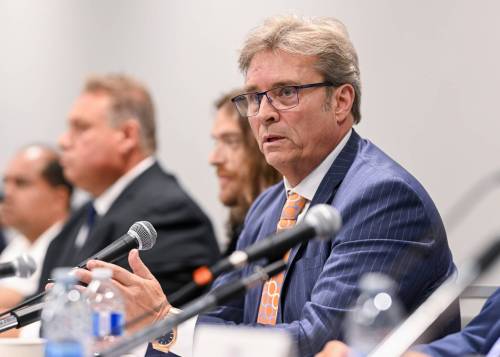
“In general, food waste is a huge problem across multiple industries,” said Sean Buchanan, a U of M business administration professor.

Buchanan expressed skepticism about industry self-regulation. Research shows industries need government or stakeholder pressure to make actual social and environmental change, he said.
However, it’s different when it’s driven by financial motives: “It’s really about the nature of the incentives.”
“If it’s done here and it’s proven to be beneficial to the industry, then it’s the kind of thing that can diffuse,” Buchanan said. “That’s how you can actually start to have a greater ecological benefit.”
Twenty-seven companies operating on the Great Lakes have signed the GSGP’s pledge. Freshwater Fish Marketing Corp. is the only Manitoba organization.
gabrielle.piche@winnipegfreepress.com

Gabrielle Piché reports on business for the Free Press. She interned at the Free Press and worked for its sister outlet, Canstar Community News, before entering the business beat in 2021. Read more about Gabrielle.
Every piece of reporting Gabrielle produces is reviewed by an editing team before it is posted online or published in print — part of the Free Press‘s tradition, since 1872, of producing reliable independent journalism. Read more about Free Press’s history and mandate, and learn how our newsroom operates.
Our newsroom depends on a growing audience of readers to power our journalism. If you are not a paid reader, please consider becoming a subscriber.
Our newsroom depends on its audience of readers to power our journalism. Thank you for your support.