Astronaut’s solo photo exhibition is for the birds
Read this article for free:
or
Already have an account? Log in here »
To continue reading, please subscribe:

Digital Subscription
One year of digital access for only $205*
- Enjoy unlimited reading on winnipegfreepress.com
- Read the E-Edition, our digital replica newspaper
- Access News Break, our award-winning app
- Play interactive puzzles
*First annual payment billed as $205.00 + GST for one year. This annual subscription will automatically renew at $233.00 + GST every 52 weeks (10% off the regular annual price of $259.35). Offer available to new and qualified returning subscribers only. Cancel any time.
To continue reading, please subscribe:
Add Free Press access to your Brandon Sun subscription for only an additional
$1 for the first 4 weeks*
- Enjoy unlimited reading on winnipegfreepress.com
- Read the E-Edition, our digital replica newspaper
- Access News Break, our award-winning app
- Play interactive puzzles
*Your next Brandon Sun subscription payment will increase by $1.00 and you will be charged $17.95 plus GST for four weeks. After four weeks, your payment will increase to $24.95 plus GST every four weeks.
Read unlimited articles for free today:
or
Already have an account? Log in here »
Roberta Bondar is no stranger to taking the bird’s-eye view of our planet.
Whether through her work as Canada’s first female astronaut and first neurologist in space or her work as a fine-art photographer with a particular interest in birds, Bondar, 80, has offered unique perspectives on our pale blue dot and all the life on it.
Those perspectives are on view in Bondar’s solo exhibition Patterns and Parallels: The Great Imperative to Survive, on now at the Mennonite Heritage Centre Gallery at Canadian Mennonite University until Oct. 10.
RUTH BONNEVILLE / FREE PRESS Roberta Bondar with one of the photos included in her exhibition which opened Friday at MHC Gallery. The exhibition uses photography to help people better connect with the natural world.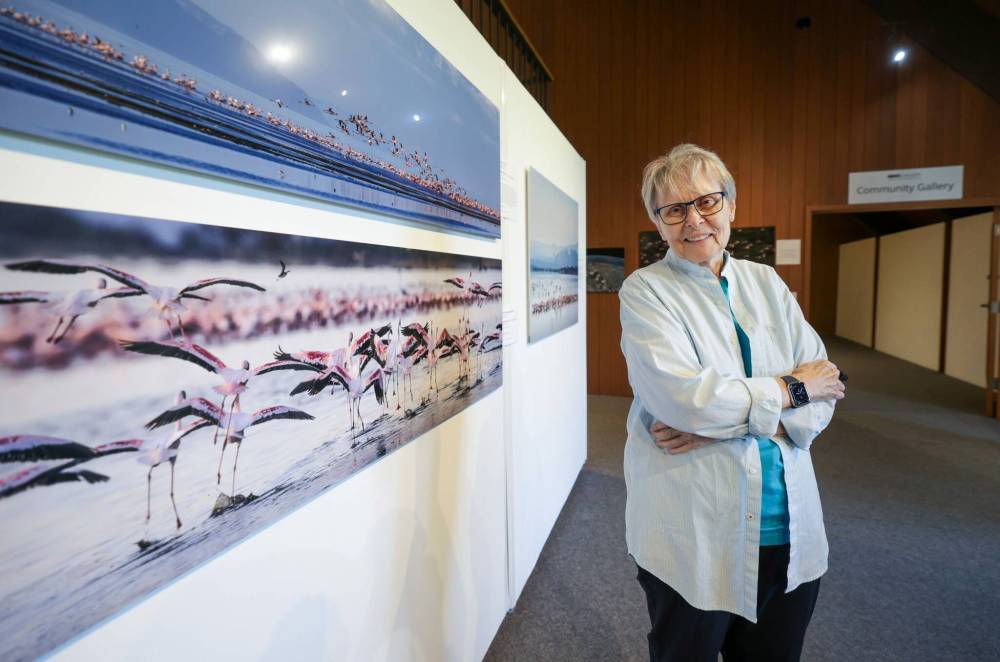
Exhibition preview
Patterns and Parallels: The Great Imperative to Survive
By Roberta Bondar
● Mennonite Heritage Centre Gallery
● Canadian Mennonite University
● To Oct. 10
Launched as a travelling exhibit in 2023, Patterns and Parallels is part of the Roberta Bondar Foundation’s Space for Birds project, which uses the universal language of photography to help people better connect with the natural world, as well as understand the impact climate change has on birds, affecting everything from their migration patterns to their habitats.
The exhibition features Bondar’s aerial and surface photography, alongside NASA’s images from space, following the migratory patterns of the three species of at-risk or endangered birds: the whooping crane, the lesser flamingo and the piping plover.
They are different birds with different stories in different parts of the world, but the goal of photographing them was the same: “I wanted to remind people that we’re on a planet, and that all of these images, all this habitat, is really on one planet, and that’s the one that’s nearest us because we’re standing on it,” Bondar says.
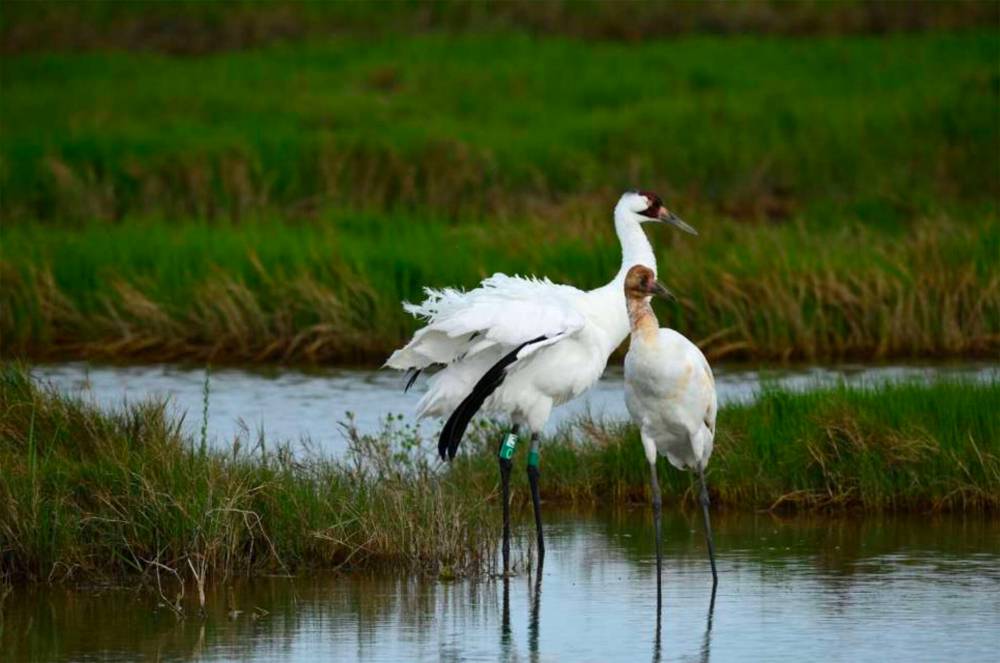
”Colt & Parent” An endangered Whooping Crane adult stretches its wing as it stands with its young colt on the Aransas National Wildlife Refuge, along the edge of the Texas shoreline of the Gulf of Mexico.
Bondar can’t say whether her interest in flight or her interest in birds came first as a child growing up in Sault Ste. Marie, Ont.
“It’s really hard to separate the two because the plastic model rockets and my microscope, they were always there, but I think that probably stars were always in my future,” she says.
NASA Roberta Bondar flew on the NASA Space Shuttle Discovery in January 1992.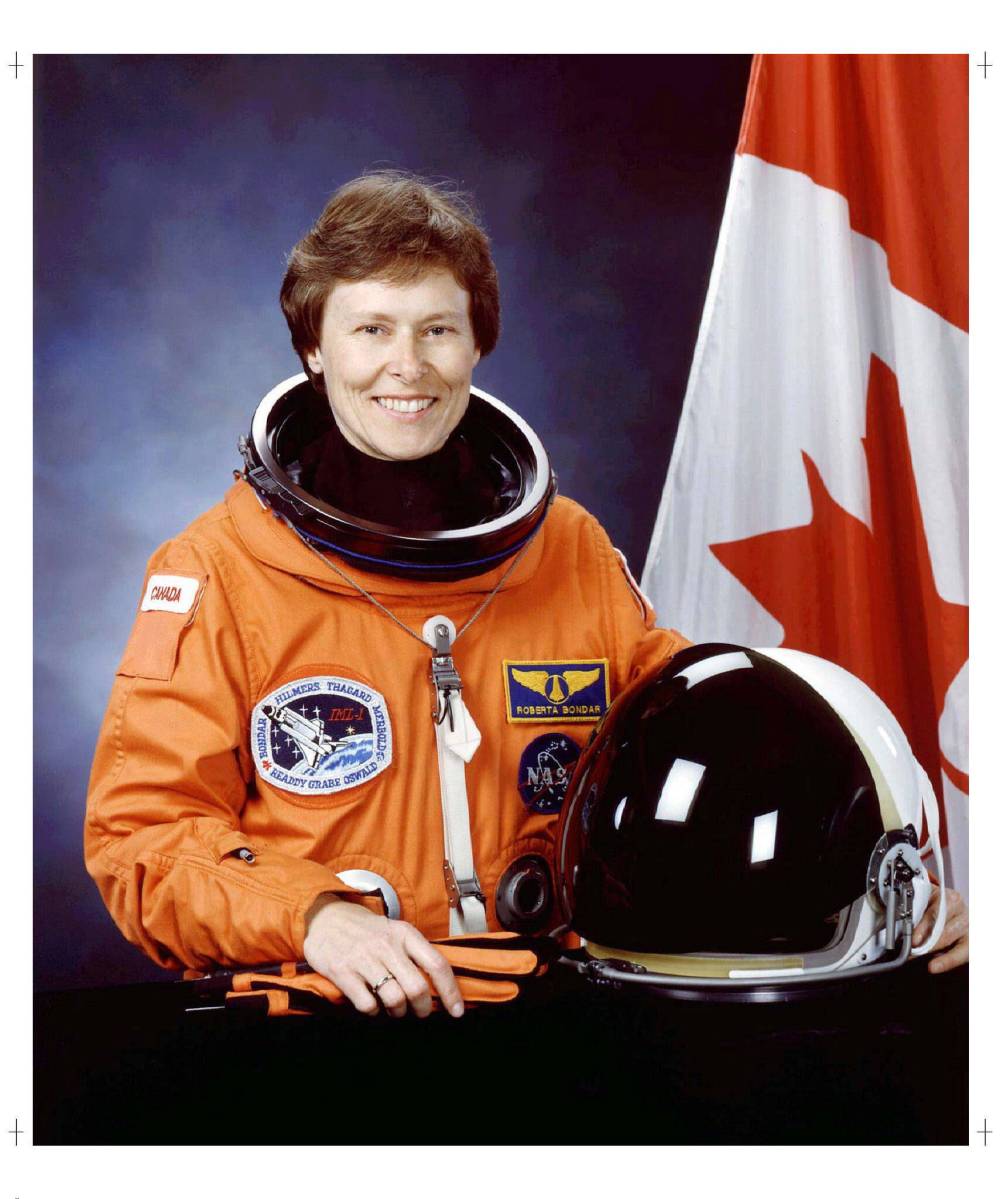
Bondar recalls attending a book fair at school, and her mother allowing her to buy the book she was most interested in.
“I picked up this little guide to stars, and there were no photographs in it. I mean, it was back in the early ’50s, and it was all in paintings. There were no photographs. Nothing had left the planet yet,” she says.
“So flight became important to me because of birds on the planet, but (interest in) the view from afar was quite early on as well.”
In Bondar’s lifetime, the world has seen unfathomable loss — North America has lost nearly three billion birds since 1970 — but also comebacks. She points to the conservation story of the whooping crane, which is still being written.
“When I was born in the mid-’40s, there were 16 of these birds left. That’s all that was left, 14 adults and two young. It’s now up to 550, all from the same genetic stock,” Bondar says.
That’s not enough to delist it as an endangered species. Whooping cranes are slow to reproduce, laying just two eggs a year — and, at that, often only one is successful.
“So the idea with habitat and the habitat story with whooping cranes is that without the habitat they will die, without protection by law they will be shot down or they will disappear,” Bondar says.
ROBERTA BONDAR PHOTO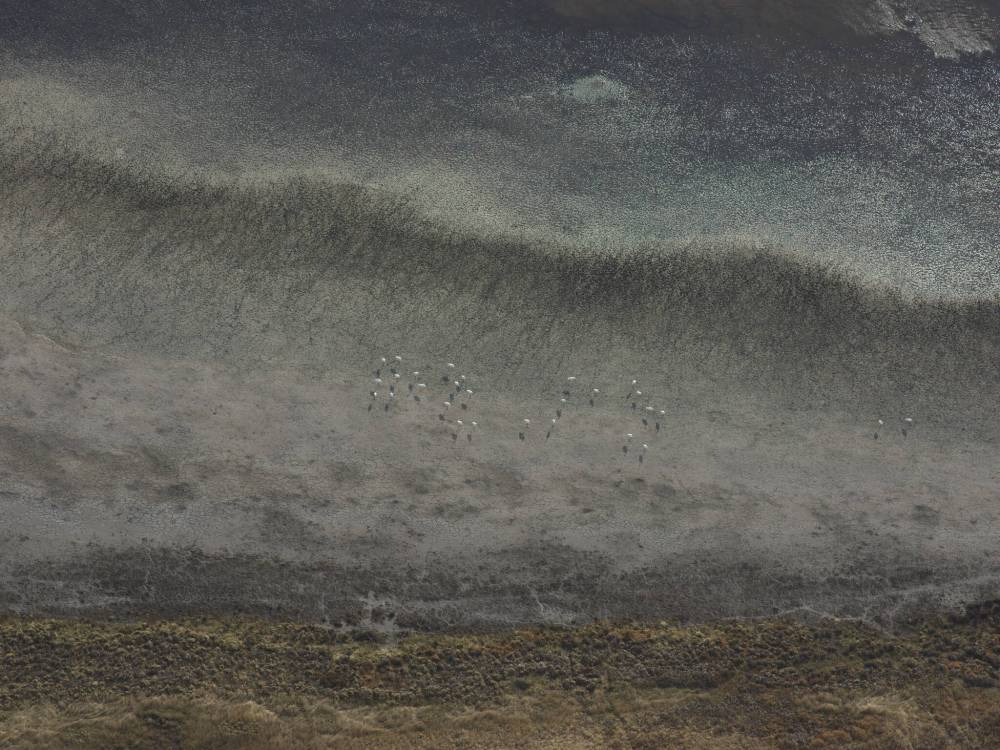
Canada’s largest national park, Wood Buffalo National Park, which spans northeastern Alberta and the southern Northwest Territories, protects the nesting area of the last natural wild migratory flock of whooping cranes.
“But how do we protect the rest of the migratory pathway? I wanted to bring people’s attention to what these cranes need, and I wanted to do it in a way that would excite people’s curiosity.”
ROBERTA BONDAR PHOTO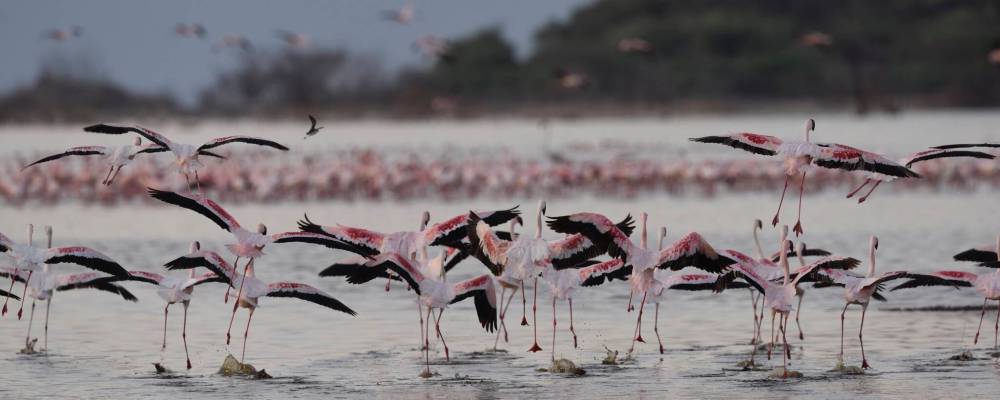
Bondar’s eye for art and science converge most poignantly in the piece Endangered Shadows, a large-scale aluminum print of an aerial photo she took in October 2018 of whooping cranes foraging in a remnant pond in the Prairie Pothole Region of Saskatchewan. (A print of this work was selected for the Visual Voices exhibition in the Senate in Ottawa.)
In the photo, the cranes look small and vulnerable, even though they are huge birds, and it’s only clear they are cranes from their shadows.
ROBERTA BONDAR PHOTO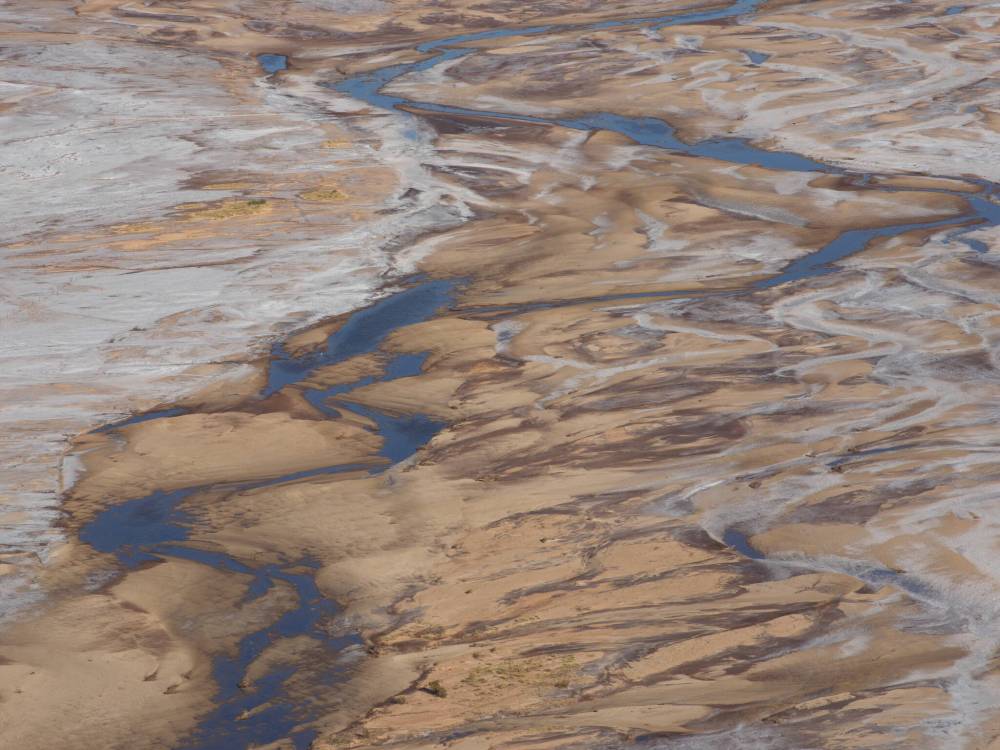
“And this, to me, looked like a wave that was coming, cresting and about to knock them over,” Bondar says, pointing to a threatening edge that does indeed look like it is trimmed by sea foam. “Well, it’s not. It’s the substrate. It’s just the way the light hits it.
“I took it to show it’s like a wave that’s coming over and endangering not just the bird but their shadows. It’s sort of like a Peter Pan thing.”
But you can extend the visual metaphor with science. Blue crabs, the primary food sources of whooping cranes when they migrate south, are being washed away by real waves caused by hurricanes, displacing them, Bondar says.
That also endangers the birds, which can eat up to 80 blue crabs a day.
ROBERTA BONDAR PHOTO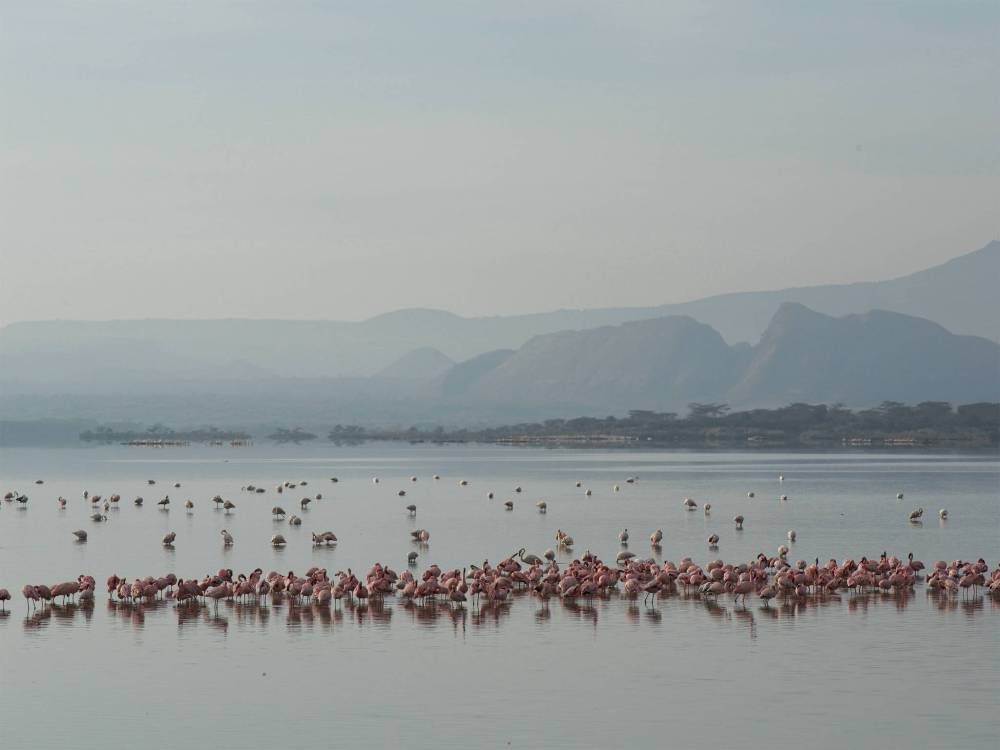
Bondar’s photos — and the perspectives therein — offer people a different lens through which to view the world.
“If you see this and you kind of get excited by a few things, then we’ve shared something,” she says. “(The viewers) start getting ownership over it themselves, and they should — their interpretation is their own. I can only go so far and say, ‘I’ve given you something here that really appealed to me, and how does it strike you?’
“But it’s a view they never would have had if they hadn’t walked in this gallery.”
jen.zoratti@winnipegfreepress.com

Jen Zoratti is a columnist and feature writer working in the Arts & Life department, as well as the author of the weekly newsletter NEXT. A National Newspaper Award finalist for arts and entertainment writing, Jen is a graduate of the Creative Communications program at RRC Polytech and was a music writer before joining the Free Press in 2013. Read more about Jen.
Every piece of reporting Jen produces is reviewed by an editing team before it is posted online or published in print – part of the Free Press‘s tradition, since 1872, of producing reliable independent journalism. Read more about Free Press’s history and mandate, and learn how our newsroom operates.
Our newsroom depends on a growing audience of readers to power our journalism. If you are not a paid reader, please consider becoming a subscriber.
Our newsroom depends on its audience of readers to power our journalism. Thank you for your support.